In the News: WPB Library Foundation Yacht Cruise Has Record-Breaking Year
(WEST PALM BEACH, FL) – The West Palm Beach Library Foundation’s Cruise for a Cause set new records in number of guests aboard the yacht and in achieving…
Read moreFirst published in 1965, Frank Herbert’s Dune is the best-selling science fiction novel ever written and the first to win both the Hugo and the Nebula awards. Set on the arid planet Arrakis, the only source of a consciousness-expanding, life-extending substance called the spice melange, it fuses political intrigue, religion, ecology, and a coming-of-age epic into a single sweeping narrative. Its journey from an obscure magazine serial to the cornerstone of a six-book saga—and to one of the most influential works of the twentieth century—can be traced through the books themselves.

Dune reached readers first not as a book but as a magazine serial. Its origins lay in a research trip Herbert made to the coastal dunes of Oregon in 1957, where a government effort to anchor the shifting sands with hardy grasses set him thinking about deserts, ecology, and the ways a harsh landscape shapes the people who survive it. He spent roughly six years expanding that seed into a novel, immersing himself in ecology, religion, history, and politics until the desert world of Arrakis had a depth few invented settings could match. The result appeared in the science-fiction magazine Analog in two installments—”Dune World” (1963–64) and “The Prophet of Dune” (1965)—though the full scope of Herbert’s ambition would only become clear once the two halves were joined in a single book.

Turning the serial into a book proved unexpectedly difficult. Herbert’s manuscript was reportedly rejected by around twenty publishers before it found an unlikely home at Chilton—a Philadelphia firm famous not for fiction but for its automotive repair manuals—where an editor named Sterling Lanier championed it. It remains one of the strangest debuts in publishing history: the company that taught mechanics how to rebuild a carburetor issued what would become the best-selling science fiction novel ever written. The 1965 first edition appeared in a modest printing, wrapped in the now-iconic dust jacket painted by the artist John Schoenherr, whose brooding desert vista gave the book its unmistakable face. Sales were slow at first and the gamble did little for Chilton in the short term, but steady word of mouth would carry the novel toward the status of a classic.

The true first edition is identified by the plain words “First Edition” on the copyright page, published in Philadelphia by Chilton and simultaneously in Toronto by Ambassador Books. Bound in light blue cloth with patterned endpapers, it is a surprisingly understated vessel for so influential a book. Because Dune was read and re-read by generations of devoted fans, most first-edition jackets were worn away or discarded altogether; surviving copies in the original first-issue dust jacket, like this one, are genuinely scarce. It is the best-selling science fiction novel of all time in its earliest—and least common—form, and it stands today among the most coveted of all modern first editions.

The novel’s success was immediate with critics and lasting with readers. Dune won the first Nebula Award for Best Novel in 1965 and shared the Hugo Award in 1966—the first work ever to take both—and it has never once gone out of print. Much of its enduring power lies in its refusal to offer a simple hero: through Paul Atreides, the exiled duke’s son who becomes the messianic figure Muad’Dib among the desert-dwelling Fremen, Herbert examined the seductions and dangers of charismatic leadership even as he built a richly imagined world of feuding noble houses, a galaxy-spanning empire, and a religion engineered for political ends. Woven through it all is a prophetic concern for ecology and the control of a single scarce resource—concerns that feel only more urgent today. Copies signed by Herbert, who died in 1986, are especially prized.
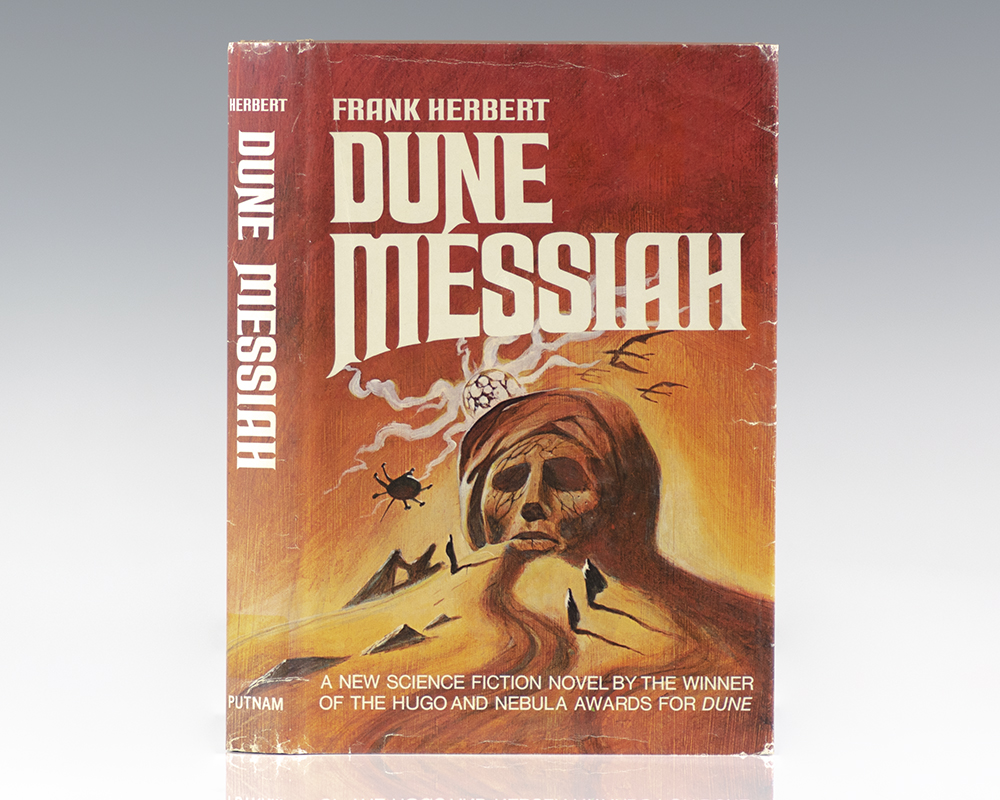
Herbert returned to Arrakis in 1969 with Dune Messiah, published by G. P. Putnam’s Sons. Set twelve years after the first novel, it follows Paul Atreides at the height of his power as emperor, and deliberately complicates—and darkens—the triumphant arc of its predecessor. Herbert had grown uneasy that readers were embracing Paul as a straightforward hero, and the sequel turns a cold eye on the human cost of his holy war and the corrupting machinery of empire. It is the shortest and most concentrated book in the series, and it establishes the skepticism toward messiahs and power that runs through everything that follows.
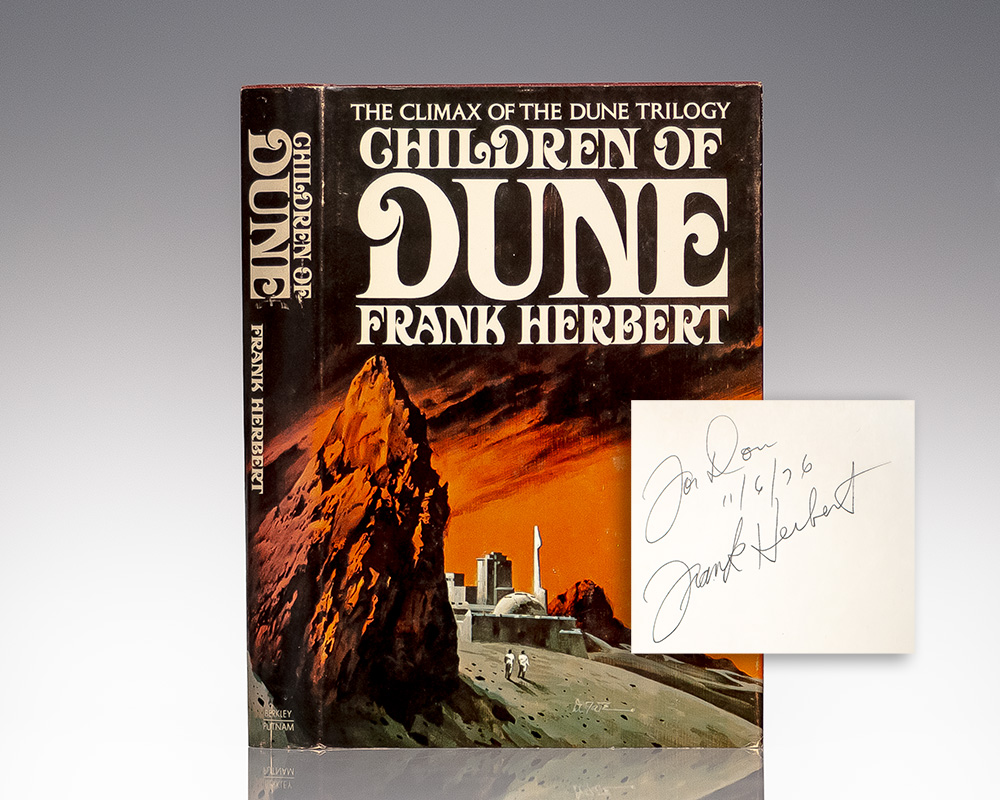
Children of Dune followed in 1976, completing what is often called the original Dune trilogy. Centered on Paul’s twin children, Leto II and Ghanima, it carries the story into the next generation of the Atreides line and sets in motion Leto’s fateful decision to bind himself to the sandworms of Arrakis. The novel became a genuine best-seller in hardcover—a rarity for science fiction at the time—helping to prove that the genre could command a mainstream readership and confirming Dune as a publishing phenomenon rather than a cult favorite.
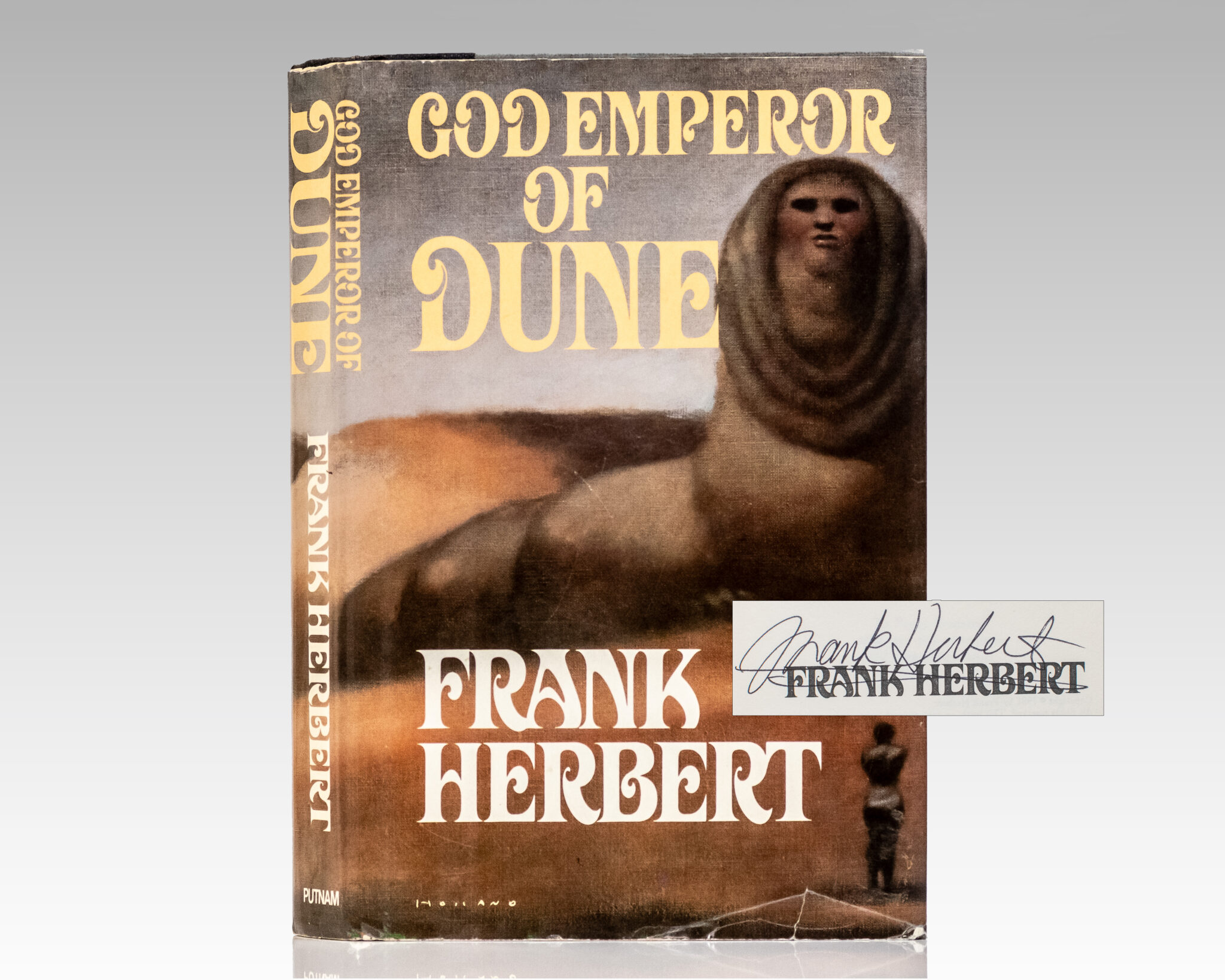
In God Emperor of Dune (1981), Herbert leapt more than three thousand years into the future, following Leto II—by now merged with the sandworms into a nearly immortal, half-human tyrant—across a long meditation on power, tyranny, religion, and the survival of the species. The most philosophical and divisive entry in the series, it trades the palace intrigue of the earlier novels for a sweeping argument about the shape of human history and the terrible price of enforced peace. For all its strangeness, it deepened the sense that the saga was building toward something far larger than the fate of any single character.
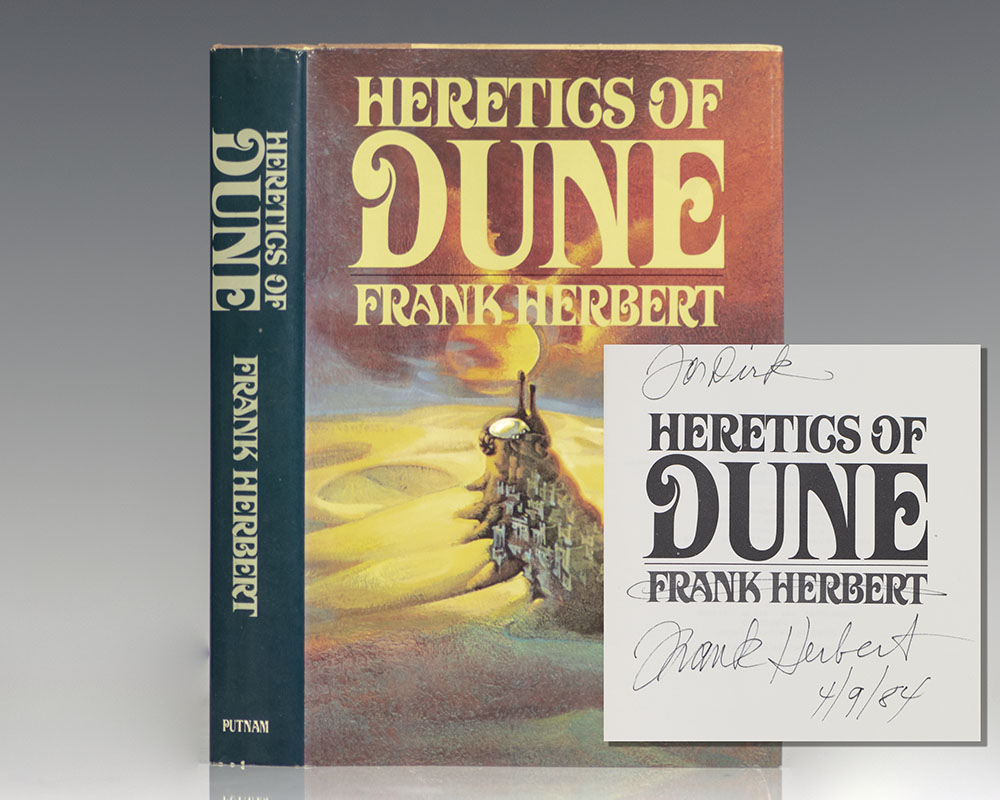
Heretics of Dune (1984) opens a new sequence set roughly fifteen hundred years after Leto’s death, in a universe scattered and transformed by the events he set in motion. It introduces fresh forces—the disciplined Bene Gesserit sisterhood and the ferocious, returning Honored Matres—contending for control of Arrakis and its legacy, and it brings the sandworms and the spice back to the center of the struggle. Among the last works Herbert wrote, it shows him still enlarging the world he had built two decades earlier rather than merely revisiting it.

Chapterhouse: Dune (1985) was the sixth and final novel Herbert completed before his death the following year. Continuing directly from Heretics, it follows the Bene Gesserit as they fight for survival against the Honored Matres and struggle to remake their order for a changed universe. Herbert ended it on a deliberate, unresolved note—a cliffhanger he did not live to answer. The story would later be continued by his son Brian Herbert together with Kevin J. Anderson, working in part from Frank Herbert’s notes, but the six novels he wrote himself remain the heart of the Dune universe.
In the decades since, Dune‘s influence has only deepened. Its ecological vision, its fusion of religion and politics, and its indelible desert imagery echo across science fiction and beyond—most famously informing George Lucas’s Star Wars—while its warnings about charismatic leaders and fragile ecosystems have made it feel increasingly prophetic. The novel has drawn filmmakers back again and again, from Alejandro Jodorowsky’s legendary unmade adaptation, to David Lynch’s ambitious 1984 film, to Denis Villeneuve’s acclaimed two-part epic of the 2020s that at last brought Arrakis to the screen at the scale Herbert imagined. Yet every version returns to the same source: the novel Frank Herbert struggled for years to publish, and the first edition in which it made its improbable debut.
This first edition, first issue of Dune, in the original first-issue dust jacket, is available in our collection.
(WEST PALM BEACH, FL) – The West Palm Beach Library Foundation’s Cruise for a Cause set new records in number of guests aboard the yacht and in achieving…
Read moreArthur Koestler was born in Budapest on the fifth of September, 1905, and by the time he died in London seventy-seven years later he had produced one of…
Read moreArthur C. Clarke’s 2001: A Space Odyssey was written in an unusual way—hand in hand with the film it accompanies. Beginning in 1964 from Clarke’s 1948 short story…
Read more