Skip to content

Why Ulysses Was Banned — And Why It Changed Literature Forever (1922 First Edition).

It is one of the strangest stories in the history of modern literature. A novel rejected by every commercial publisher who saw it. A novel prosecuted for obscenity in the United States before it had even been issued as a book. A novel barred from entry into the United Kingdom by His Majesty’s Customs for more than a decade. A novel printed at last, in 1922, in a small Parisian bookshop run by an American woman who had never published anything in her life. And, today, a novel almost universally regarded as the central achievement of literary modernism and one of the indispensable books of the twentieth century. The novel is James Joyce’s Ulysses, and the form in which it first entered the world – the Shakespeare and Company first edition of 1922 – is among the most coveted printed books of the modern era.

First edition of Joyce’s masterpiece, one of 750 numbered copies printed on handmade paper from a total edition of 1000 copies, this is number number 817.

A Book No One Would Publish

Joyce had been at work on Ulysses since 1914. Portions began appearing serially in the American journal The Little Review in 1918, and within three years its editors, Margaret Anderson and Jane Heap, had been hauled into a New York court and convicted of publishing obscene material on the strength of the “Nausicaa” episode. The verdict effectively ended any prospect of an American publication. No commercial firm in London or New York was willing to risk a prosecution of its own. The book, in the form Joyce had written it, was unpublishable on either side of the Atlantic.

That it appeared at all was the work of Sylvia Beach. An American expatriate of thirty-four, Beach kept a small English-language bookshop on the Left Bank of Paris called Shakespeare and Company, and she had become a friend and admirer of Joyce shortly after his arrival in the city. In the spring of 1921, watching her friend’s manuscript reach an apparent dead end, she made an offer of breathtaking presumption: she would publish the book herself. She had no experience as a publisher, no capital beyond what the shop produced, and no infrastructure for distribution. She had, on the other hand, a printer in Dijon, Maurice Darantiere, willing to undertake the formidable task of setting the book’s eight hundred pages in type from a manuscript that Joyce continued to revise on the proofs themselves. Beach announced a subscription edition of one thousand copies. The book appeared on Joyce’s fortieth birthday, the second of February 1922, in a print run that has since become one of the most famous in the history of the book.


The Banning and the Long Road to America

The fact of Parisian publication did not put an end to the controversy. Copies smuggled into the United States were intercepted and burned at the Port of New York. Copies entering the United Kingdom were seized at customs as obscene. The novel remained, in effect, banned in the two largest English-speaking countries in the world for more than a decade after its appearance. Joyce’s American readers acquired the book by sleight of hand, friends carrying single copies across the Atlantic in luggage and posting them on under false covers; British readers did the same, or made the journey to Paris to buy directly from Beach’s shop.

Ulysses.
First edition of Joyce’s masterpiece, one of 750 numbered copies printed on handmade paper from a total edition of 1000 copies, this is number number 817.

The American ban was overturned in 1933 in one of the landmark obscenity decisions of the twentieth century. Judge John M. Woolsey of the Southern District of New York, in United States v. One Book Called Ulysses, ruled that the novel was not pornographic and that its frank treatment of consciousness, including its sexual contents, served a serious artistic purpose. Random House issued the first authorized American edition the following year. The British ban followed in 1936, when the Bodley Head produced the first authorized English edition. By then Joyce had been the most discussed serious novelist in the world for more than a decade, and Ulysses had begun its long passage from contraband to canon.


What the Novel Did

Stripped of its controversies, the novel can be described in a single sentence: Ulysses follows the events of a single day, the sixteenth of June 1904, in the city of Dublin, as experienced principally by three figures – the advertising canvasser Leopold Bloom, his wife the singer Molly Bloom, and the young writer Stephen Dedalus, whom readers had first encountered as the protagonist of Joyce’s earlier A Portrait of the Artist as a Young Man. Beneath that surface is something altogether more ambitious. The book is a complete reimagining of Homer’s Odyssey, each of its eighteen episodes mirroring a passage of the ancient epic, each of its principal figures answering to a Homeric counterpart – Bloom to Odysseus, Molly to Penelope, Stephen to Telemachus – but transposed from the world of gods and heroes to the world of an ordinary Dublin day.

Ulysses.
First edition of Joyce’s masterpiece, Ulysses.

What changed literature was the means by which Joyce rendered that day. He pioneered, in Ulysses, the technique that has since come to be called stream of consciousness: a method of writing that attempts to capture thought as it actually occurs, unfiltered, nonlinear, sometimes chaotic, often beautiful, always deeply human. Readers in 1922 had encountered nothing like it. The “Penelope” episode, the long final monologue of Molly Bloom that closes the book with the celebrated affirmation, “yes I said yes I will Yes,” runs for some forty pages without conventional punctuation. The “Sirens” episode is structured as a piece of music. The “Oxen of the Sun” episode parodies, in chronological order, the entire history of English prose. Joyce famously remarked that he had put so many puzzles and enigmas into the book that it would keep scholars busy for centuries arguing about what he had meant, and a century later they still are. Ulysses did not merely tell a story. It expanded what a novel could be, not just a record of events but an immersion in consciousness itself, and very nearly every serious novelist who has written in English since has worked in its long shadow.


The 1922 First Edition

The first edition of Ulysses is among the most carefully studied printed books of the modern era, and its details matter to collectors. Sylvia Beach issued the book in a limitation of one thousand copies, divided into three distinct tiers. The first one hundred copies were printed on Dutch handmade paper and signed by Joyce. The next one hundred and fifty copies were printed on vergé d’Arches paper. The remaining seven hundred and fifty copies, numbered 251 to 1000, were printed on handmade paper and issued unsigned, in distinctive blue printed wrappers – the Greek-flag blue, by Joyce’s specification, that would become one of the most recognizable bindings in twentieth-century literature.

Ulysses.
First Edition of James Joyce’s masterpiece Ulysses; One of 750 Numbered Copies.

The book is famous in the trade for the fragility of those wrappers. The paper covers, never designed to survive a century of handling, have been lost or replaced on a great many of the surviving copies. A first edition rebound in cloth or leather, however handsomely, is no longer the book as Beach issued it. A first edition in the original wrappers – intact, complete, sound – is a different proposition altogether, and the copies that have come down to the present in such condition are scarce. The presence of a custom clamshell box, the standard protective housing for a book of this importance, indicates a copy that has been cared for by collectors who understood what they had.


The Copy We Are Currently Offering

We are currently offering a first edition, first impression of Ulysses, published in Paris by Shakespeare and Company in 1922. Our copy is one of the seven hundred and fifty numbered copies printed on handmade paper, survives in its original blue printed wrappers, and is housed in a custom clamshell box for protection. As a copy of the book that more nearly than any other defines the literary modernism of the twentieth century – and that survives in the form in which Joyce and Beach first sent it into the world – it represents one of the most important acquisitions available to a serious collector of modern firsts. It stands as both a literary milestone and a record of artistic courage, the work that was once rejected and prosecuted now regarded as essential.

The book is available at the gallery on Worth Avenue in Palm Beach and at raptisrarebooks.com.


It is worth pausing on the symmetry of the story. A book that no major publisher would touch, printed in a thousand copies by a young woman with a small shop on the rue de l’Odéon, banned at customs, burned at the docks, sold under cover for more than a decade – and now one of the books a serious twentieth-century library cannot do without. The first edition is the form in which all of that began. To hold a copy in its original wrappers is to hold the book as the small subscription list of 1922 first received it, before the prosecutions, before the rulings, before the century of scholarship and imitation that has followed. There are not many objects of which that can still honestly be said.


Browse our current inventory of modern first editions, and the wider holdings of twentieth-century literature presently at the gallery.


You may also enjoy reading:

The Novel Twenty-One Publishers Rejected… and the First Edition Collectors Now Chase.

Raptis Rare Books Lecture Series: A Tour of James Joyce’s Ulysses, the 20th Century’s Most Famous Novel with Irish Ambassador Daniel Mulhall.

James Joyce: Modernist Master.

The Famous Works of James Joyce

A Book and Its Legend: The Rubaiyat of Omar Khayyam in a Jewelled Binding by Sangorski & Sutcliffe.

The Novel Twenty-One Publishers Rejected… and the First Edition Collectors Now Chase.

It is one of the great near-misses in modern publishing history. In 1953 a forty-one-year-old schoolmaster named William Golding finished a short, strange novel about a group of English boys stranded on a tropical island after a plane crash, and sent the manuscript out to find a publisher. More than twenty London houses read it. Every single one of them turned it down. By the time Faber and Faber accepted the book the following year, it had been rejected so widely that the firm’s own reader had already dismissed it – and the manuscript was rescued, almost by accident, from a slush pile by a young editor making one last sweep before the rejected pages went back into the post. The book Faber published in September 1954 was Lord of the Flies. It changed modern literature.

Lord of the Flies.
First edition of Golding’s first book, one of the best-known works in modern literature.

The Manuscript That Nearly Wasn’t Published

Golding was, in 1953, an unlikely candidate for literary celebrity. He had spent the war commanding a rocket-launching landing craft in the Royal Navy, had returned to a teaching post at Bishop Wordsworth’s School in Salisbury, and had written for years without commercial success. The manuscript he sent out under the title Strangers from Within drew on what he had seen of human behavior under pressure in wartime and on the daily theater of boys at close quarters in a school. It was bleak, allegorical, and very far from the comfortable adventure story to which its tropical setting might have seemed to nod.

The novel reached Faber and Faber by way of an agent and was, by all accounts, on its way back out the door. Faber’s professional reader had recommended against it in unsparing terms, calling the book absurd and uninteresting. It was Charles Monteith, a young editor recently arrived at the firm, who happened to glance at the rejected typescript on his way to lunch and was arrested by what he found. Monteith took the manuscript home, read it through, and brought it back to the firm with the conviction that, with significant revisions, Faber had a book on its hands. He proposed a different title – the one Golding’s translator from Beelzebub had given him, in three small words that would soon belong to the language. He proposed cutting an extended opening scene of nuclear war that anchored the boys’ presence on the island in a too-explicit frame. He worked closely with Golding over the course of months. The result, published on 17 September 1954 in a modest first impression with a dust jacket designed by Anthony Gross, was Lord of the Flies.


A Slow Beginning, a Sudden Classic

The book did not become a sensation overnight. Reviews were respectful rather than ecstatic, sales were modest, and the first impression of just over three thousand copies was not exhausted quickly. What changed everything, in the second half of the 1950s and through the 1960s, was the schoolroom. Teachers in Britain and then in the United States found in Lord of the Flies a novel exactly suited to the moment – short enough to assign, rich enough to discuss for weeks, and unsparing in its depiction of how quickly the institutions of civilization can give way to something darker beneath. By the time the American paperback edition appeared in the late 1950s, the book was on its way to becoming one of the defining texts of postwar education.


The critical recognition followed. The New York Times praised the book as superbly written. The Modern Library named it one of the hundred greatest novels of the twentieth century. In 1983 Golding was awarded the Nobel Prize for Literature, the Swedish Academy citing the novels which, in his words, illuminate the human condition in the world of today. The book was filmed twice – by Peter Brook in 1963 in a stark black-and-white adaptation that has its own claim on the cinematic canon, and again, in a more conventional American treatment, by Harry Hook in 1990. By the closing decades of the twentieth century, Lord of the Flies had achieved the rare standing of a work both universally taught and continuously argued about, a novel as available to twelve-year-olds as it is to political theorists.


Why the First Edition Matters

The collecting market has long understood what Faber’s first reader did not. A book that survives more than twenty rejections to become a foundational work of twentieth-century literature is, by definition, a book whose earliest printed form is scarce. The London first impression of Lord of the Flies was small, the dust jackets were fragile, and the great majority of copies that have come down to the present have done so in conditions that range from sound but jacketless to worn beyond practical repair. A copy of the true first edition, in the original first-issue dust jacket, in collectible condition, is a meaningfully scarce object. A copy that bears the author’s signature is scarcer still.

Lord of the Flies.
First edition of Golding’s first book, near fine in a very good first-issue dust jacket. Jacket design by Anthony Gross.

Three points decide the value of a Golding first edition in the current market. The first is the jacket. The first-issue dust jacket is essential to a complete copy; later jackets and library rebackings, however clean, do not stand in for it, and a jacketless first – common in the trade – is a fundamentally different proposition from a jacketed one. The second is condition. Bright spines, complete jacket flaps with the original price intact, and clean boards are the marks of a copy that has been cared for; foxing, sunning, tape repairs, and price-clipping all reduce a copy’s standing. The third is the signature. Golding signed and inscribed books throughout his life, but signed copies of the first novel – the book that began it all – are a different category from a signed later edition, and a presentation inscription in a first edition is the most desirable form of all. Such copies pass through the trade only occasionally, and when they do they tend to move quickly.


The Copy We Are Currently Offering

We are currently offering a true first edition, first impression of Lord of the Flies, published in London by Faber and Faber in 1954, in the original first-issue dust jacket and bearing a personal presentation inscription from the author. This is the form of the book that brings together every element a serious collector of modern first editions seeks in a copy of Golding’s first novel: the earliest printed text, the original protective jacket as the book was first released, and the direct authorial association of an inscription written by Golding’s own hand. As a copy of one of the most important and most widely read novels of the twentieth century – and as the first book by an author who would go on to win the Nobel Prize – it represents a particularly desirable acquisition.

The book is available at the gallery on Worth Avenue in Palm Beach and at raptisrarebooks.com.


It is worth pausing, in closing, on the small accident at the center of this story. A young editor on his way to lunch happened to glance at a manuscript that had been recommended for rejection. Had he kept walking, the book would have gone back to its author with twenty-one refusals to its name, and the history of postwar literature would look measurably different. The first editions that the trade now seeks, the films, the school assignments, the Nobel Prize – all of it depended on a moment of editorial attention that very nearly did not happen. There are few better illustrations of why the first edition matters: it is, quite literally, the form in which a book enters the world, in the small number of copies that were produced before anyone yet knew what it would become.


Browse our current inventory of modern first editions, or write to us directly to discuss building a collection around the books that matter most to you.


You may also enjoy reading:

Nobel Laureates in Print: Collecting the First Editions of Literature’s Highest Honor.

The Beginner’s Guide to Collecting Rare Books.

Curating a Legacy: Ten Iconic First Editions Worth Acquiring.

Collecting Americana: the Founding Texts of American History.

Quotes on Collecting Books.

Curating a Legacy: Ten Iconic First Editions Worth Acquiring.

There is a particular category of rare book that transcends the ordinary parameters of the collecting field. These are not simply early printings of significant texts they are the physical embodiments of cultural turning points, volumes whose first appearances in the world marked moments from which literature, science, and intellectual history did not return. To acquire a first edition of this calibre is not merely to purchase a book. It is to take custodianship of a piece of history, and to pass something of genuine and permanent value to those who come after you.

What follows is a considered selection of ten such volumes each currently represented in our inventory chosen for their literary and cultural significance, their enduring collector demand, and their capacity to serve as the cornerstones of a collection built to last generations.


1. F. Scott FitzgeraldThe Great Gatsby (1925)

First edition, first printing of Fitzgerald’s masterpiece The Great Gatsby, inscribed by Fitzgerald to his wife Zelda’s sister and her husband.

There is no more iconic object in the canon of twentieth-century American literature. Published by Scribner’s in 1925 in a modest first printing that barely registered commercially, The Great Gatsby was rediscovered during the Second World War and has since become the definitive novel of the American Dream and, in its first edition, one of the most sought-after books in the collecting world.

The dust jacket, designed by painter Francis Cugat and depicting the haunting eyes of Doctor T. J. Eckleburg over the lights of Coney Island, is among the most celebrated pieces of book art in existence. A first edition in the original jacket is a rarity in any condition; an inscribed copy is among the rarest objects in the field. We are currently offering an outstanding association copy inscribed by Fitzgerald to Zelda’s sister and her husband Newman Smith in the year of publication, in the exceptionally rare first issue dust jacket a volume of historical and literary significance of the very highest order.

Read more of In the News: A Jazz Age gem: Author-signed copy of ‘Great Gatsby’ on sale for nearly $1M in Palm Beach.


2. J.R.R. TolkienThe Hobbit (1937)

The Hobbit
First edition, first issue of The Hobbit; inscribed by J.R.R. Tolkien to the Livesleys.

Published by George Allen & Unwin in September 1937 in a first printing of only 1,500 copies, The Hobbit is among the most consequential first editions in the literature of the twentieth century. Tolkien’s creation of Middle-earth begins here, in a volume whose bibliographic significance is matched only by its cultural reach. The original dust jacket designed by Tolkien himself is extraordinarily rare in any state of preservation.

We are currently offering an exceedingly rare first edition inscribed by Tolkien and in the rare original dust jacket, representing one of the finest examples of this landmark title to appear on the market in recent years.

Read more of Where Modern Fantasy Began: Tolkien’s Signed 1937 Hobbit.


3. Ernest HemingwayThe Sun Also Rises (1926)

First edition, first issue of The Sun Also Rises Inscribed by Ernest Hemingway to publisher Edward Titus.

Hemingway’s first novel, published by Scribner’s in October 1926, established at a stroke the spare, declarative prose style that would define American literary modernism for a generation. The first issue is identified by the misprint “stoppped” on page 181 and carries its own specific dust jacket points. A fine copy in the first issue jacket is among the most desirable of all Hemingway firsts.

We are currently offering a first edition, first issue in the rare first issue dust jacket; a defining document of the Lost Generation and one of the most collectible titles in the American canon.

Read more of The Legacy of Ernest Hemingway: Master of Modern American Literature.


4. J.D. SalingerThe Catcher in the Rye (1951)

Catcher in the Rye cover art with red carousel horse.
First edition, first issue of The Catcher in the Rye; Inscribed and Dated by J.D Salinger in the year of publication.

Published by Little, Brown in July 1951, The Catcher in the Rye has remained continuously in print for over seventy years and has sold in excess of sixty-five million copies. Salinger’s pathological aversion to publicity rendered his signature extraordinarily scarce, making signed and inscribed copies among the most actively sought in the field of modern first editions.

We are currently offering an early printing in the year of publication, a presentation copy inscribed by Salinger on Christmas Eve 1951. Signed examples of this title are genuinely rare, and an inscribed copy with a clear recipient and date represents the finest category of Salinger association material.

Read more of Behind the Carousel Horse: Delving into ‘Catcher in the Rye’ and Salinger’s Legend.


5. Harper LeeTo Kill a Mockingbird (1960)

Association copy and inscribed by the author on the front free endpaper to her Lippincott editor, “To my beloved Tay with all the love in my heart – Nelle.”

Published by J.B. Lippincott in July 1960 in a first printing of 5,000 copies, To Kill a Mockingbird won the Pulitzer Prize the following year and has since been named the best novel of the twentieth century by librarians across the country. Lee’s extreme reticence she gave virtually no interviews and signed books only rarely places inscribed copies in a category of exceptional scarcity.

We have offered inscribed copies of this title bearing Lee’s full name and personal dedications in the year of publication, in the original first issue dust jacket with the Jonathan Daniels blurb to the rear flap. For the collector seeking a single volume that unites literary greatness with genuine rarity, few titles in the twentieth-century canon compete with this one.

Read more of To Kill A Mockingbird: the Great American Novel.


6. William GoldingLord of the Flies (1954)

Lord of the Flies
First Edition of The Lord of the Flies; Inscribed by William Golding.

Golding’s first novel, published by Faber and Faber in September 1954 after being rejected by numerous publishers, has become one of the most taught, most discussed, and most enduring works of postwar British fiction. The first edition, in the original cloth, is a scarce and actively collected title and presentation copies inscribed by Golding are rare objects in their own right.

We are currently offering a first edition, a presentation copy inscribed by Golding on the front free endpaper a volume that represents both the beginning of one of the twentieth century’s most significant literary careers and a genuine rarity in the collecting field.

Read more of Banned and Challenged Books.


7. Ian FlemingCasino Royale (1953)

First edition of the Ian Fleming’s first book Casino Royale which introduced the world to 007; Signed by Him
First edition of  Casino Royale which introduced the world to 007; Signed by Ian Fleming.

Published by Jonathan Cape in April 1953 in a first printing of 4,750 copies, Casino Royale introduced James Bond to the world and launched the most commercially successful spy fiction franchise in literary history. First editions in the original black cloth are scarce in any condition; signed copies are exceptionally so, and a complete set of all fourteen Bond novels in first issue jackets represents one of the great achievements available to the collector of twentieth-century popular fiction.

We are currently offering a first edition of Casino Royale boldly signed by Fleming a landmark of the genre and one of the most recognizable titles in the canon of modern first editions.

Read more of The World of James Bond.


8. J.K. RowlingHarry Potter and the Philosopher’s Stone (1997)

Harry Potter and the Philosopher’s Stone.
First edition, first printing of Harry Potter and the Philosopher’s Stone; Signed by J.K. Rowling and with two large original illustrations by Thomas Taylor.

Published by Bloomsbury in June 1997 in a first printing of only 500 copies 300 of which were distributed to libraries the first edition of Harry Potter and the Philosopher’s Stone is among the rarest and most actively sought first editions of the late twentieth century. It is identified by the full number line, “Joanne Rowling” in place of the now-familiar “J.K. Rowling,” and the duplication of “1 wand” on the equipment list on page 53.

We are currently offering a first edition, first printing of the rarest book in the Harry Potter series an object whose cultural significance and scarcity combine to place it among the most consequential collecting opportunities in the modern first edition market.

Read more of J. K. Rowling’s Harry Potter: the Best-Selling Book Series of All Time.


9. Adam SmithThe Wealth of Nations (1776)

First edition of Adam Smith’s magnum opus An Inquiry into the Nature and Causes of the Wealth of Nations.

For the collector whose interests extend beyond literary fiction to the history of ideas, few first editions carry the intellectual weight of Smith’s An Inquiry into the Nature and Causes of the Wealth of Nations, published by Strahan and Cadell in March 1776. The foundational text of modern economic thought, it appeared in the same year as the American Declaration of Independence and has shaped the organization of human society more profoundly than almost any book published in the centuries since.

We have offered first editions of this landmark work in two quarto volumes bound in full contemporary calf, elaborately gilt-decorated spines, and red morocco spine labels a volume that belongs in any serious collection assembled with an eye to intellectual history as well as literary significance.

Read more of The Intellectual Legacy of The Wealth of Nations.


10. Charles DarwinOn the Origin of Species (1859)

First edition of Charles Darwin’s On the Origin of Species, “certainly the most important biological book ever written” (Freeman), one of 1250 copies.

Published by John Murray on 24 November 1859 in a first printing of 1,250 copies every one of which sold on the day of publication On the Origin of Species is, by near-universal consensus among bibliographers and scientists alike, the most important work of natural science ever printed. Its argument irrevocably altered humanity’s understanding of itself and its place in the natural world, and its first edition remains one of the most sought-after scientific books at auction.

We have offered first editions of this title in the original cloth, complete with the single folding lithographed diagram an object of such intellectual and historical significance that its presence in a collection elevates everything around it.

Read more of Charles Darwin’s On The Origin of Species.


Building a Collection That Endures


The ten volumes above share certain qualities that distinguish them from the broader field of collectible first editions: each marks a genuine turning point in literary, scientific, or intellectual history; each has demonstrated sustained and growing collector demand across decades; and each, in fine condition and ideally in an inscribed or association copy, represents the kind of acquisition that holds its significance and its value across generations.

A collection anchored by even two or three of these titles has a foundation that no market fluctuation is likely to diminish. We are available to assist collectors at every level of experience and acquisition, and we welcome enquiries about any of the titles discussed above or the broader possibilities they represent.


Browse our current inventory or contact us directly to discuss building a collection around the titles that matter most to you.


You may also enjoy reading:

Nobel Laureates in Print: Collecting the First Editions of Literature’s Highest Honor.

The Beginner’s Guide to Collecting Rare Books.

Collecting J.R.R. Tolkien’s Masterpiece The Hobbit.

Collecting Americana: the Founding Texts of American History.

Quotes on Collecting Books.

A Book and Its Legend: The Rubaiyat of Omar Khayyam in a Jewelled Binding by Sangorski & Sutcliffe.

Some books exist in multiple registers simultaneously. There is The Rubaiyat of Omar Khayyam as a text — the collection of quatrains composed in eleventh-century Persia by the mathematician and astronomer Omar Khayyám, rendered into English verse by Edward FitzGerald in 1859, and subsequently translated, illustrated, printed, and bound in more editions than any comparable work of the period. And then there is the Rubaiyat as an object — specifically, as an occasion for the most ambitious decorative bookbinding in the history of the craft, the text that inspired Sangorski & Sutcliffe to produce the Great Omar, the most spectacular jewelled binding ever made, which sank with the Titanic in April 1912.

The copy we are currently offering occupies a unique position between these two registers. It is an exceptionally rare example of the Sangorski & Sutcliffe Rubaiyat in a jewelled binding set with thirty-seven stones — a volume that connects directly to the tradition of the Great Omar, produced by the same hands, in the same house, in the same period, and representing the finest expression of the jewelled binding as a living and active craft tradition.


The Rubaiyat of Omar Khayyam.

The Text and Its Translation

Omar Khayyám composed his Rubaiyat — a series of four-line stanzas meditating on pleasure, mortality, the unknowability of God, and the proper use of the time we are given — in Persia in the eleventh century. The poems circulated in manuscript for nearly eight hundred years before Edward FitzGerald encountered them in the nineteenth century and produced an English rendering of extraordinary lyric power. FitzGerald was not a strict translator — he took significant liberties with the original Persian, condensing, rearranging, and in places inventing — but the resulting text, first published anonymously in 1859, achieved a popularity that few poems in the English language have matched.

By the 1880s the Rubaiyat was read throughout the English-speaking world, and Omar Khayyam clubs had formed on both sides of the Atlantic. It became one of the defining texts of the Victorian fin de siècle — a poem about pleasure and impermanence that resonated deeply with a culture increasingly uncertain of its own foundations. Few literary texts have inspired a comparable range of illustrated and finely bound editions, and none has a more dramatic collecting history.


The Rubaiyat of Omar Khayyam.

Sangorski & Sutcliffe and the Jewelled Binding

Francis Sangorski and George Sutcliffe established their London bindery in 1901 as former students of the City and Guilds bookbinding programme, and within a decade had produced work of a decorative ambition that placed them beyond any contemporary competitor. Their jewelled bindings — in which semi-precious stones are set directly into elaborately tooled leather covers, integrated into decorative programmes of peacocks, serpents, flowers, and geometric motifs executed in gold and coloured leather onlays — revived a tradition of gem-set bookbinding that had been dormant since the medieval period.

The Great Omar, commissioned in 1909 and completed in 1911, was the supreme expression of this ambition. Featuring 1,051 precious and semi-precious stones set into a design of three peacocks in full plumage on the upper cover, it was described at the time as the most ambitious bookbinding ever undertaken by any binder in history. Consigned for sale to an American collector, it was placed aboard the Titanic in April 1912 and sank with the ship. Francis Sangorski drowned in a swimming accident the same year. The Great Omar has remained on the ocean floor ever since.


The Rubaiyat of Omar Khayyam.

The Copy We Are Offering

This copy was produced by Sangorski & Sutcliffe from the same manuscript — reproduced from the illuminated original created by Francis Sangorski and George Sutcliffe themselves, with miniatures — and bound in their jewelled style, set with thirty-seven stones. It is a direct expression of the same tradition, the same workshop, and the same ambition that produced the Great Omar. The joints have been expertly and invisibly repaired. Laid into the front flyleaf is a one-page autograph letter signed by Elihu Vedder — the American artist whose 1884 illustrations for the Rubaiyat represent another landmark of the book’s decorative history — written to a Boston gallery owner regarding paintings for sale, dated December 16, 1868. The engraved bookplate of renowned collector William F. Gable of Altoona is present to the verso of the front endpaper. The original black and gold printed grey wrappers designed by Vedder are bound in.

This is a fine, fresh copy in a binding that stands in direct continuity with the most ambitious tradition in the history of the craft — a physical object whose beauty, rarity, and historical resonance are impossible to separate from one another. For the collector of fine bindings, it represents an opportunity of singular significance.


Contact us to enquire about this copy or to discuss the Sangorski & Sutcliffe tradition further.


You may also enjoy reading:

The Beginner’s Guide to Collecting Rare Books.

The Novel Twenty-One Publishers Rejected… and the First Edition Collectors Now Chase.

Curating a Legacy: Ten Iconic First Editions Worth Acquiring.

Nobel Laureates in Print: Collecting the First Editions of Literature’s Highest Honor.

Inside the Ancient Art of Bookbinding: How Harcourt Bindery Gives Rare Books New Life.

Nobel Laureates in Print: Collecting the First Editions of Literature’s Highest Honor.

The Nobel Prize in Literature is the most consequential recognition in the literary world. Awarded annually by the Swedish Academy since 1901, it has conferred its authority on writers whose work has, in the Academy’s enduring phrase, been of the greatest benefit to mankind — a formulation capacious enough to encompass poets, novelists, essayists, and playwrights across six continents and more than thirty languages. For the rare book collector, the Nobel Prize carries a specific and well-understood significance: it is the moment at which a writer’s first editions, previously collectible on literary merit alone, acquire the additional weight of institutional recognition — and with it, sustained and deepening market demand.

Collecting Nobel Prize first editions is one of the most intellectually coherent strategies available to the serious collector. The prize validates both the literary significance and the long-term cultural durability of a body of work. A collection anchored by the major Nobel laureates in literature — particularly those whose first editions were already highly collectible before the award — has a stability and a scholarly coherence that purely speculative collecting rarely achieves.

What follows is a survey of the most significant Nobel laureates for the rare book collector, with attention to the first editions that matter most and the specific copies from our inventory and catalogues that illustrate what this field looks like at its finest.


Ernest Hemingway — Nobel Prize in Literature, 1954


First edition, first issue of The Sun Also Rises Inscribed by Ernest Hemingway to publisher Edward Titus


Hemingway received the Nobel Prize in 1954, the Academy citing his mastery of narrative art and the influence he had exerted on contemporary style. By that point his canonical first editions — The Sun Also Rises, A Farewell to Arms, For Whom the Bell Tolls — had already established themselves as among the most actively sought titles in the field of twentieth-century American literature. The prize confirmed what collectors had long understood.

The most desirable Hemingway first editions are those carrying their original dust jackets in fine condition, with correct issue points confirmed. The Sun Also Rises in the first issue jacket — identified by the misprint on the front panel and the “stoppped” error in the text — is the cornerstone Hemingway title, and we have offered first edition, first issue copies carrying both points. We have also offered the signed limited edition of his early collection In Our Time, one of 510 copies signed by Hemingway — among the most significant signed limited editions in his bibliography.


William Faulkner — Nobel Prize in Literature, 1949


First Edition of Light In August; Inscribed by William Faulkner


Faulkner’s Nobel came in 1949 for the prize year, awarded the following year — recognizing a body of work that had been critically celebrated but commercially modest, and that had already placed his first editions in a category of considerable scarcity. The Sound and the Fury, published in 1929 in a first printing of 1,789 copies, is among the most sought first editions in the entire canon of American modernism. Light in August, As I Lay Dying, and Absalom, Absalom! complete the quartet of Faulkner firsts that every serious collector of American literature pursues.

We have offered a first edition of The Sound and the Fury in the rare original dust jacket — the book that announced Faulkner’s genius to the literary world and remains the most significant of his firsts — as well as a first edition, first issue of Light in August. We have also handled an exceptionally rare collection of sixteen autograph letters signed and entirely in Faulkner’s hand, sent to his mother during his 1925 trip to Europe — one of the most intimate archives of Faulkner manuscript material to appear in the market in recent years.


John Steinbeck — Nobel Prize in Literature, 1962


First Edition of John Steinbeck’s Pulitzer Prize-Winning Novel The Grapes of Wrath


Steinbeck received the Nobel Prize in 1962 for realistic and imaginative writings combining sympathetic humour and keen social perception — a citation that encompasses the full range of his output, from the Depression-era naturalism of Of Mice and Men and The Grapes of Wrath to the epic ambition of East of Eden. His first editions are among the most consistently active titles in the American literature market, driven by a combination of genuine literary significance and broad cultural recognition.

The Grapes of Wrath, published in 1939 and identified in the first issue by the copyright page notice “First Published in April 1939,” won the Pulitzer Prize the following year and is Steinbeck’s most important single title. We have offered signed first editions of this landmark work — including a fine copy in a bright dust jacket — as well as a first edition, first issue of Of Mice and Men, a presentation copy inscribed by Steinbeck to Sara Hull Krahn, in fine condition in the original dust jacket. Of Mice and Men carries its own specific issue points, most notably the word “pendula” on page 9 and the dot between the 8’s on page 88, and a copy that presents these points cleanly alongside a Steinbeck inscription represents one of the finest categories of association copy in his bibliography.

We have additionally offered a first edition of East of Eden from the library of Jacqueline Kennedy Onassis — the kind of provenance that transforms a significant first edition into a unique historical object.


Gabriel García Márquez — Nobel Prize in Literature, 1982


Book with clamshell cover, Cien Anos de Soledad by Gabriel Garcia Marquez
Rare first edition in Spanish of the author’s masterpiece Cien Anos De Soledad; Inscribed by Gabriel Garcia Marquez in the year of publication.


García Márquez received the Nobel Prize in 1982 for novels and short stories in which the fantastic and the realistic are combined in a richly composed world of imagination — the Academy’s description of magical realism, the mode that One Hundred Years of Solitude both defined and perfected. Published in Buenos Aires in 1967 in a first printing of 8,000 copies, the Spanish first edition of Cien Años de Soledad is among the most significant and most actively collected first editions in the literature of the twentieth century. The first American edition in English, published in 1970, carries its own strong collector market, particularly in signed copies.

We have offered the first American edition of García Márquez’s magnum opus, boldly signed by him on the dedication page and additionally signed at length by his translator Gregory Rabassa — one of the finest forms in which this landmark title enters the collector market, connecting the author’s hand with the translator whose English rendering introduced the novel to the broader world.


Toni Morrison — Nobel Prize in Literature, 1993


First Edition of Sula; Inscribed by Toni Morrison


Toni Morrison received the Nobel Prize in 1993, the Academy citing novels characterized by visionary force and poetic import that give life to an essential aspect of American reality. She was the first African American to receive the prize in literature, and her recognition confirmed the canonical status of a body of work — The Bluest Eye, Sula, Song of Solomon, Beloved — that had been reshaping American fiction since the early 1970s.

Beloved, published in 1987 and awarded the Pulitzer Prize the following year, is Morrison’s most significant first edition in the collecting market. We have offered signed first editions of Beloved — Morrison on the title page — representing one of the defining works of late twentieth-century American literature in its earliest and most collectible form. For the collector building a collection around the great American Nobel laureates, a signed Morrison first edition alongside signed Hemingway, Faulkner, and Steinbeck represents a collection of genuine literary and historical coherence.


Saul Bellow — Nobel Prize in Literature, 1976


First Edition of Henderson the Rain King; Inscribed by Saul Bellow to Fellow Writer Christopher Hitchens


Bellow received the Nobel Prize in 1976, the Academy citing his human understanding and subtle analysis of contemporary culture — an award that recognized a body of work stretching from Dangling Man in 1944 through Humboldt’s Gift and beyond. His first edition bibliography is rich and deeply collectible, with Henderson the Rain King, Herzog, and Mr. Sammler’s Planet all carrying strong market presence.

We have offered a first edition of Bellow’s very first book — a presentation copy inscribed by the author on the dedication page to Van Allen Bradley, the influential Chicago literary critic who championed emerging talent in the postwar period. A Nobel laureate’s first book, in the form of a presentation copy to one of the most significant literary figures in his early career, represents one of the most compelling categories of association copy in the field of American literature.


Collecting Nobel Laureates: A Strategic Framework


Lord of the Flies
First Edition of The Lord of the Flies; Inscribed by William Golding


The Nobel Prize first edition market rewards a particular kind of collecting intelligence. The prize itself is a lagging indicator — by the time the award is announced, the most significant first editions of major laureates are already scarce and expensive, having been collected on literary merit for years or decades. The collector who acquires landmark first editions of writers widely regarded as Nobel candidates before the announcement is in a far stronger position than one who reacts to the prize itself.

This is not merely a financial observation. It reflects a deeper truth about the collecting field: the books that matter most are those that would matter regardless of any institutional recognition. The Nobel Prize validates literary significance; it does not create it. The Sound and the Fury would be a cornerstone of American modernism whether or not Faulkner had won the prize in 1949. Beloved would be one of the most important American novels of the twentieth century whether or not Morrison had been recognized in Stockholm in 1993.

What the prize does is confirm, for the broader market, what the most attentive collectors already know. It deepens demand, sustains values through market fluctuations, and — for writers of genuinely global significance, like García Márquez — dramatically expands the international collector base. A collection anchored by fine first editions of the major American Nobel laureates in literature represents one of the most coherent and most historically durable strategies in the entire field.

We regularly offer first editions by Nobel laureates across literature, science, and economics, and we are happy to assist collectors building a targeted collection in this area.


Browse our current inventory of Nobel Prize first editions, or contact us to discuss your collecting interests.


You may also enjoy reading:

Among Nobels.

Nobel Prize Laureates in Literature.

Celebrating 250 Years of America: Raptis Rare Books Commemorates the Anniversary of the USA.

Infinite Jest Turns 30: How a 1,000-Page Novel Became a Mirror for Modern Life.

The Legacy of Ernest Hemingway: Master of Modern American Literature.

PBS Feature – Made With Love in America 250 – The Harcourt Bindery in Boston, Massachusetts: The Oldest Hand Book Bindery in America.

In the spring of 2026, PBS’s Emmy Award-winning Made With Love series turned its attention to a question that has rarely felt more timely: in a country marking the 250th anniversary of its Declaration of Independence, what does it still mean to make something by hand? The result was a special episode, Celebrating America 250: Made With Love, produced by Symbio Studios under director and executive producer Patrick Greene, which travels the United States from Massachusetts to Montana in search of the artisans who quietly keep the country’s founding traditions alive. Among the makers profiled is the Harcourt Bindery of Charlestown, Massachusetts, presented as the nation’s oldest and largest hand bookbinder and as a working answer to the question the series asks at every stop: how, and why, does handcraft survive into an age of mass production?

The premise of Celebrating America 250: Made With Love is at once simple and quietly radical. To commemorate two and a half centuries of American independence, the program does not assemble historians at podiums or pan across familiar monuments. It crisscrosses the country to meet living craftspeople whose work depends on skills that predate the founding itself, and whose continued practice is, in the program’s view, a form of patriotism more durable than rhetoric. The journey begins in Amesbury, Massachusetts, at Lowell’s Boat Shop, the oldest boat shop in America, which has been building dories since the presidency of George Washington. It travels south to Philadelphia, where Humphrys Flag Company carries on the flag-making tradition rooted in the city that produced one of the first American flags. It pauses in New York to watch a rabbi and master tailor cutting bespoke garments at the intersection of fashion and religion. It crosses to New Orleans for the blacksmiths and perfumers whose trades arrived with French settlers in the nineteenth century, and it continues westward across the country, gathering the kind of small workshops that are easy to drive past and impossible to replace.

Harcourt Bindery staff

What unites the makers is not a region or a medium but a refusal: each of them has declined the obvious efficiencies of factory production in favor of work that takes longer, costs more, and lasts. Made With Love presents that refusal as central to the American story rather than peripheral to it. The handmade object, the program argues, is not a quaint exception to modern life but the thread that connects the workshops of the eighteenth century to the workshops of today.

Harcourt Bindery finisher Boston, Massachusetts


The Press, the Page, and the Bindery

The decision to bring the cameras to the Harcourt Bindery follows naturally from that thesis. If any single technology shaped the political culture of the founding generation, it was the printing press. The pamphlets of Thomas Paine, the essays of Hamilton and Madison and Jay, the broadside printings of the Declaration itself – none of it would have reached the public without the presses of Philadelphia, Boston, New York, and a dozen smaller towns, and none of it would have survived as bound books to be read by later generations without the binders who stitched, glued, and covered the printed sheets. The book, in the American eighteenth century, was a piece of physical infrastructure for the spread of an idea. To preserve the craft that made it is, in a sense, to preserve the medium that made the country.

The Harcourt Bindery has been doing precisely that, without interruption, since 1900. Housed today in a repurposed Charlestown warehouse, it is widely regarded as the oldest traditional hand bookbindery in the United States and among the largest devoted exclusively to fine binding done by hand rather than by machine. In 2025 the firm quietly marked its 125th anniversary, a span that reaches from the age of the horse-drawn delivery wagon to the age of the e-reader, and through which the essential motions of the craft have changed remarkably little. Leaves are still folded and gathered by hand. Type is still set for the gold-stamped lettering of a spine. Leather is still pared with a knife to the precise thinness required to turn cleanly over a board. The tools on the benches are, in many cases, as old as the company itself, and the only computer in routine use sits on the manager’s desk.

For Raptis Rare Books, this is not a remote subject. In 2022, Adrienne and Matthew Raptis acquired the Harcourt Bindery, drawn by a conviction that the preservation of bookbinding as a living craft is inseparable from the work of dealing in rare books at all. A first edition is an artifact; keeping it sound, and sometimes giving it the binding its importance deserves, requires hands that know how. The PBS feature, in turning its lens on Charlestown, has confirmed in a national setting what we have understood from the beginning: that the future of the physical book depends on the small number of people willing to keep an old skill alive.

Harcourt Bindery PBS Made in America


Counteracting Mass Production

The segment’s framing of the Harcourt Bindery as an enterprise dedicated to counteracting mass production captures something essential about what the work means today. Mass production has its undeniable virtues. It has made books, in their most basic form, available at prices and in quantities no eighteenth-century reader could have imagined, and the diffusion of the printed word that has followed is among the great achievements of the modern world. But mass production has also produced a particular kind of book: one assembled by machine from materials chosen for cost rather than longevity, one that begins to fall apart as soon as it is read more than a few times, one to which no individual hand has been applied between the manufacturer and the reader.

The hand-bound book is a deliberate refusal of every step in that process. Its leaves are sewn rather than glued, its boards are covered in materials chosen to last centuries rather than seasons, and its binding is the work of a single set of hands from first stitch to final stamping. The labor is slow and the result is expensive, but the object that emerges is built to outlive its maker by a considerable margin. The standard against which it is measured is not next quarter’s catalog but the bindings of a century or two ago, which still sit unblemished on the shelves of every great library and which are still serviceable enough to read.

This is what the Made With Love segment captures, and why the PBS production was right to include Harcourt in a series devoted to America’s enduring traditions. The bindery does not exist to keep an old craft alive as a curiosity. It exists because the work it does cannot be done any other way, and because the books that matter most – the first editions of the founding era, the association copies that pass through scholars’ and collectors’ hands, the family records that are meant to survive into the next century – depend on its survival.

An Anniversary, an Inheritance

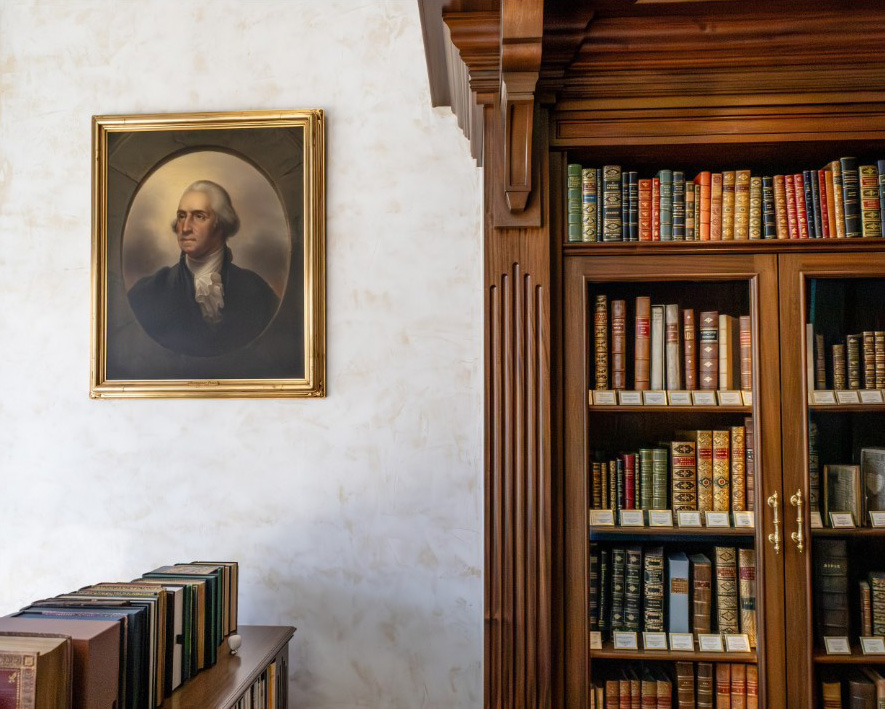
The 250th anniversary of American independence has occasioned a great deal of public attention to the documents and figures of the founding era, and rightly so. At Raptis Rare Books we are observing the moment with our own America 250 exhibition, gathering works that bear directly on the story the country is celebrating – a first edition of The Federalist Papers, a sixteen-page autograph letter of John Adams, documents signed by Jefferson, Hamilton, Hancock, and Lincoln, the Rembrandt Peale portrait of George Washington, and the rare association volumes that connect us most tangibly to the men who built the republic.

That work and the work of the bindery belong to the same enterprise. Both depend on the conviction that the past is not a sealed chapter but a physical inheritance, transmitted in objects that have to be cared for if they are to be passed along. A document signed by Hamilton needs to be housed properly. A first edition in the original boards needs to be conserved, not rebound. A great library, public or private, depends on a tradition of skilled hands that knows how to keep books bound, lettered, boxed, and intact across the generations. The PBS special grasps this in a way that documentary television rarely does, and it is no accident that the program’s portrait of America at 250 turns, repeatedly, toward the workshops where the country’s craft traditions are still being practiced.

bookbinding at the Harcourt Bindery


What the Cameras Found

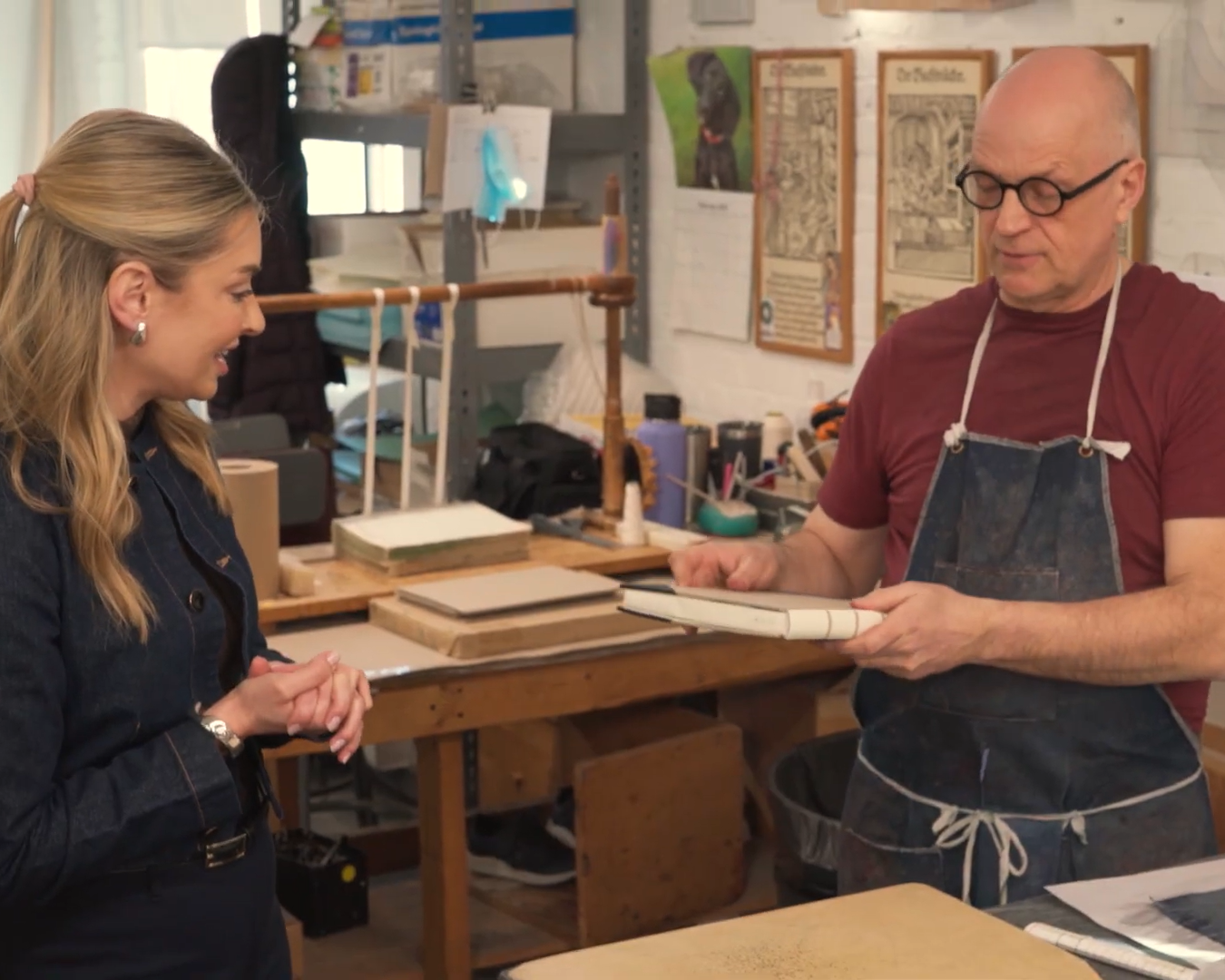
Visitors to the Harcourt Bindery, whether on television or in person, find a working shop rather than a stage set. A small team of binders works in concentrated quiet on the tables along the windows; a wall of leathers in every weight and hue stands ready for the next commission; the smells of beeswax, paste, and tanned hide carry across the room as they have for more than a hundred years. Some of the books in process are humble – the kind of municipal ledger that, by executive order, must still be hand-bound and shelved in a county clerk’s office. Others are rare editions destined to sit beside fires and behind glass, finished in goatskin, lettered in gold, and protected in custom clamshell boxes built to outlast every reader who will ever open them.

What unites the work is that every book leaves the shop better protected, better presented, and better positioned to survive than it arrived. That is the answer the bindery offers to the question PBS’s series asks. America at 250 looks, in Made With Love, less like a slogan than a workshop, and the workshops are still here.


We are grateful to PBS, to Symbio Studios, and to the producers of Celebrating America 250: Made With Love for turning a national audience toward Charlestown, and for understanding that the binder’s bench is one of the places where the founding traditions of the country are kept alive. The work continues, one book at a time.


More blogs on Harcourt Bindery:

Inside the Ancient Art of Bookbinding: How Harcourt Bindery Gives Rare Books New Life.

In the News: Harcourt Bindery Featured on CBS News.

In the News: Harcourt Book Bindery in Charlestown Preserving Craft for 125 Years.


Explore more of Harcourt Bindery

Browse our current collection of books finely bound by the Harcourt Bindery

Mark Rivera Book Signing.

On May 14, 2026, Raptis Rare Books and Churchill Cigar Company had the extraordinary privilege of hosting legendary musician, musical director, and rock icon Mark Rivera for an unforgettable evening centered around his memoir, Sideman: In Pursuit of the Next Gig.

The event brought together music lovers, book collectors, cigar aficionados, and members of the Palm Beach community for a night that celebrated storytelling in every form: through books, through music, and through the shared experiences that shape a creative life.

Best known as longtime saxophonist for Billy Joel, Rivera’s remarkable career spans decades and reads almost like a backstage map of Rock & Roll history itself. In addition to serving as Musical Director for Ringo Starr and His All Starr Band, Rivera has performed alongside an astonishing roster of legendary artists, including John Lennon, Paul McCartney, Elton John, Simon & Garfunkel, Foreigner, Peter Frampton, Tony Bennett, Joe Walsh, Hall & Oates, and Peter Gabriel.

Darren Rovell, Mark Rivera, Ted Leonsis, Matthew Raptis, Lou Nanne at Churchill Cigar Company on Worth Avenue
Darren Rovell, Mark Rivera, Ted Leonsis, Matthew Raptis, Lou Nanne at Churchill Cigar Company on Worth Avenue in Palm Beach


Yet despite a résumé glittering with musical history, what made the evening truly special was Rivera’s humility, humor, and generosity in sharing the stories behind the spotlight.

Guests gathered first inside Raptis Rare Books, surrounded by shelves filled with literary treasures and centuries of preserved history. It felt especially fitting to host Rivera in a setting dedicated to storytelling and preservation. His memoir, Sideman: In Pursuit of the Next Gig, offers readers an intimate look behind the curtain of the music industry, chronicling not only career highlights but also the persistence, relationships, adaptability, and passion required to sustain a life in music.

Throughout the conversation, Rivera shared personal stories from the road, reflections on working with some of music’s most influential artists, and insights into the often-unseen role of the “sideman” in shaping legendary performances. There was an intimacy to the evening that larger concert venues could never replicate. Guests were not merely spectators; they became part of the conversation.


Mark Rivera Sideman at Raptis Rare Books


Mark Rivera Raptis Rare Books
Sideman Mark Rivera at Raptis Rare Books

Ted Leonisis, Chip Kidd, and Matthew Raptis at Churchill Cigar Company in Palm Beach


Matthew Raptis, Ted Leonsis, and Steve Pagliuca at Churchill Cigar Company on Worth Avenue in Palm Beach


Mark Rivera at Raptis Rare Books

As the night continued next door at Churchill Cigar Company, the atmosphere shifted into something cinematic. Cigars glowed beneath warm lighting while conversation and laughter drifted through the lounge. Music and cigars share a certain timeless rhythm. Both invite people to slow down, savor the moment, and appreciate craftsmanship in a world increasingly built for speed and distraction.

One of the most rewarding parts of evenings like this is watching different worlds converge. Rare books, live music, hospitality, and community all intersected beautifully throughout the night. Conversations sparked between strangers. Stories were exchanged. New friendships formed. For a few hours, Worth Avenue felt less like a destination and more like an old-world salon where culture, artistry, and human connection still mattered deeply.

At Raptis Rare Books and Churchill Cigar Company, our hope has always been to create more than retail spaces. We aspire to cultivate gathering places where people encounter beauty, inspiration, and meaningful experiences. Whether through a first edition book, a memorable conversation, an espresso shared with friends, or an evening spent listening to stories from a legendary musician, we believe these moments enrich life in profound ways.

We are deeply grateful to everyone who attended and helped make the evening so memorable, and especially to Mark Rivera for sharing his extraordinary stories, music, and time with us.

Some evenings fade quickly. Others become part of the story.

Mark Rivera at Churchill Cigar Company Palm Beach
Mark Rivera at Churchill Cigar Company in Palm Beach


Purchase your copy of Sideman: in Pursuit of the Next Gig here. 

Purple State of Mind: Fox News Commentator Dana Perino Launches her New Romance Book in Palm Beach.


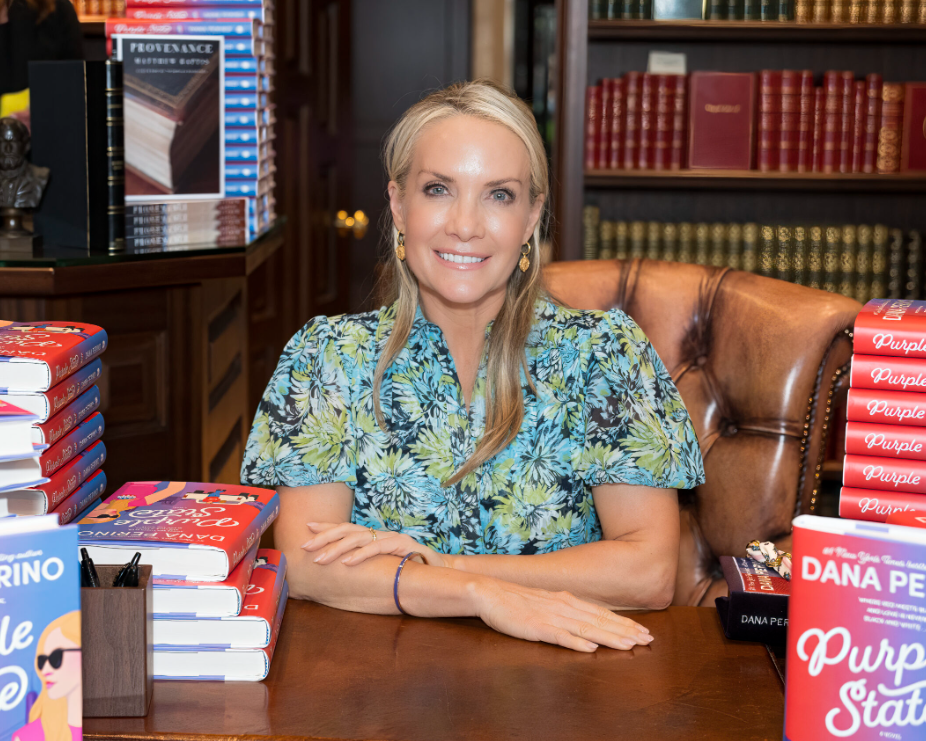
Inside Raptis Rare Book Store on Worth Avenue, stacks of FOX News Commentator Dana Perino’s new book, “Purple State,” sit waiting for the hundreds of eager fans in line at the author’s recent book signing. The books’ bright pink and purple covers brought a splash of color to the bookstore’s old-world interior, where classic dark wood bookshelves are lined with some of the world’s rarest books. The scene is a study in contrasts, but then so too is the fact that the co-anchor of hard-hitting news shows “The Five” and “America’s Newsroom” has just released a romance novel.

Contrasts is exactly the point, says Perino, when asked the obvious question of why a news personality would want to write a romance novel. “The story is about three young women from Manhattan going through their quarter-life crisis. They are not where they want to be in life,” says Perino. When one of the women, Dot, gets an opportunity to work on a Democratic campaign in a swing district in Wisconsin for a year, her friends join her. Dating in a “Purple State” means deciding if romance and politics can co-exist. “A lot of young women would never consider dating someone on the other side, but I think people are not as polarized as we think,” says Perino. “I wanted to encourage readers to wear their politics lightly. Ultimately, the goal is to find joy in life.”


The book is Perino’s fifth book and her first work of fiction. In her previous non-fiction books, she has focused on sharing life lessons and advice aimed at young women. “I do a lot of mentoring, giving advice and guidance to young people,” says Perino. Although fiction, “Purple State” also offers life lessons through the experiences of the three main characters. The challenges the trio of women face in the novel are the same ones Perino often hears from the young people she mentors. “They are young women in their mid-twenties who feel like their dreams are not coming true,” says Perino. “I wanted the story of girlhood and friendships to be realistic. I was very intentional.”

Perino, who just turned 54, has built a successful, high-profile career, yet she recalls feeling unsure of her future when she was young. “When I was 25, I worried a lot,” she says. “If I could go back in time, I would tell myself not to worry so much.” Perino’s feelings as a young woman starting her career, along with her small-town upbringing, helped her bring her own unique voice to “Purple State.”

Born in Wyoming, Perino grew up in Colorado. As a child, she spent a lot of time on her family’s ranch in Wyoming and credits her appreciation for traditional values to her experiences in rural ranch life. She graduated from Colorado State University Pueblo with a degree in Mass Communications and went on to earn a master’s degree in Public Affairs Reporting from the University of Illinois Springfield. She launched a career in politics. After serving as Deputy Press Secretary under President George W. Bush, in 2007, she succeeded White House Press Secretary Tony Snow and held the position until the end of the Bush administration in 2009. Next, she became a political commentator on FOX News. Today, she is co-anchor of the network’s morning news show “America’s Newsroom” and co-host on “The Five.” She also hosts a podcast, “Perino on Politics.”

While authoring a rom-com novel may seem like an odd path for a political commentator, Perino is an avid reader in all genres, including romance. “I love fiction and I am a voracious reader,” she says. “It’s not unusual for me to be reading five books at a time.” Perino also has her own love story of how she met her husband, Peter McMahon. “My mantra is ‘choosing to be loved is not a career-limiting decision,’” she says.

Perino and McMahon met on an airplane in 1997. The chemistry was there, but Perino saw serious roadblocks in the relationship. “He is 18 years older than me and he lived in England. I had a pretty good career trajectory at the time,” says Perino. “There were 100 reasons why I shouldn’t be with my husband.” She shared her concerns with a friend who gave her a piece of advice that changed her life. “She said: ‘Don’t give up on this chance to be loved. It might not ever happen again,’” recalls Perino. She decided to take the chance, and the couple has been together ever since.

The decision to take chances in life is one of the themes of “Purple State.” “Life is a decision-making experience,” says Perino. “In the book, I am so proud of Dot for the difficult decisions she makes.”

While the book has only been out a short time, Perino says she is getting good feedback from readers, young and old. “Mothers and daughters are reading it, and the moms are telling me: ‘I remember what it was like to be young and in love,’” she says.

If the number of people who waited in line for Perino’s Palm Beach book signing event is any indication, “Purple State” may hit the bestseller list. “The event was highly successful, with more than 300 guests,” says Adrienne Raptis, owner of Raptis Rare Books. “It was a pleasure to host Dana, and attendees were enthusiastic about meeting her. The strong turnout and the lively interaction between the author and guests were highlights for us.”

Founded in 2000, Raptis Rare Books specializes in fine first editions, signed and inscribed books, and landmark books in all fields. “Purple State” is not the type of book shoppers would typically find on the bookshelves in the antiquarian bookstore, however Raptis says hosting an author of Perino’s stature was the perfect opportunity. “A personal friend of Dana Perino approached us about hosting a book signing in our gallery, and we were delighted to do it,” says Raptis. “Dana’s distinguished background, including her service as the 26th and second female White House Press Secretary under President George W. Bush, made her an especially compelling guest.” Earlier this month, Raptis Rare Books hosted a book signing with another FOX News commentator — Chief Political Anchor Bret Baier — who just released his new book “The Case for America.” Raptis is planning similar events in the future.

As for Perino, she is enjoying a whirlwind book tour where local bookstores, just like the fictional store featured in “Purple State,” are getting in on the fun. At a recent event at the Little Point Bookshop in Point Pleasant Beach, New Jersey, guests enjoyed food and drinks inspired by the places and characters in the book, as well as a book discussion with Perino. Asked if she has another book on the horizon, Perino hints that something new is in the works. “You never know what’s next,” she laughs.


In The KNOW:

Dana Perino

Raptis Rare Books

Inside the Ancient Art of Bookbinding: How Harcourt Bindery Gives Rare Books New Life.

In April 2026, the CBS affiliate WBZ-TV turned its cameras on a subject that might seem, at first glance, an unlikely candidate for a lifestyle feature: a modest workshop in Charlestown, Massachusetts, where books are still sewn, rounded, backed, and tooled entirely by hand. The segment, produced for the station’s New England Living series and reported by Rachel Holt, carried a quietly provocative title – Bookbinding finds new life at Harcourt Bindery in Charlestown – and it found, in a craft most people assume long extinct, something unexpectedly current.

That a television feature should describe an ancient art as finding “new life” is itself worth pausing over. We live in an age in which the word “book” increasingly denotes a file rather than an object – something summoned to a screen, stored in a cloud, and never touched. Against that backdrop, the Harcourt Bindery is not a museum piece but a working enterprise, and the CBS report captured precisely why it endures. Visiting the studio, Holt observed how, at Harcourt, a deep respect for history drives a passion for perfection. That single phrase explains a great deal about why hand bookbinding still matters, and why the people who care about books most are not abandoning the physical object but returning to it.

Hand bookbinding evolved alongside human communication, transitioning from scrolls and early stitched codices in the ancient world to the revered artisan craft still practiced today. The core techniques established thousands of years ago remain foundational to modern book construction.


A Craft as Old as the Book Itself

Bookbinding is not an accessory to the history of the book. It is, in a real sense, what made the book possible. For most of antiquity, the written word traveled on the scroll, a continuous roll of papyrus that had to be unwound to be read and rewound to be stored. The transformation came with the codex: gatherings of folded leaves, sewn together along one edge and protected by covers. This was the form that allowed a reader to turn directly to a passage, to annotate margins, to hold an entire text in one hand. Nearly every book printed since has been, structurally, a descendant of that innovation.


Through the medieval centuries, the binding of books was the work of monastic scriptoria, where leaves of vellum were sewn onto raised cords, laced into heavy wooden boards, and covered in tanned leather. Such bindings were built to survive. The clasps that held them shut were not decoration but engineering, designed to keep the parchment from drawing damp and warping. When the printing press arrived in the fifteenth century and the number of books multiplied beyond anything the medieval world had imagined, the binder’s trade multiplied with it. Binding became a profession in its own right, organized into guilds, with distinct national styles and a vocabulary of decoration – gold tooling, blind stamping, marbled papers – that a knowledgeable eye can still read like a signature.

The decisive break came in the nineteenth century. Industrialization introduced the publisher’s case binding: covers produced separately from the text block, mass-manufactured in cloth, and affixed by machine. For the first time, books arrived from the publisher already bound and ready for sale, rather than being sold as loose sheets for the purchaser to have bound to taste. This was a democratizing change, and it is the reason the “original cloth” of a Victorian first edition is so significant to collectors today. But it also meant that hand binding, once universal, became a specialized craft – reserved for fine editions, for rebinding treasured texts, and for the conservation of books whose value warranted individual attention. That is the tradition the Harcourt Bindery has carried, without interruption, for more than a century.


First Editions of Each Novel By William Faulkner; Finely Bound by The Harcourt Bindery


Charlestown’s Living Workshop

The Harcourt Bindery has been binding books by hand since 1900. Housed today in a repurposed Charlestown warehouse, it is widely regarded as the oldest traditional hand bookbindery in the United States, and among the largest devoted exclusively to fine binding done by hand rather than by machine. In 2025 the firm marked its 125th anniversary – a span that reaches from the age of the horse-drawn delivery wagon to the age of the e-reader, and through which the essential motions of the craft have changed remarkably little.

Walk into the workshop and the first thing one notices is the near-total absence of the digital. The tools on the benches are, in many cases, as old as the company itself. Type is set by hand for the gold-stamped lettering of a spine. Leather is pared with a knife to a precise thinness so that it will turn cleanly over a board. Sewing frames, finishing presses, and brass tools worn smooth by a century of use do the work that no machine has ever done as well. The bindery’s craftspeople learn their trade slowly, often through apprenticeship and through programs such as Boston’s North Bennet Street School, one of the few institutions in the country still teaching the discipline at a professional level. Skilled binders are scarce, and each one represents years of accumulated judgment that cannot be downloaded or automated.

For Raptis Rare Books, this is not a distant subject. In 2022, Adrienne and Matthew Raptis acquired the Harcourt Bindery, drawn by a conviction that the preservation of bookbinding as a living craft is inseparable from the work of dealing in rare books at all. A first edition is an artifact; keeping it sound, and sometimes giving it the binding its importance deserves, requires hands that know how. The CBS feature, in turning its attention to Charlestown, documented something we see every day: that the future of the physical book depends on a small number of people willing to keep an old skill alive.


Explore more of Harcourt Bindery

Browse our current collection of books finely bound by the Harcourt Bindery

Celebrating 250 Years of America: Raptis Rare Books Commemorates the Anniversary of the USA.

Raptis Rare Books was recently featured in the May 10, 2026 issue of Florida Weekly: Celebrating 250 Years of America – Florida Weekly

RAPTIS RARE BOOKS / COURTESY PHOTOS

History comes to life this season on Worth Avenue, where Raptis Rare Books will mark the 250th anniversary of the United States with a remarkable exhibition of founding-era treasures.

Set within the gallery’s refined Palm Beach space, the exhibition offers a rare opportunity to encounter the documents, ideas and figures that shaped a nation. At its center is a volume from George Washington’s personal library, complete with his ownership signature—a tangible link to the country’s first leader. Nearby, visitors will find a striking portrait of Washington by Rembrandt Peale.

The intellectual backbone of the young republic is equally represented. A first edition of “The Federalist Papers” and John Locke’s “Two Treatises of Government” highlight the philosophical underpinnings that guided the drafting of the Declaration of Independence and the Constitution.

The exhibition deepens with personal artifacts, including a rare 16-page autograph letter from John Adams, as well as documents signed by Thomas Jefferson, Alexander Hamilton, John Hancock and Abraham Lincoln.

Rather than retelling history, the collection presents it through primary sources that reveal the everyday workings of a fledgling nation. For collectors, historians and the simply curious, it’s a rare chance to stand face-to-face with the origins of America—one page at a time.

The exhibition runs through May 22 at Raptis Rare Books, 329 Worth Avenue, Palm Beach.  For more, visit raptisrarebooks.com.

Malcare WordPress Security