
CARTER, Rubin "Hurricane" [Bob Dylan].
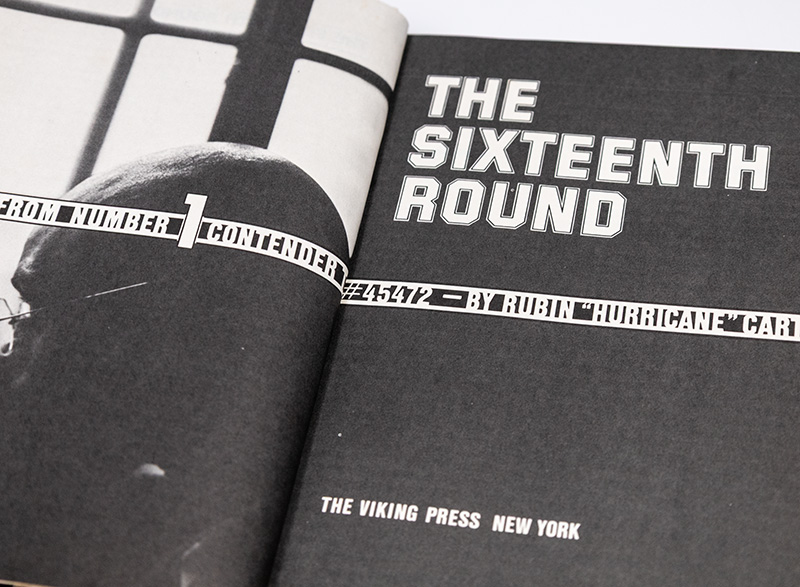
The Sixteenth Round: From Number 1 Contender to #45472.
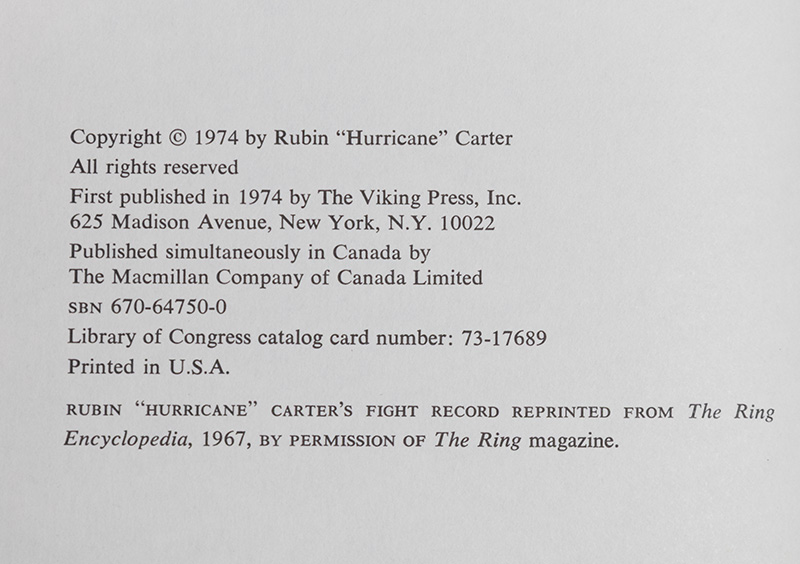
New York: Viking Press , 1974.
$8,200.00
In Stock
Item Number: RRB-151553
+$500
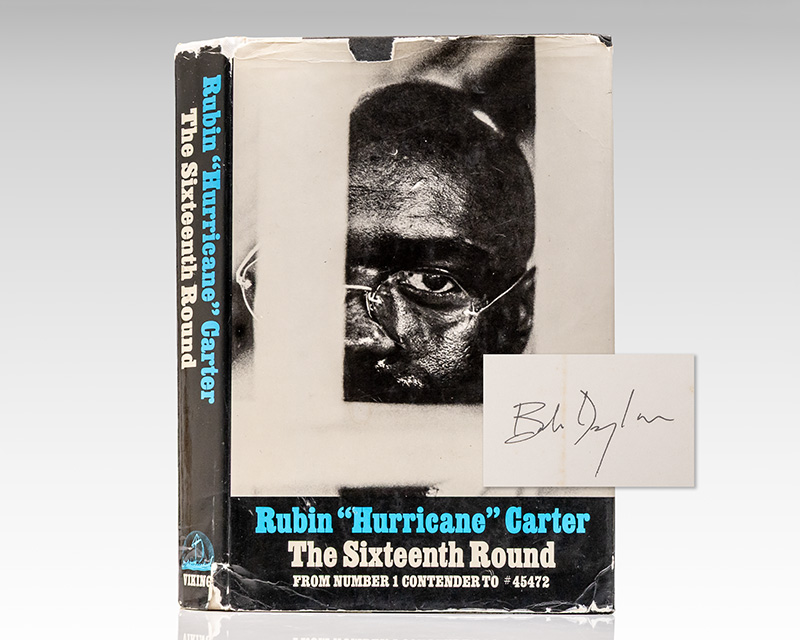
First Edition of Rubin "Hurricane" Carter's The Sixteenth Round; Signed by Bob Dylan
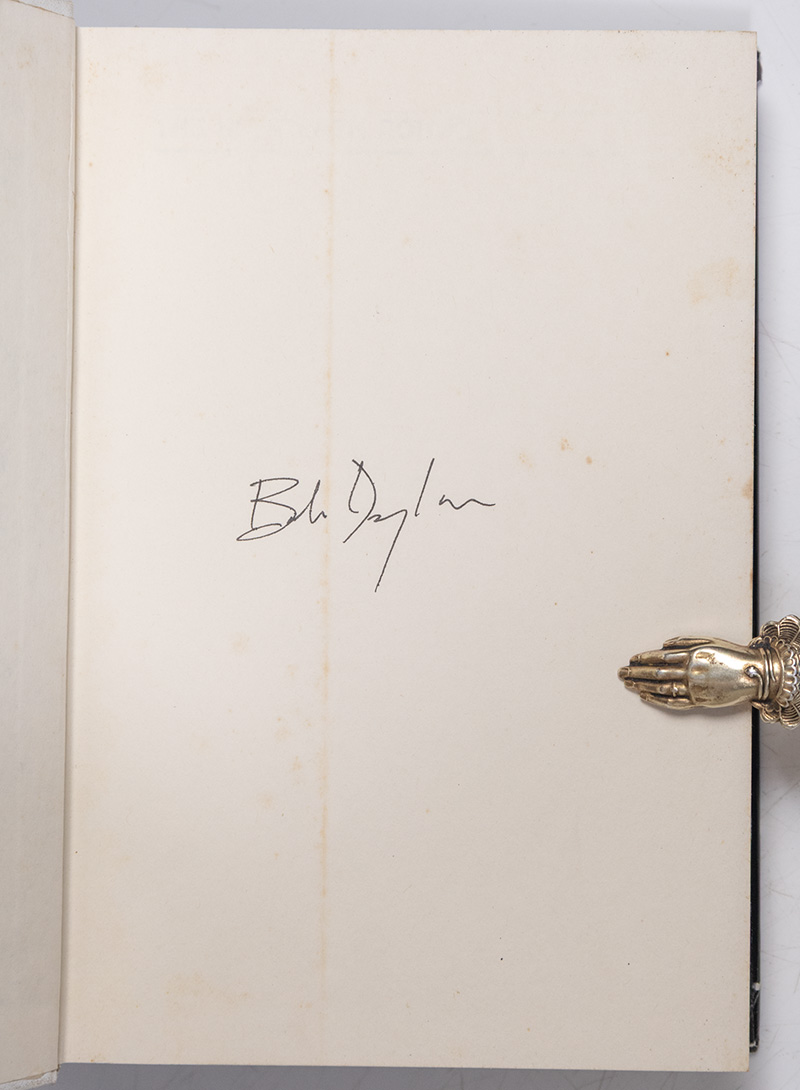
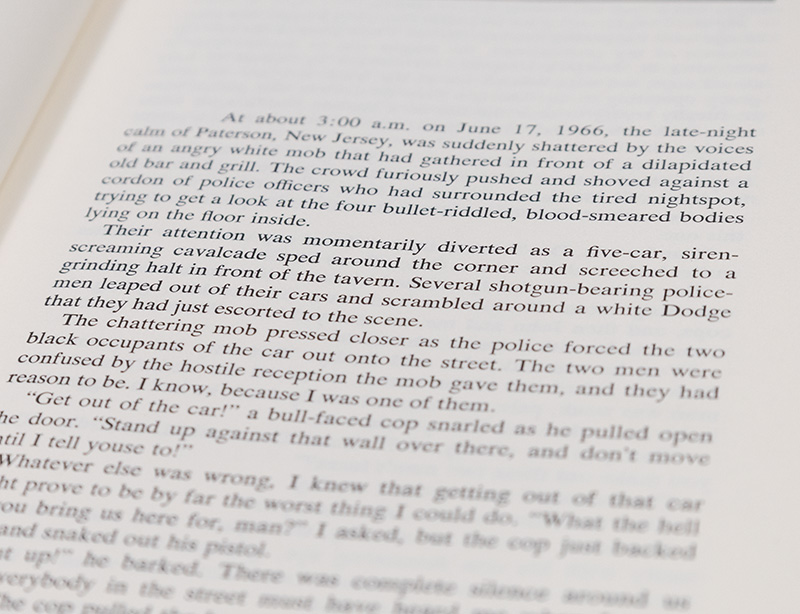
First edition of this exceedingly powerful account of 'Hurricane' Carter's battle with the American legal system. Octavo, original half cloth. Boldly signed by Bob Dylan on the front free endpaper. Bob Dylan co-wrote "Hurricane" with Jacques Levy, a protest song, that was released as a single in November 1975. It was also included on Dylan's 1976 album Desire. The song is about the imprisonment of boxer Rubin "Hurricane" Carter. It compiles acts of racism and profiling against Carter, which Dylan describes as leading to a false trial and conviction. Carter was wrongfully convicted of the murder of three white victims of a bar in Paterson, New Jersey, a court decision that resulted in the loss of almost 20 years of Carter's life to imprisonment. On June 17, 1966 at approximately 2:30 a.m., two men had entered the Lafayette Bar and Grill in Paterson and began shooting, killing the bartender and a customer, and wounding two others, only one of which would survive. When questioned, both witnesses told police the shooters had been black males escaping in a white vehicle, and ten minutes later, a police cruiser stopped Carter and John Artis, a 19-year-old student athlete with no criminal record, who had just left the Nite Spot bar in a rental car. Carter was in the back, with Artis driving, and a third man, John Royster, in the passenger seat. The police recognized Carter, a well-known and controversial local figure, but let him go, only to stop him and Artis later in the night after dropping off Royster. Two eyewitnesses, Alfred Bello and Arthur Bradley, who were performing a theft at the time, had provided a description of the getaway car, which matched that of the rental, and positively identified the Carter and Artis as the men driving; however, inconsistencies in the evidence given by the eyewitnesses and the addition of witnesses who confirmed the two were still in the Nite Spot at the time of the shooting would render those descriptions meaningless. Despite this, a lack of forensic evidence, and last-minute changes in the prosecution's reports, the all-white jury convicted both men of first-degree murder, with a recommendation of mercy, so that they were not sentenced to death. After a trial based on racial profiling, witness reports based on ulterior motives, and general mismanagement on the part of law enforcement, Bello and Bradley recanted their identifications of Carter and Artis, and public outcry for a retrial rose, with Boxer Muhammad Ali lending his support to the campaign and Bob Dylan co-writing and performing the song 'Hurricane,' which declared Carter's innocence. During the recantation hearing, defense attorneys also argued that the witnesses had lied during the 1967 trial, telling the jurors that they had made only certain narrow, limited deals with prosecutors in exchange for their trial testimony. Despite the difficulties of prosecuting a ten-year-old case, Prosecutor Burrell Ives Humphreys decided to try Carter and Artis again, but the jury again found Carter and Artis guilty of the murders. In 1985, Carter's attorneys filed a petition for a writ of habeas corpus in federal court, which Judge H. Lee Sarokin of the United States District Court for the District of New Jersey granted, noting that the prosecution had been "predicated upon an appeal to racism rather than reason, and concealment rather than disclosure," and Carter was freed without bail. Prosecutors appealed Sarokin's ruling to the Third Circuit Court of Appeals and filed a motion with the court to return Carter to prison; however, the court denied this motion and upheld Sarokin's opinion. Once free, Carter became executive director of the Association in Defense of the Wrongly Convicted from 1993 until 2005. Very good in a very good dust jacket. Jacket photograph by Ray Gibson.
Written from prison and first published in 1974, The Sixteenth Round chronicles Hurricane's journey from the ring to solitary confinement. The book was his cry for help to the public, an attempt to set the record straight and force a new trial. Bob Dylan wrote his classic anthem "Hurricane" about his struggle, and Muhammad Ali and thousands of others took up his cause. The power of Carter's voice, as well as his ironic humor, makes this an eloquent, soul-stirring account of a remarkable life. "When they come to list the greatest boxers, Hurricane's name isn't likely to pop up in the Top 10. But when they come to list the greatest figures of the 20th century, he'll be alone at the peak" (The Boston Globe).
The Sixteenth Round: From Number 1 Contender to #45472.
$8,200.00
In Stock
