[LLOYD GEORGE, David].
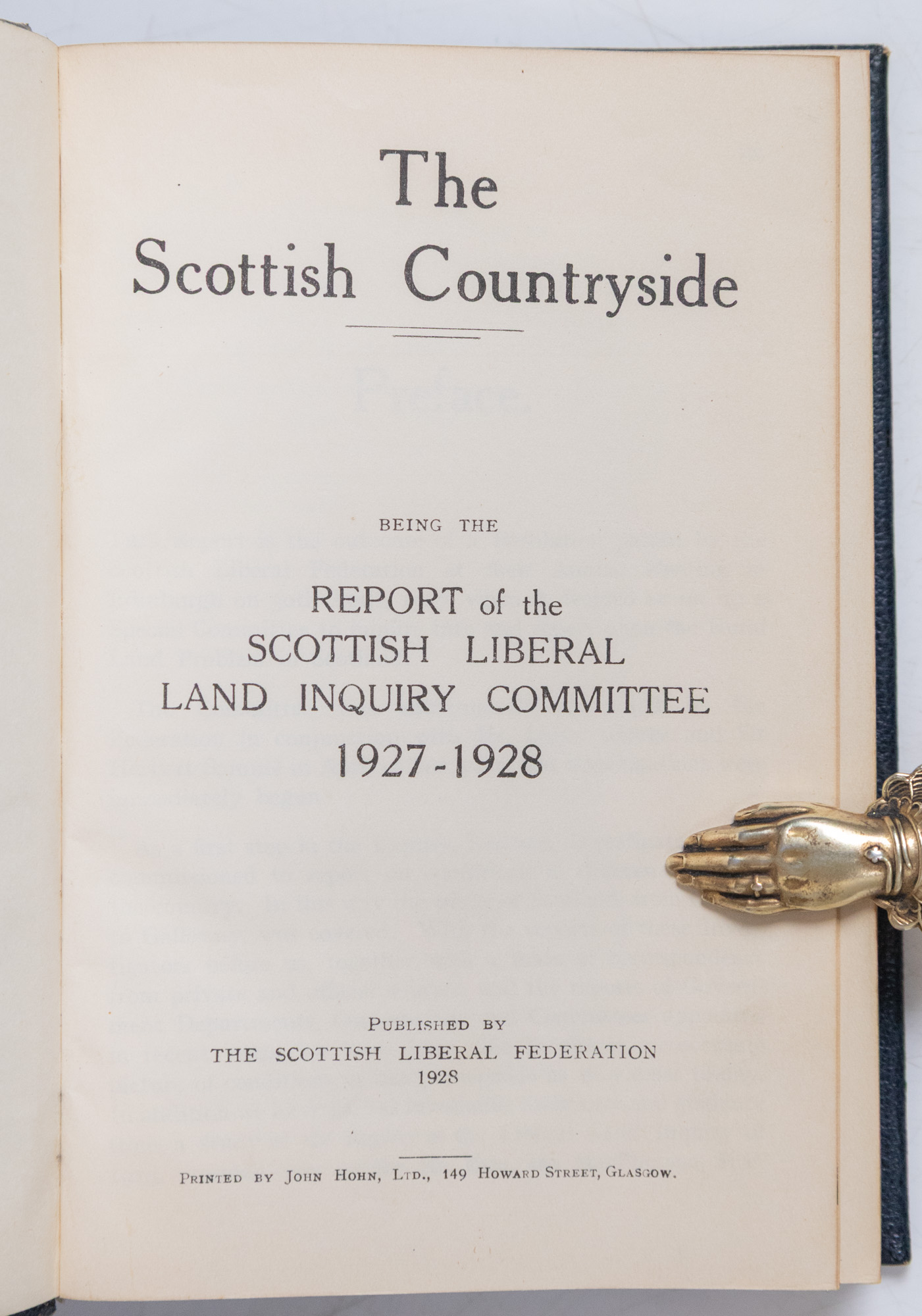
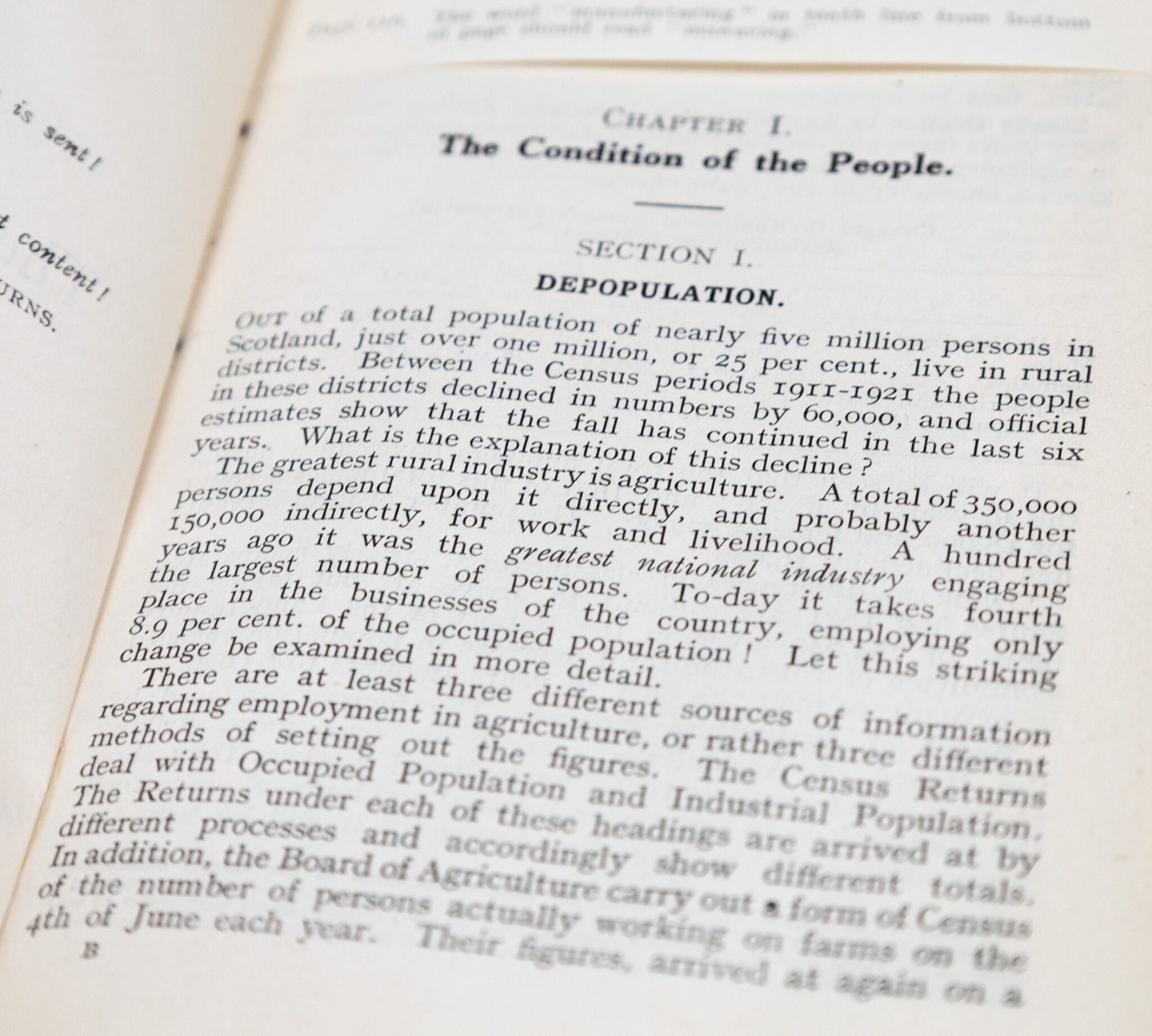
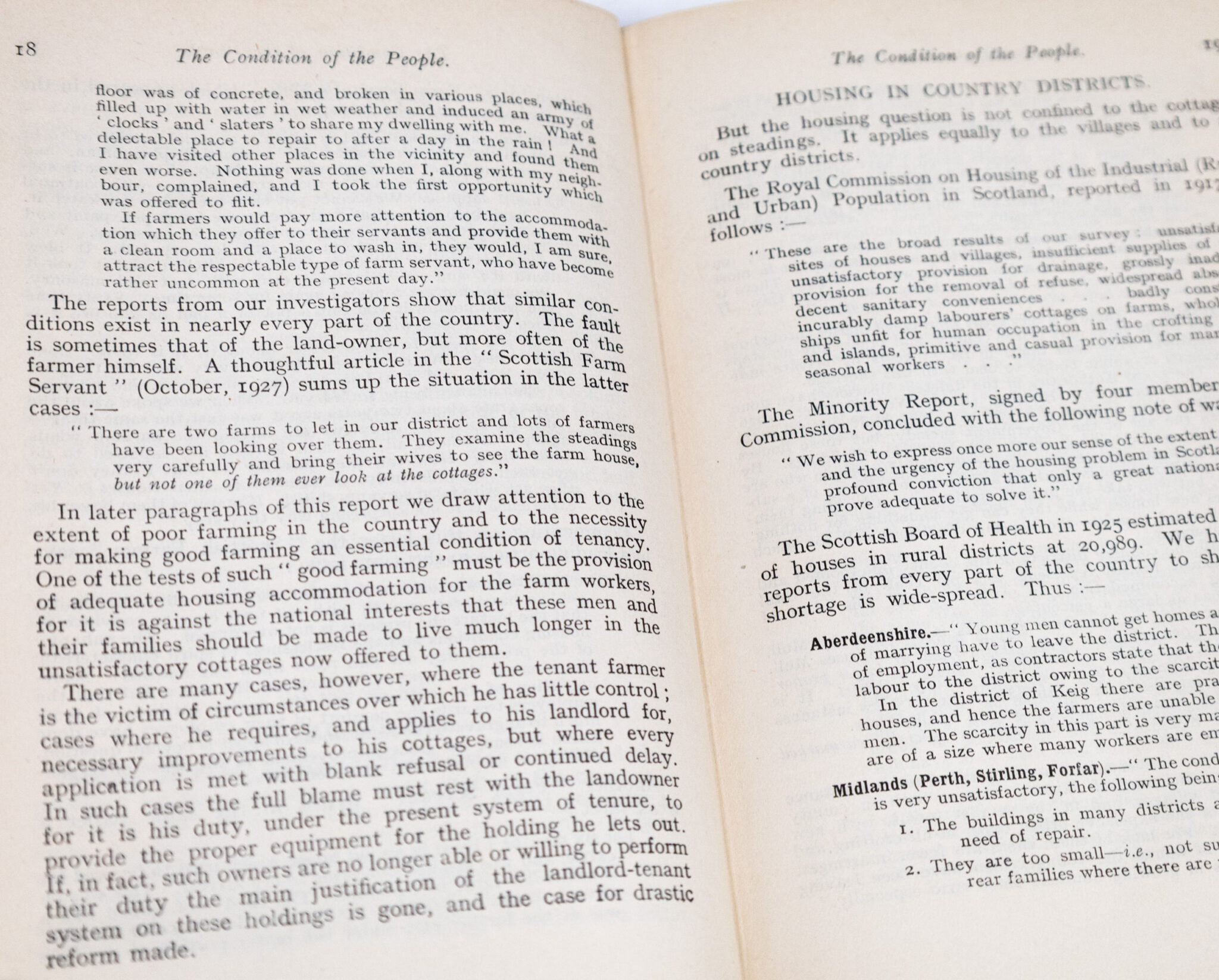
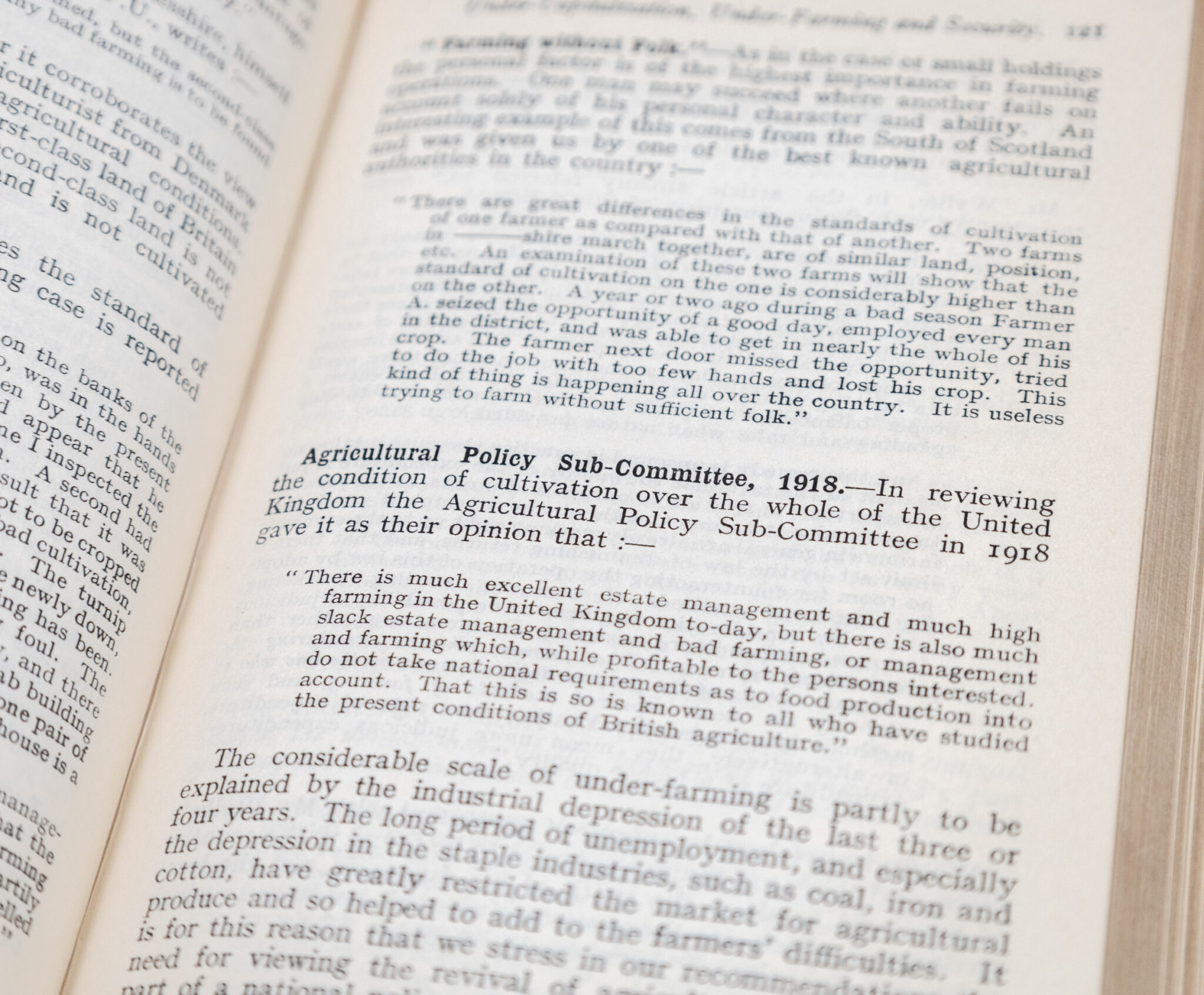
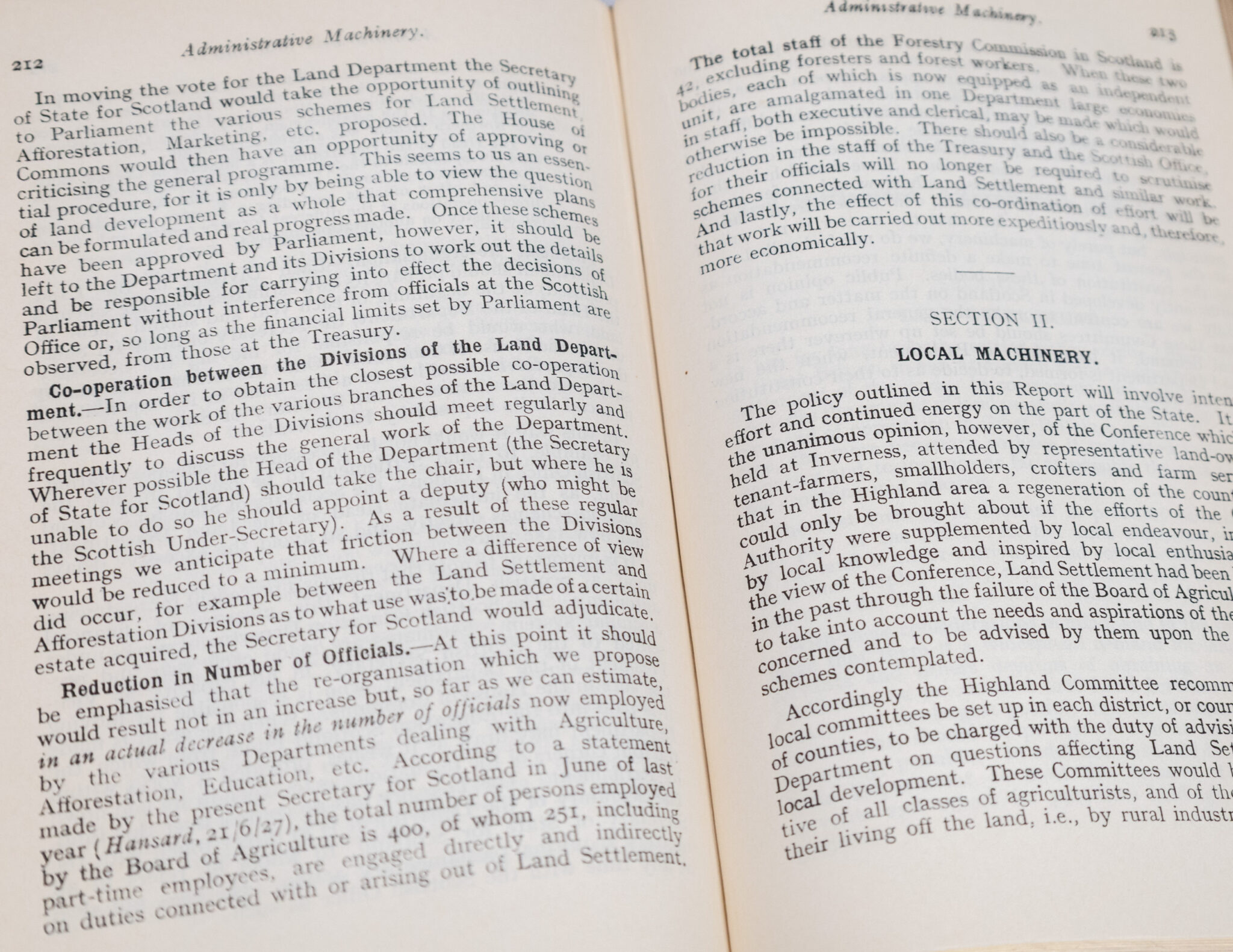
The Scottish Countryside Being the Report of the Scottish Liberal Land Inquiry Committee 1927-1928.
[Edinburgh]: Published by The Scottish Liberal Federation , 1928.
$2,500.00
In Stock
Item Number: RRB-151324
Rare First Edition of the 1928 report of the Scottish Liberal Land Inquiry Committee; Signed by founder David Lloyd George on a Presentation Bookplate
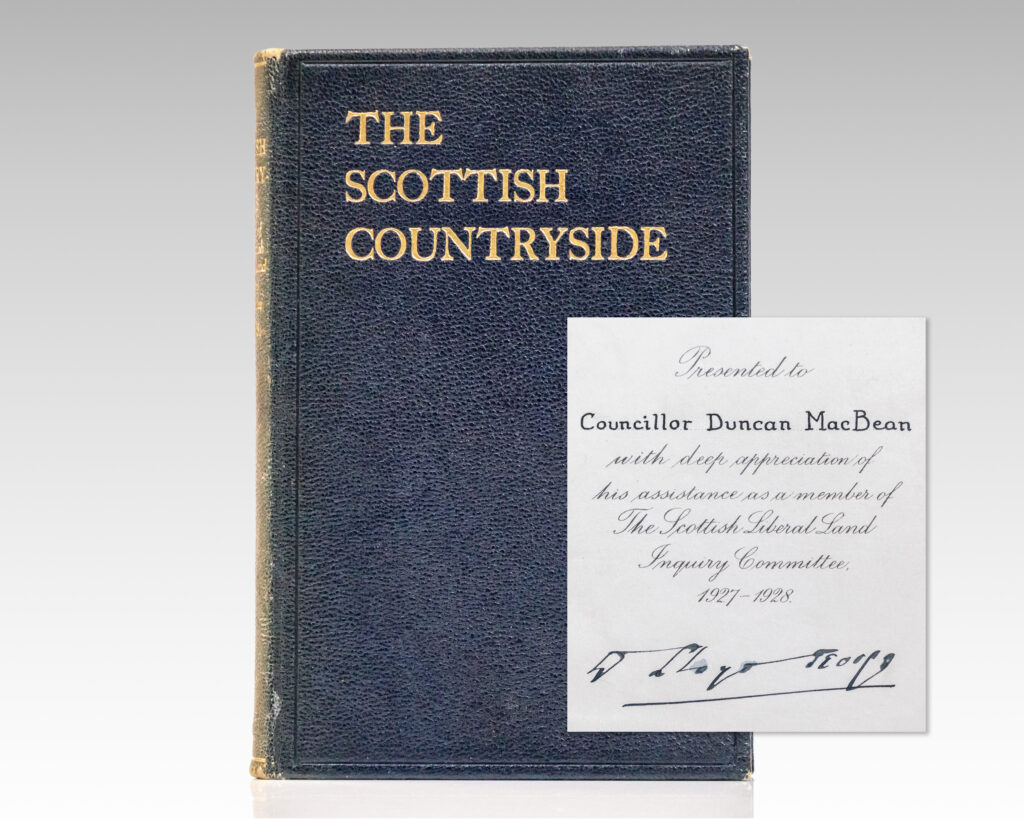
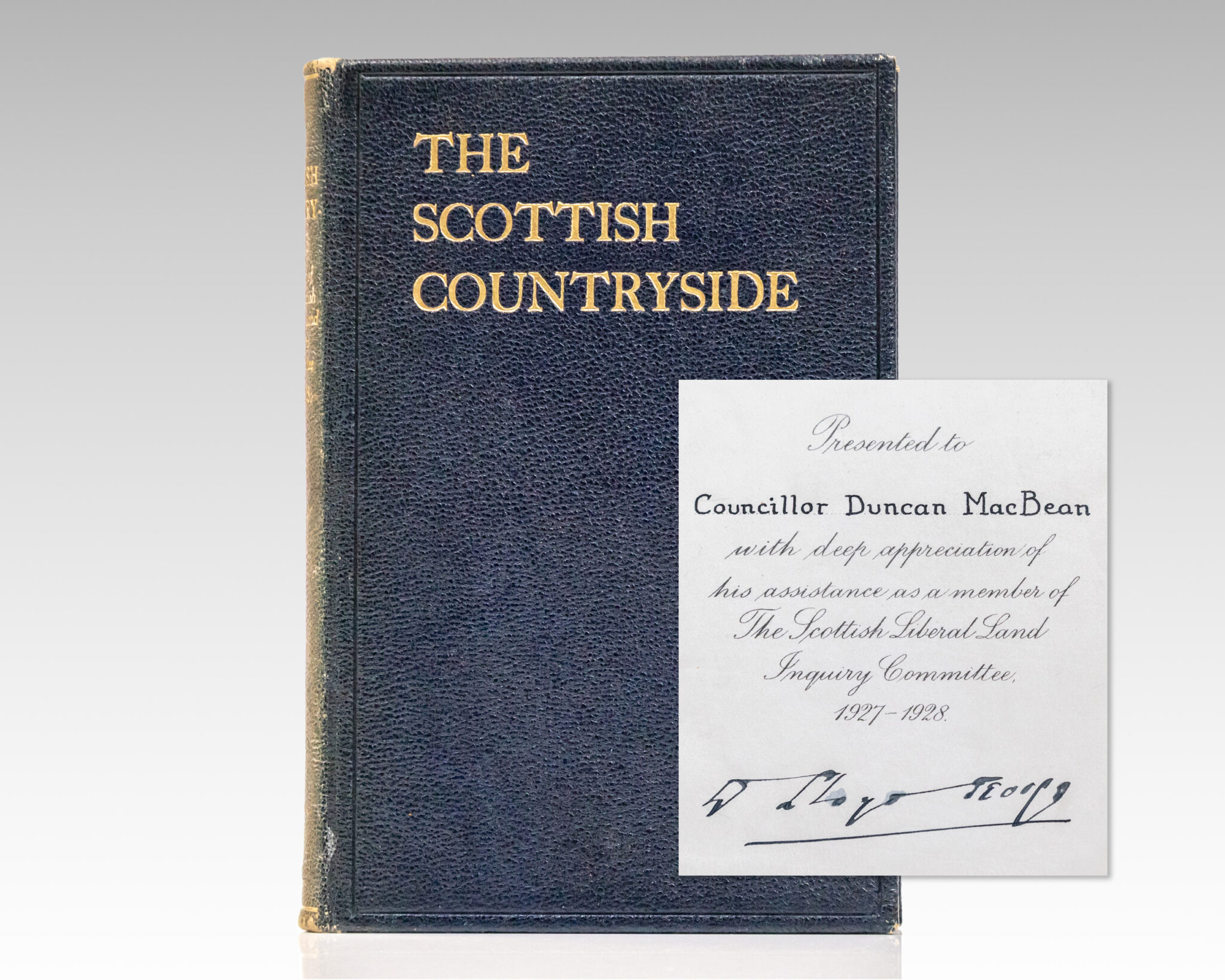
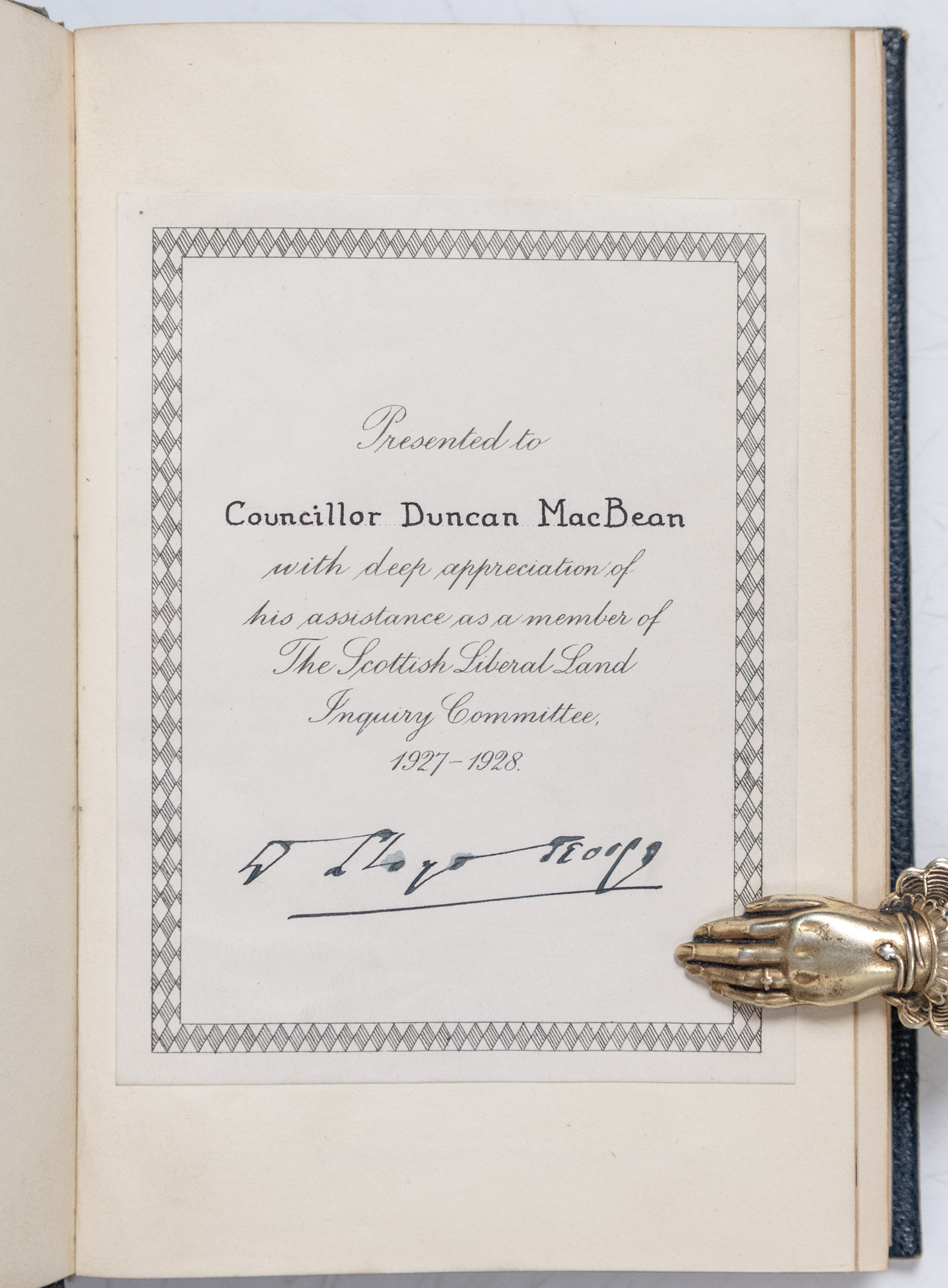
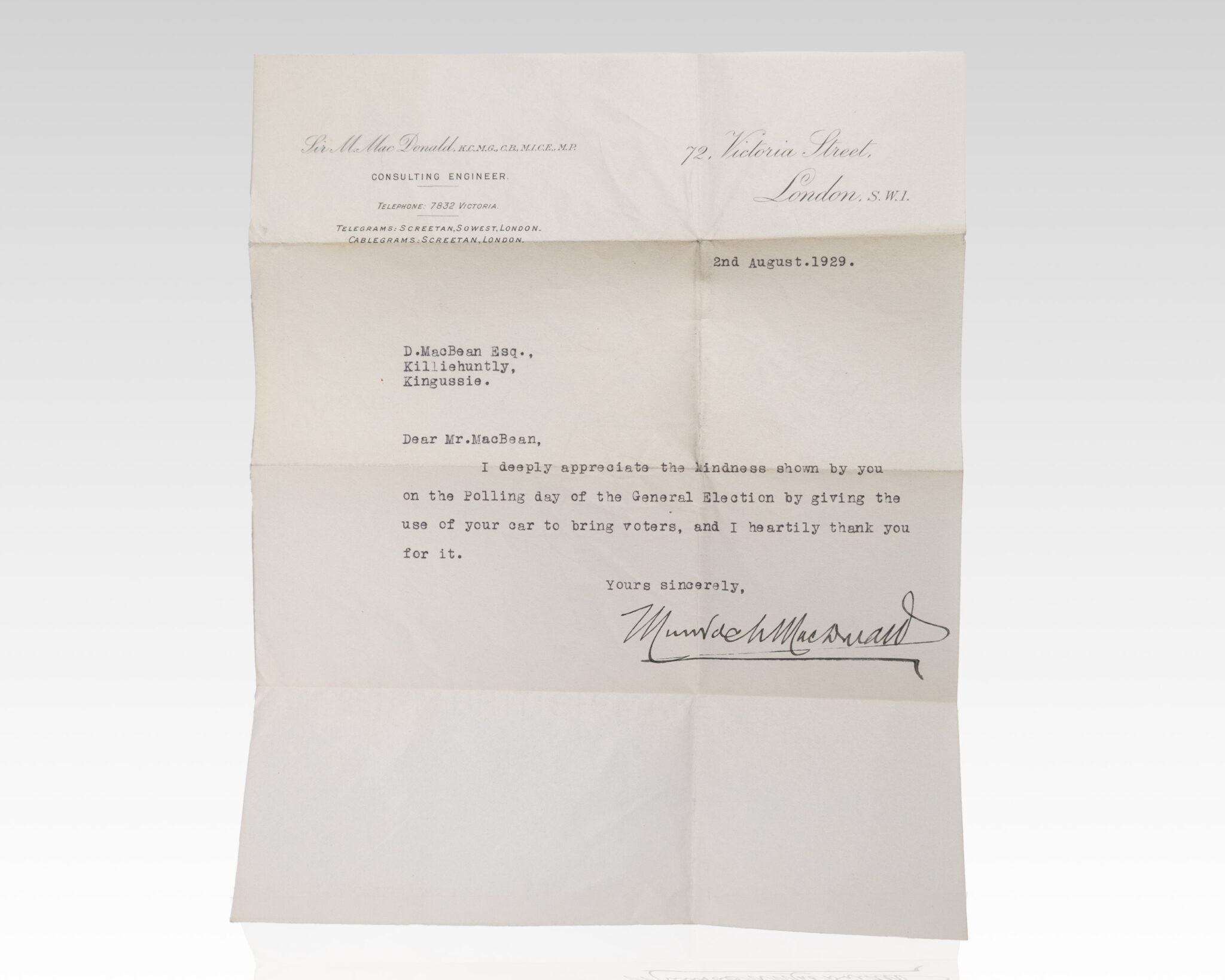
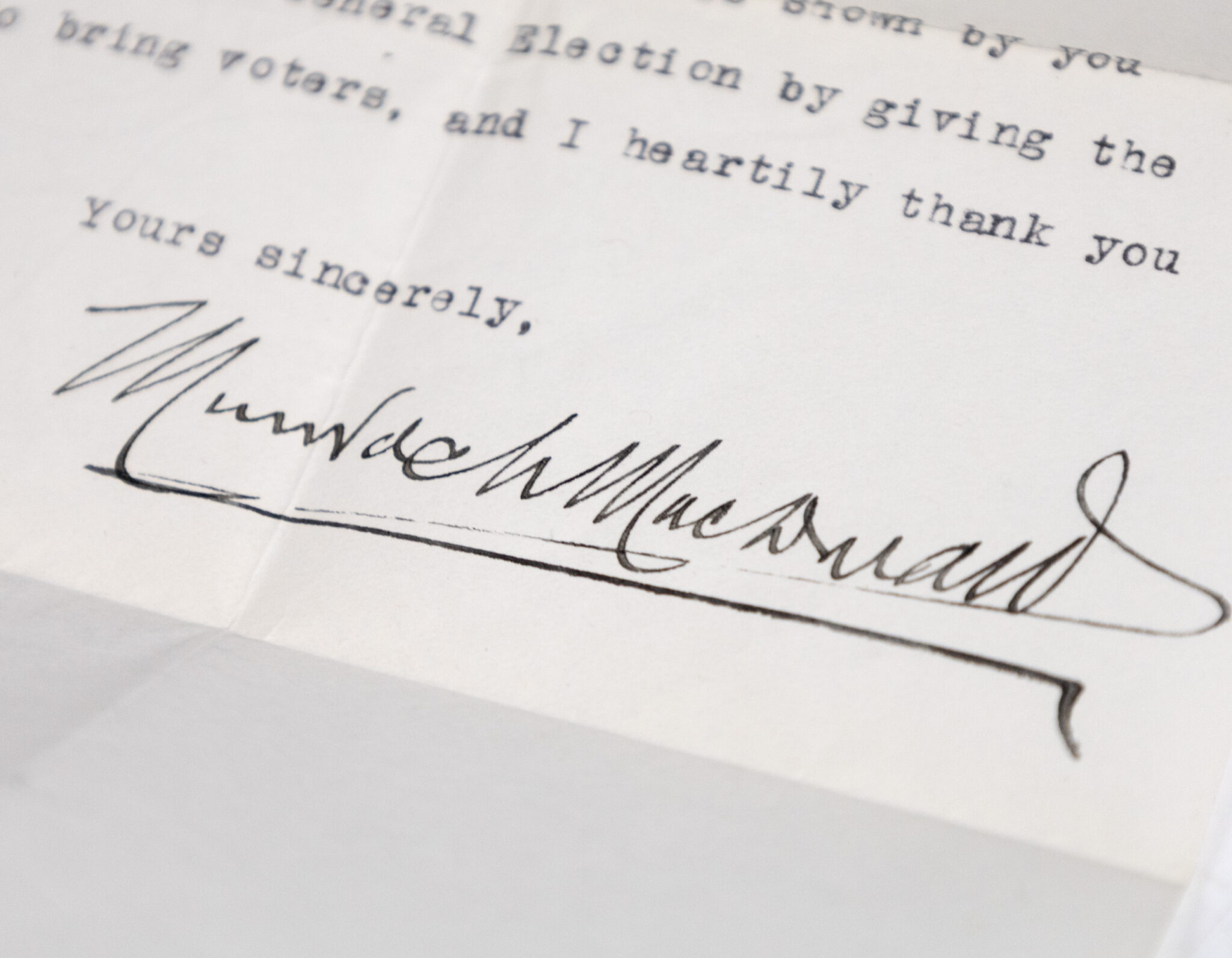
First edition of the 1928 report of the Scottish Liberal Land Inquiry Committee. Octavo, bound in full morocco with gilt titles to the spine and front panel, marbled endpapers, all edges gilt. Presentation copy, presented by David Lloyd George on a presentation bookplate affixed to the flyleaf which reads: Presented to Councillor Duncan MacBean with deep appreciation of his assistance as a member of the Scottish Liberal Land Inquiry Committee 1927-1928. "D. Lloyd George." David Lloyd George founded the Liberal Land Inquiry in 1912 as one of the most ambitious reform initiatives of the Liberal government, seeking to confront the entrenched system of land ownership that he believed lay at the root of poverty and social inequality in Britain. Building upon the reformist momentum of his People’s Budget of 1909, Lloyd George commissioned the inquiry to gather comprehensive evidence on the concentration of land in aristocratic hands and its consequences for agricultural decline, rural housing shortages, and low wages among farm laborers. With a typed letter signed by Sir Murdoch MacDonald laid in dated 2nd August 1929 which reads in part: Dear Mr. MacBean, I deeply appreciate the kindness shown by you on Polling day of the General Election by giving the use of your car to bring voters, and I heartily thank you for it. Yours sincerely, "Murdoch MacDonald." Distinguished Scottish engineer and Liberal politician Sir Murdoch MacDonald (1866–1950) was associated with the broader reform movement surrounding Lloyd George’s land campaign. His involvement in Liberal politics and support for inquiries into land ownership and rural conditions reflect the wider network of reformers engaged in the effort to address land inequality in Britain and Scotland during the early twentieth century. In near fine condition. A very unique presentation, from a pivotal moment in early twentieth-century British political history, reflecting the grassroots networks and civic participation that underpinned the Liberal reform movement of the period.
David Lloyd George (1863–1945) was one of the most influential British statesmen of the early twentieth century and a central figure in the reforming Liberal governments before and during the First World War. Rising from a modest Welsh background, he became a leading advocate of social reform, championing measures designed to alleviate poverty and modernize Britain’s economic and social systems. As Chancellor of the Exchequer, he introduced the landmark People’s Budget of 1909, which sought to fund welfare reforms through progressive taxation and challenged the political power of the landed aristocracy. Lloyd George later served as Prime Minister from 1916 to 1922, guiding Britain through the final years of the First World War and playing a prominent role in the postwar peace settlement. His career left a lasting imprint on British politics, particularly through his commitment to social reform and the expansion of the modern welfare state.
The Scottish Countryside Being the Report of the Scottish Liberal Land Inquiry Committee 1927-1928.
$2,500.00
In Stock