


KEYNES, John Maynard [J.M.] [Fannie Hurst].
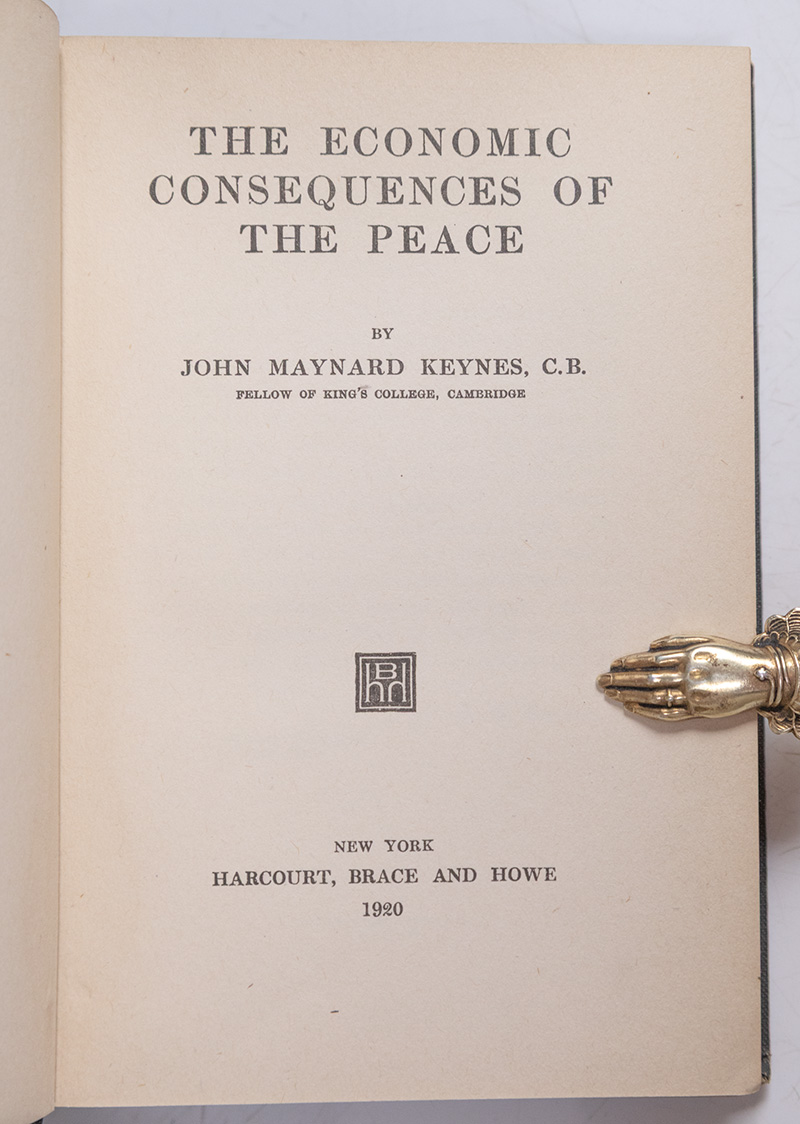
The Economic Consequences of the Peace.
New York: Harcourt, Brace and Howe , 1920.
$650.00
In Stock
Item Number: RRB-151443
+$500
First Edition of J.M. Keynes' The Economic Consequences of the Peace; From the Library of American Novelist Fannie Hurst
First American edition of the best-selling book that established John Maynard Keynes' reputation as a leading economist. Octavo, original blue cloth with gilt titles and ruling to the spine. From the library of Fannie Hurst with her bookplate to the front pastedown. Fannie Hurst (1885–1968) was a novelist, short story writer, and social activist whose work often addressed issues of gender, class, and race in early twentieth-century society. A highly popular and commercially successful author, she is best known for works such as Imitation of Life (1933), which explored racial identity and social inequality and was later adapted into influential films. Beyond her literary career, Hurst was actively engaged in public service and reform, serving on various government commissions during the New Deal and as a delegate to the U.N. World Health Assembly in 1937. In very good condition with wonderful provenance.
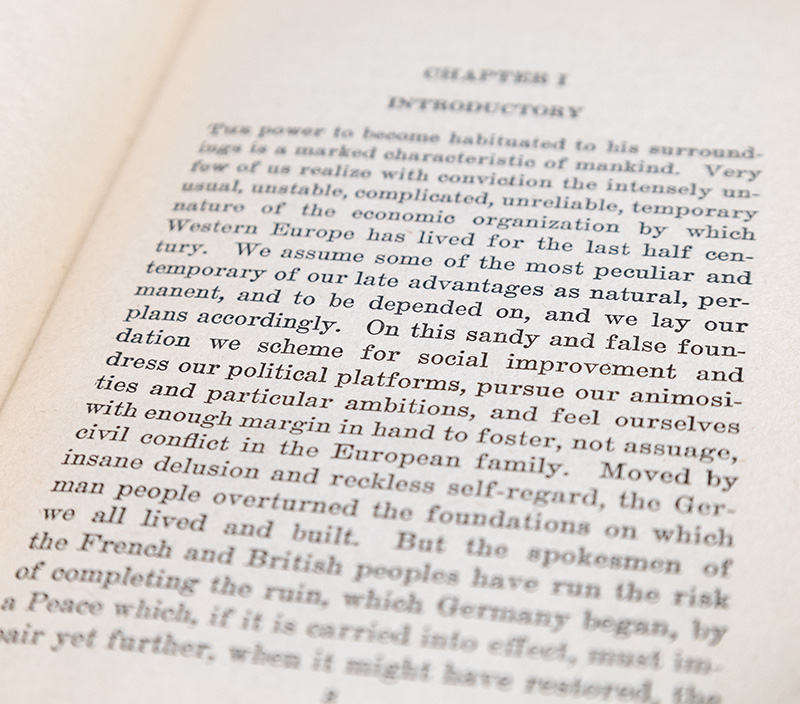
The Economic Consequences of the Peace was written after Keynes attended the Versailles Conference as a delegate of the British Treasury and argued for a much more generous peace. It was a best-seller throughout the world and was critical in establishing a general opinion that the Versailles Treaty was a "Carthaginian peace". It helped to consolidate American public opinion against the treaty and involvement in the League of Nations. The perception by much of the British public that Germany had been treated unfairly in turn was a crucial factor in public support for appeasement. The success of the book established Keynes' reputation as a leading economist. When Keynes was a key player in establishing the Bretton Woods system in 1944, he remembered the lessons from Versailles as well as the Great Depression. The Marshall Plan after Second World War is a similar system to that proposed by Keynes in The Economic Consequences of the Peace. "The most important economic document relating to World War I and its aftermath" (John Kenneth Galbraith).
The Economic Consequences of the Peace.
$650.00
In Stock