FRANK, Anne. [Elie Wiesel].
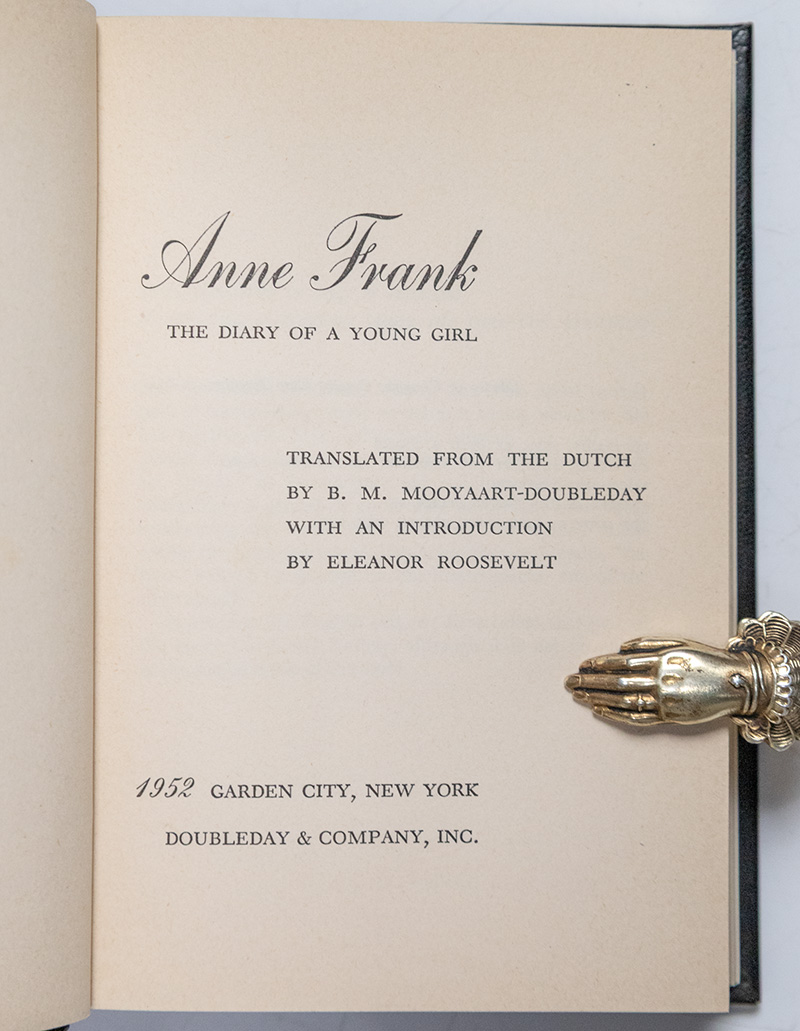
Anne Frank: The Diary of a Young Girl.
New York: Doubleday & Company, Inc , 1952.
$5,500.00
In Stock
Item Number: RRB-151688
Anne Frank: The Diary of A Young Girl; Signed by Nobel Laureate Elie Wiesel and Finely Bound by the Harcourt Bindery
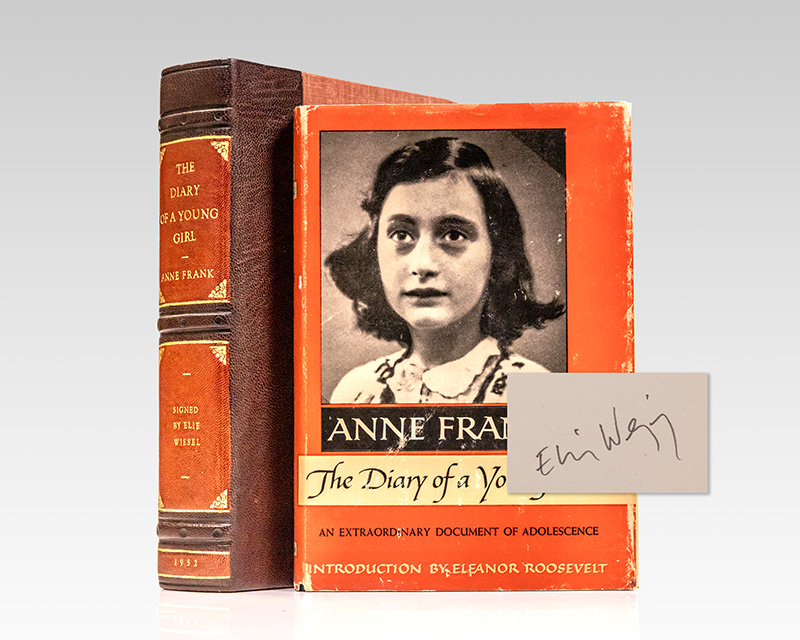
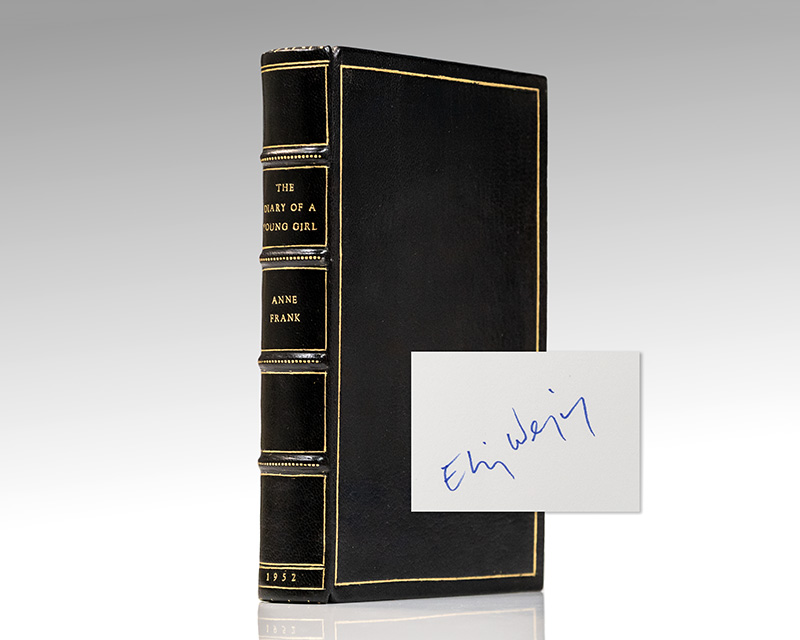
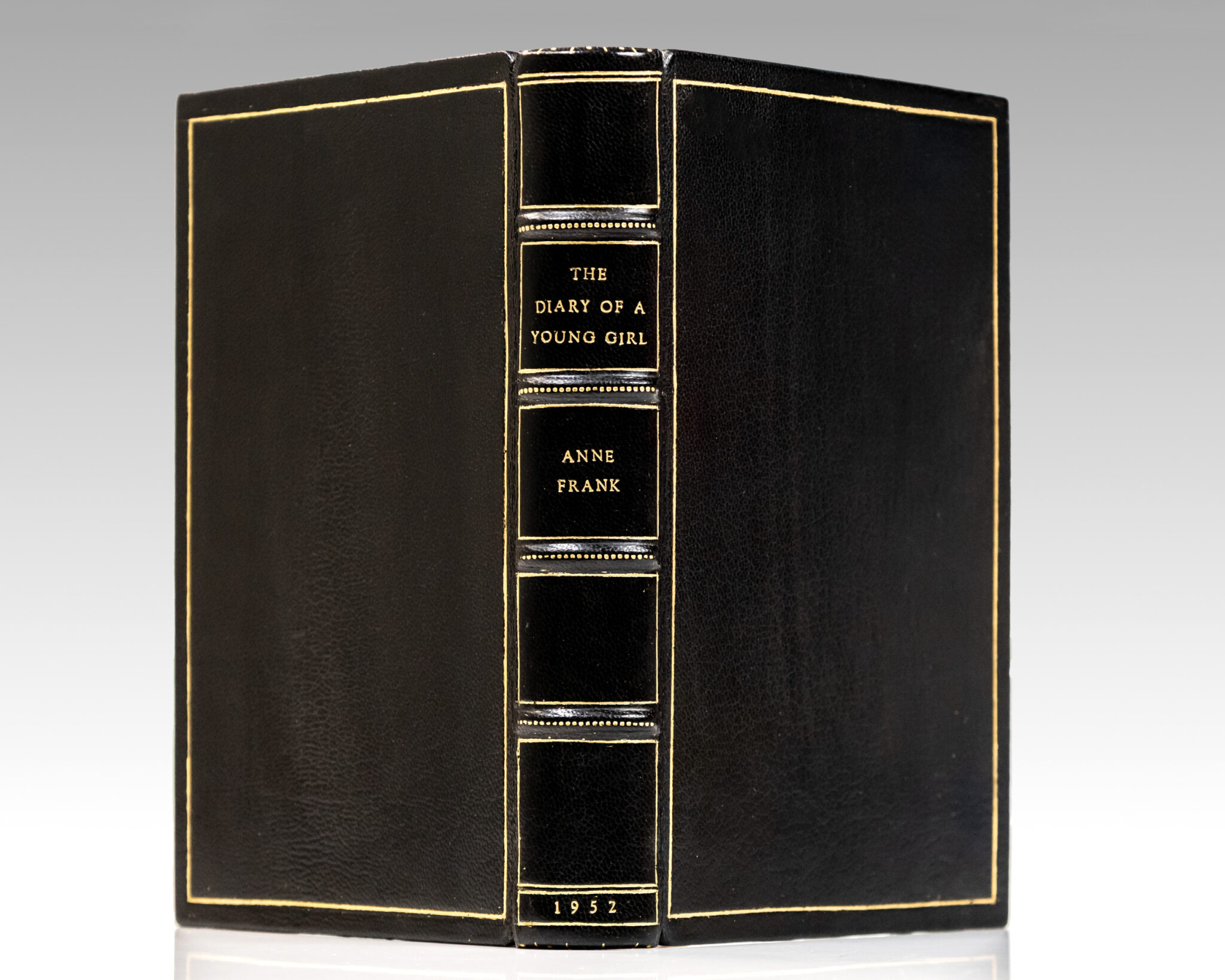
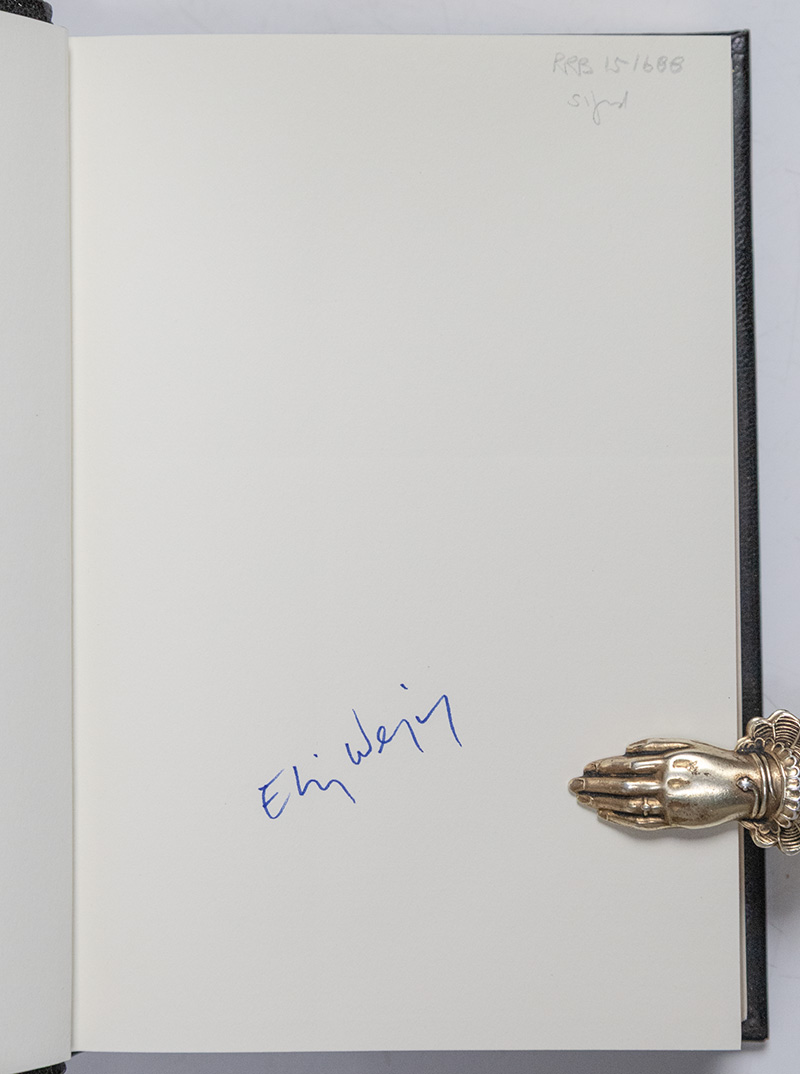
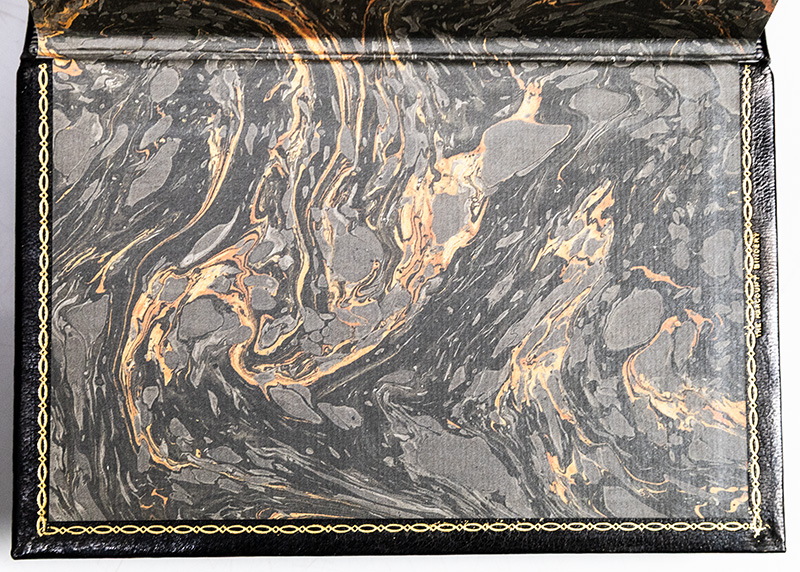
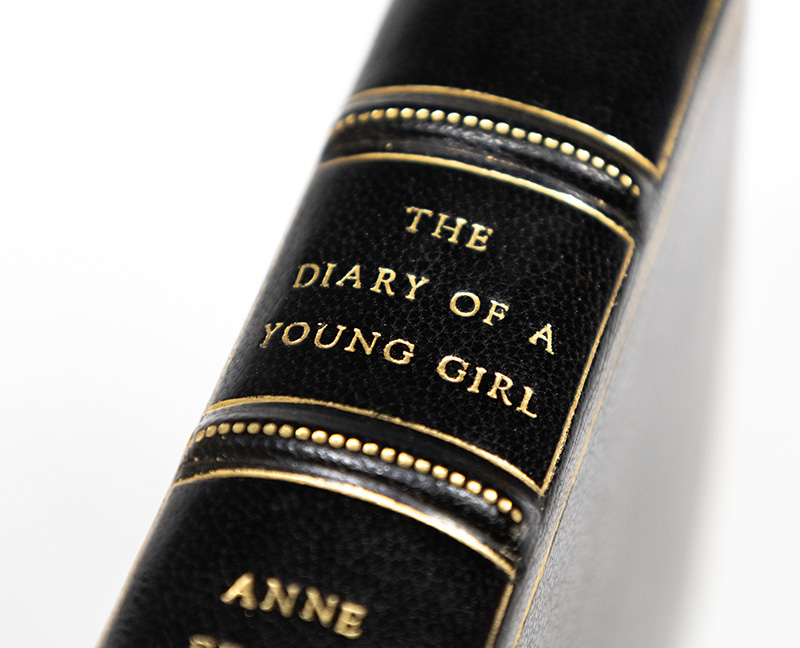
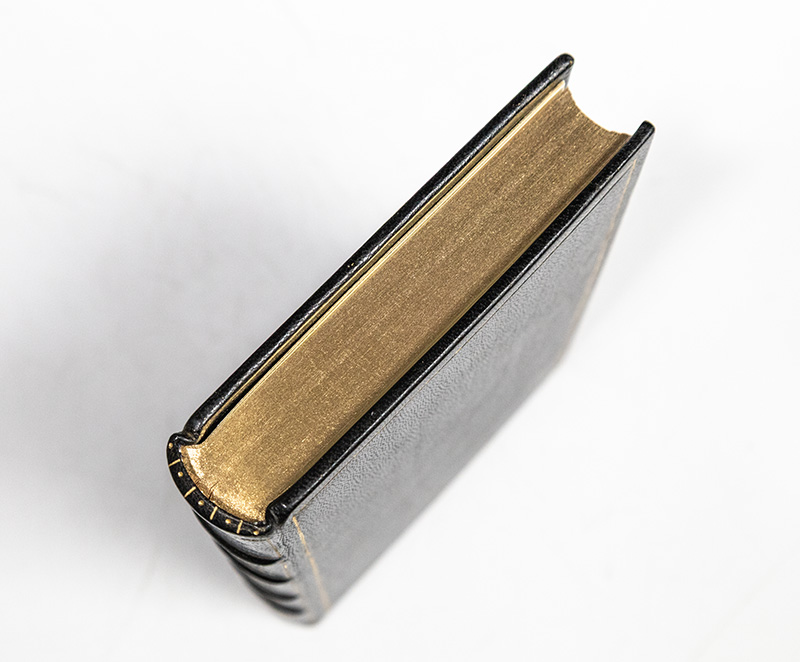
First edition, early printing of “one of the wisest and most moving commentaries on war” (Eleanor Roosevelt). Octavo, bound in full morocco by the Harcourt bindery with gilt titles and tooling to the spine in five compartments within raised gilt bands, gilt ruling to the front and rear panels, gilt inner dentelles stamp-signed by the Harcourt bindery, marbled endpapers, all edges gilt, frontispiece, illustrated. Boldly signed by Holocaust survivor and Nobel Laureate Elie Wiesel on a page bound in. Introduction by Eleanor Roosevelt. Translated from the Dutch by B.M. Mooyaart-Doubleday. The parallels between Frank and Wiesel are striking. They were nearly the same age (Anne born June 1929 in Frankfurt, Elie born September 1928 in Sighet, Romania), both were from observant Jewish families, both teenagers when they were caught up in the deportations of 1944. Both ended up in the Nazi camp system in the same period: Anne Frank arrived at Auschwitz with her family on September 3, 1944, and was later transferred to Bergen-Belsen, where she and her sister Margot died of typhus in early March 1945. Wiesel was deported from Sighet to Auschwitz in May 1944 and was on the death march to Buchenwald in January 1945, where his father died days before liberation. Both are first-person testimonies written by Jewish adolescents who lived through the Holocaust, and both have come to stand for something larger than themselves — they're the two memoirs through which most readers in the English-speaking world first encounter the Shoah. Both memoirs are short and compress an enormous historical catastrophe into a tight, intimate frame, and the power of each comes from that compression — the reader is held inside one consciousness, one family, one tightening situation. Both are built around the relationship between a child and a father. Anne's diary is in some ways an extended argument with, and love letter to, Otto Frank; Night is structured almost entirely around Eliezer's bond with his father Shlomo and the slow agony of watching that bond be tested and finally severed in the camps. The father-child axis is the emotional spine of both books. Both are also, at heart, religious documents — books about young people raised in observant Jewish families whose faith is forced into crisis. Anne's questioning is gentler and more searching; Wiesel's is wrenching and famously bitter, culminating in the hanging of the child and the line about God being hanged on the gallows. But the underlying movement is the same: a young person's inherited belief running up against a reality it was never built to hold. Each book is more crafted than its surface suggests. Anne was rewriting her diary for publication when she was arrested — the version we read is already partly literary, already self-conscious about audience. Wiesel's Night is even further from raw testimony: he first wrote a much longer Yiddish version called Un di Velt Hot Geshvign ("And the World Remained Silent") in the mid-1950s, then pared it down into the spare French La Nuit in 1958, and gave his narrator the slightly distanced name Eliezer. Both works close on an image of the self transformed past recognition. Anne's diary simply breaks off — the silence that follows is itself the ending, the point at which the writer disappears into history. Wiesel ends with Eliezer looking into a mirror after liberation and seeing a corpse staring back. Different gestures, same recognition: the person who began the book is gone. In fine condition. An exceptional presentation.
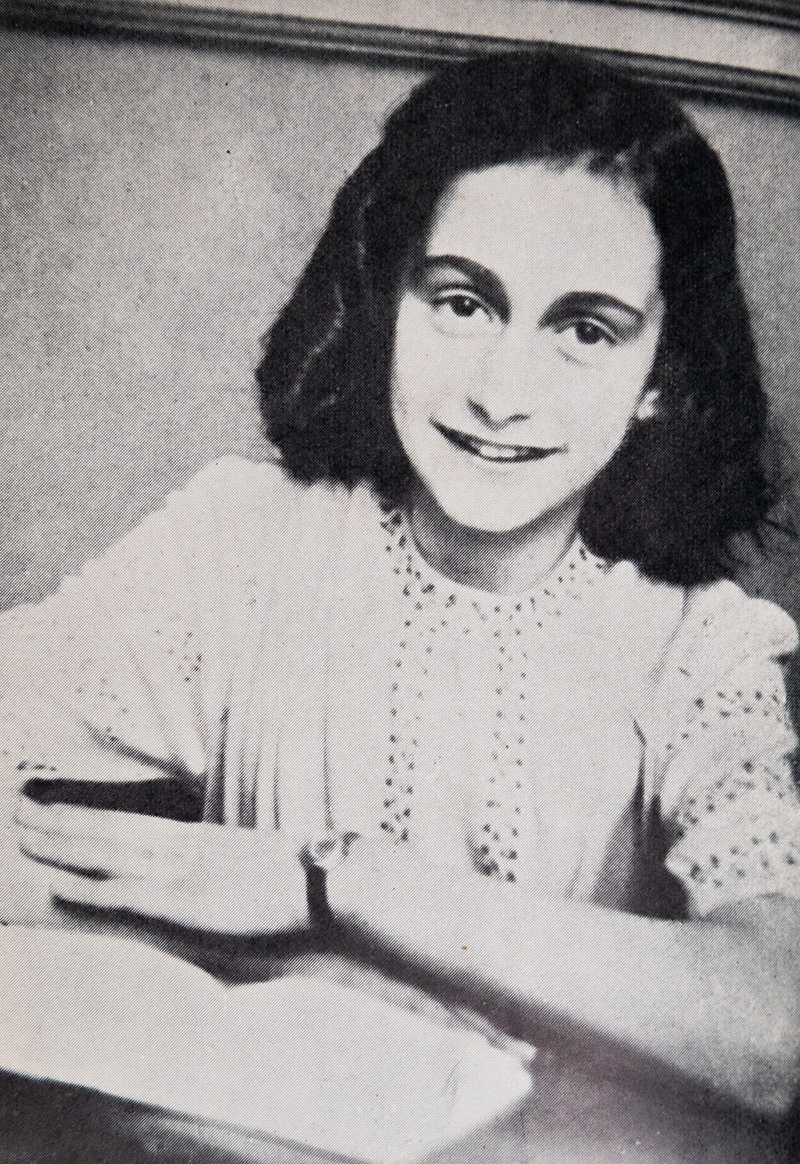
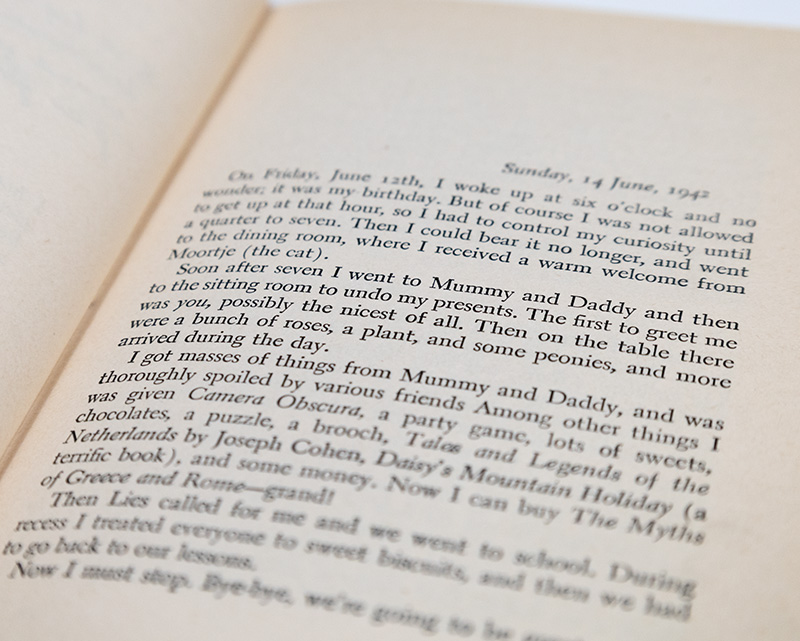
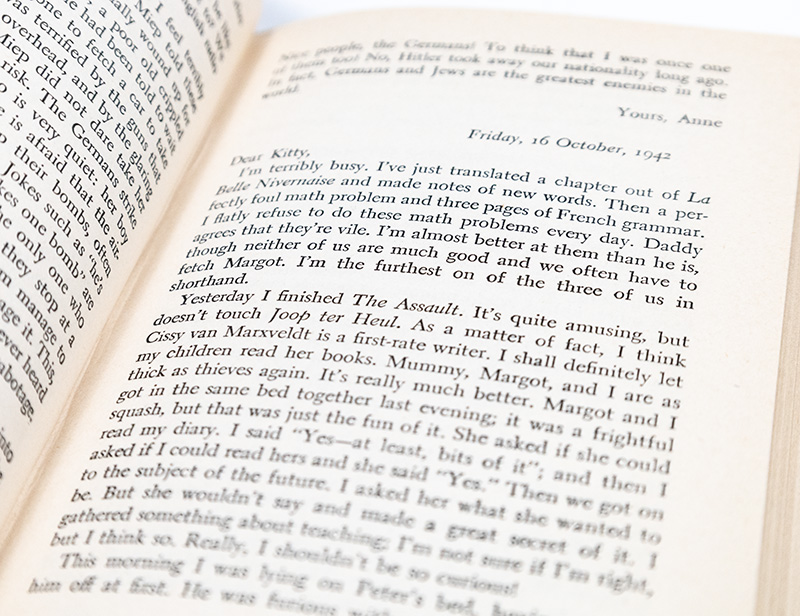
Born in 1929, Anne Frank received a blank diary on her 13th birthday, just weeks before she and her family went into hiding in Nazi-occupied Amsterdam. Here diary was later discovered in the attic in which she spent the last years of her life, Anne Frank's remarkable diary has since become a world classic—a powerful reminder of the horrors of war and an eloquent testament to the human spirit. In 1942, with Nazis occupying Holland, a thirteen-year-old Jewish girl and her family fled their home in Amsterdam and went into hiding. For the next two years, until their whereabouts were betrayed to the Gestapo, they and another family lived cloistered in the "Secret Annex" of an old office building. Cut off from the outside world, they faced hunger, boredom, the constant cruelties of living in confined quarters, and the ever-present threat of discovery and death. In her diary Anne Frank recorded vivid impressions of her experiences during this period. By turns thoughtful, moving, and amusing, her account offers a fascinating commentary on human courage and frailty and a compelling self-portrait of a sensitive and spirited young woman whose promise was tragically cut short.
Anne Frank: The Diary of a Young Girl.
$5,500.00
In Stock
Other Books by this Author