
JACKSON, Andrew.
Andrew Jackson Signed United States Patent.
Washington D.C.: June 22, 1832.
$4,000.00
In Stock
Item Number: RRB-151243
Rare United States Patent signed by President Andrew Jackson; issued only four years before the 1836 U.S. Patent Office Fire that destroyed nearly 10,000 patent records
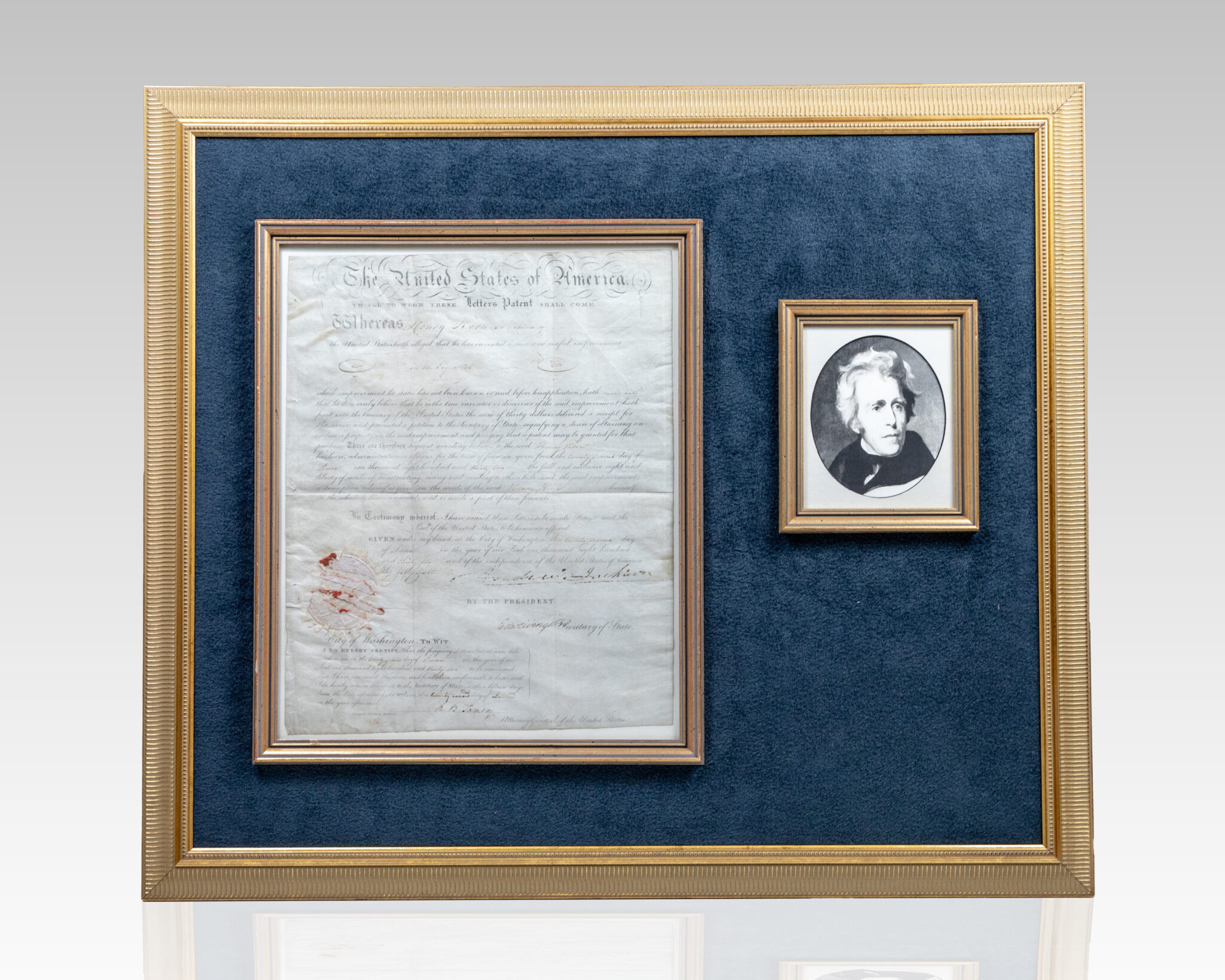
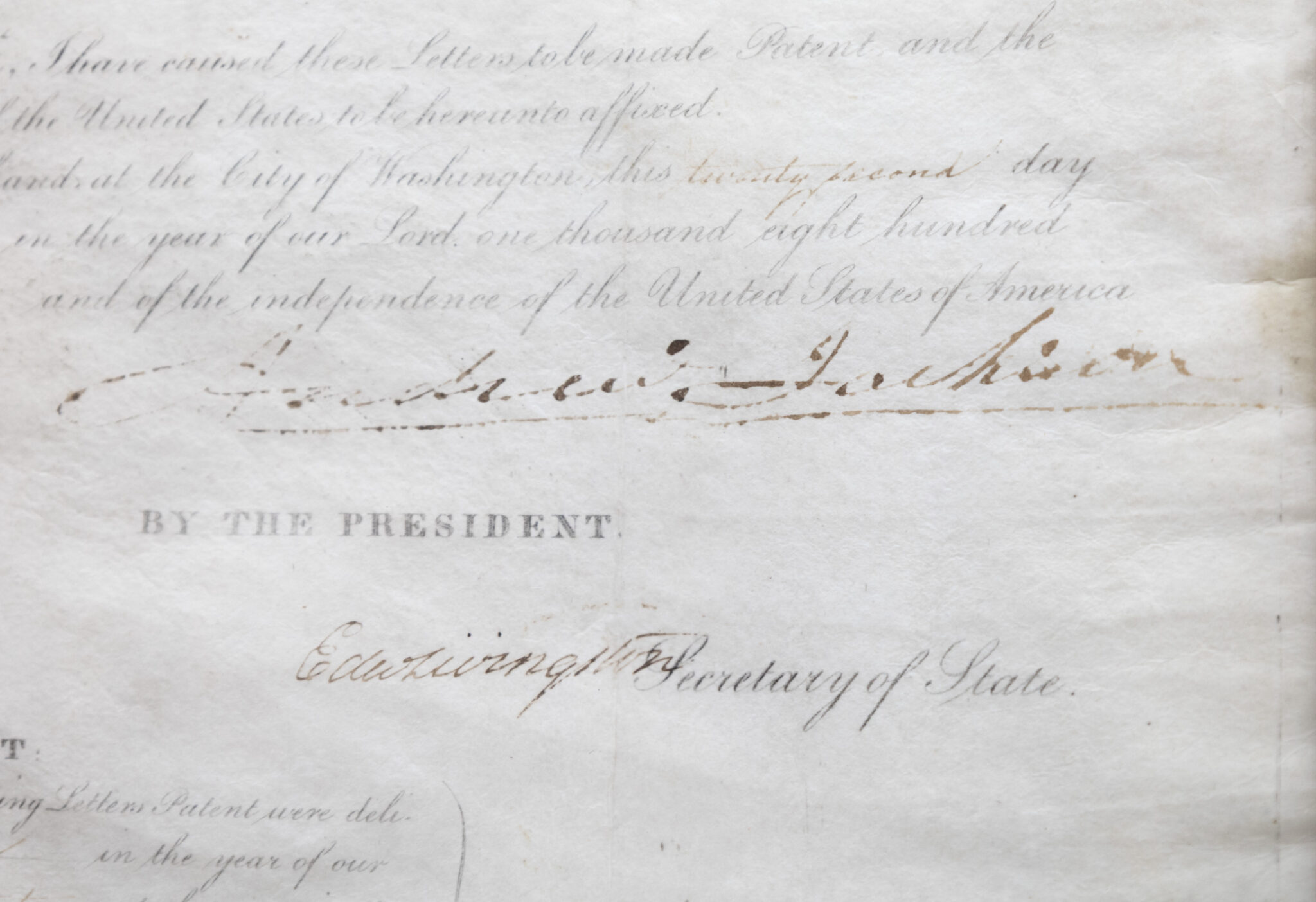
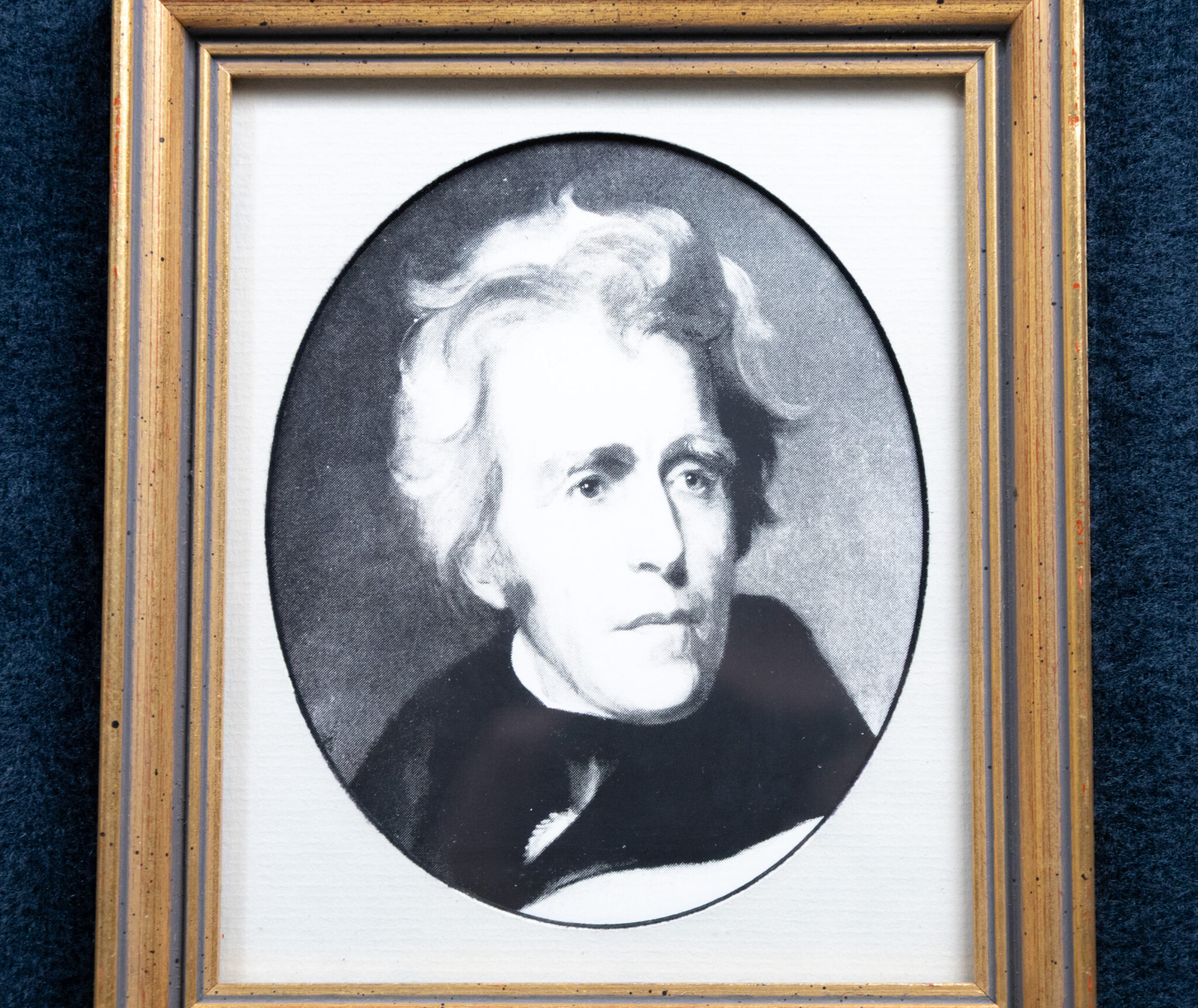
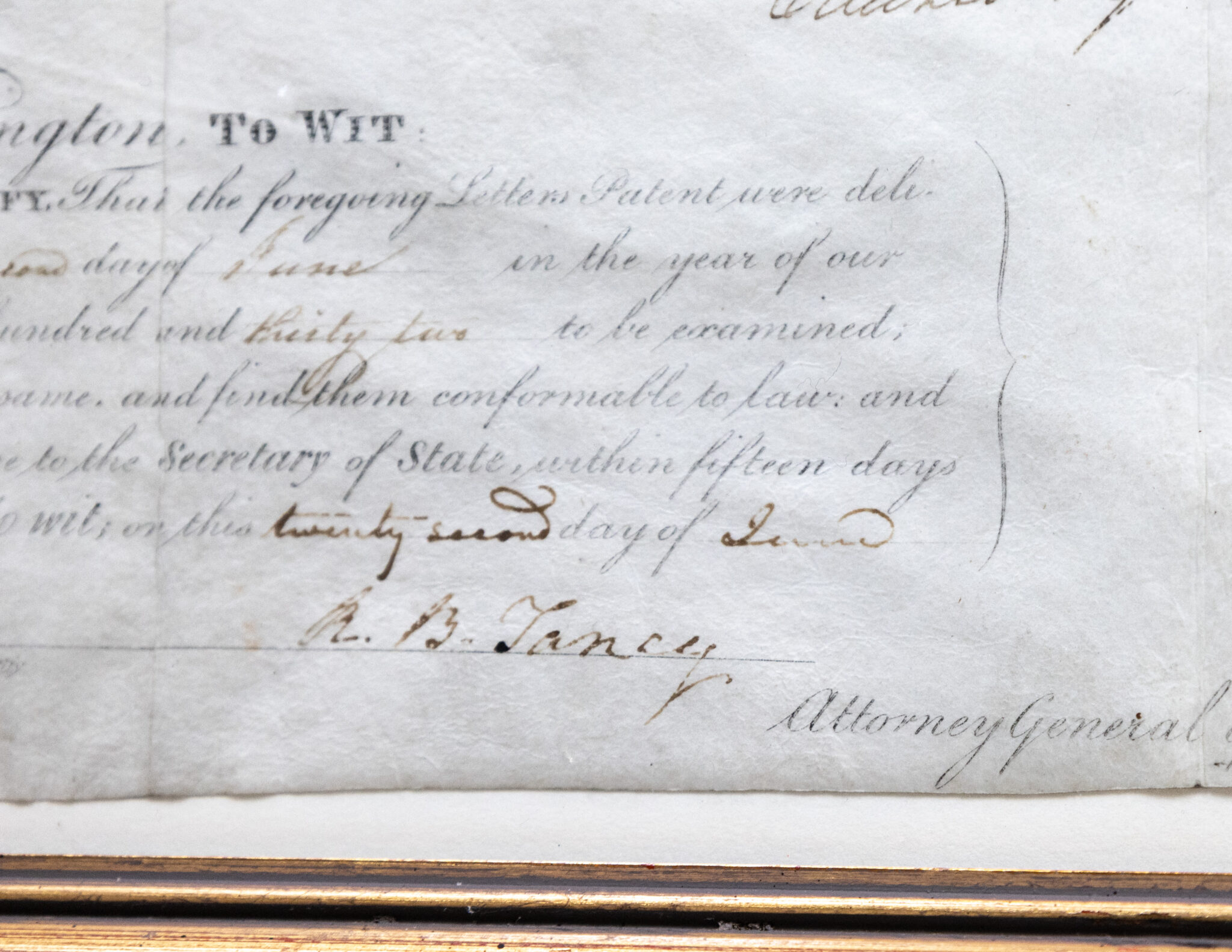
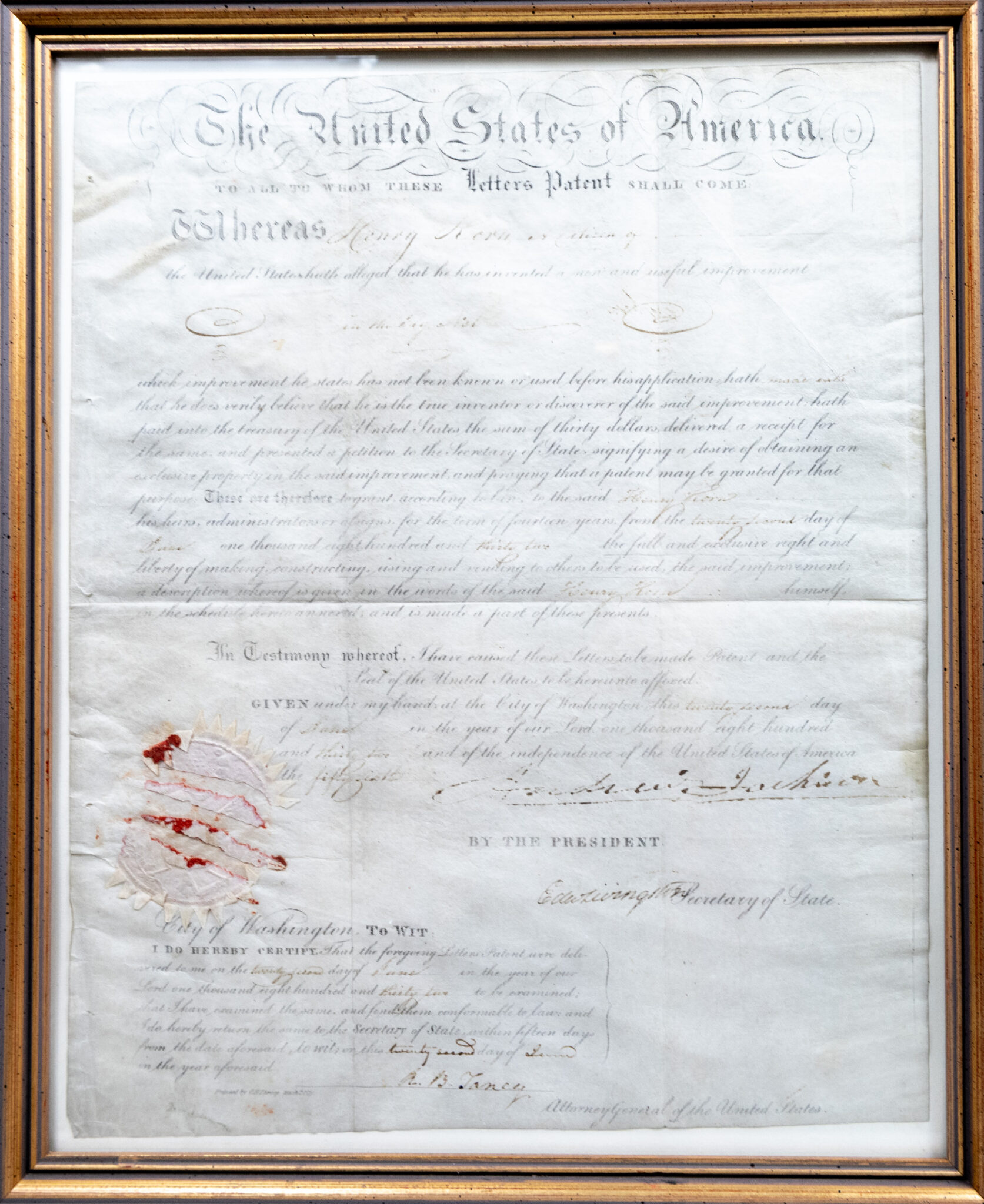
Rare United States Patent signed by Andrew Jackson as the 7th President of the United States. One page, partially printed, the patent is dated June 22, 1832 and is issued to inventor Henry Koon for a fly net. In the nineteenth century, fly nets were protective mesh coverings designed to shield horses from flies and other biting insects, particularly during the warmer months when insect activity was at its height. In military contexts, fly nets were essential for maintaining the health and readiness of cavalry and transport horses, which were vital to communication, mobility, and supply lines. The document is co-signed by Secretary of State Edward Livingston and Attorney General Roger B. Taney, both of whom played major roles in Jacksonian-era politics. Jackson's signature shows minor ink skipping, and the white paper seal is partially removed, as is typical for documents of this age and format. Four years after this patent was issued, the U.S. Patent Office suffered a catastrophic loss when a destructive fire broke out on the night of December 15, 1836, in Blodgett's Hotel in Washington, D.C., which at that time housed the Patent Office. The blaze destroyed nearly 10,000 patent records and more than 7,000 patent models; indeed, almost all documentation of inventions submitted before 1836 was lost. These early patents, now referred to as “X-Patents,” largely disappeared from the historical record, with only a small number later reconstructed from surviving copies or private records. Consequently, original patent documents from this pre-fire period—particularly those bearing the signature of a sitting president such as Andrew Jackson—are exceptionally rare and historically significant, representing surviving evidence of America’s earliest recorded innovations. In very good condition. Matted and framed with a portrait of Andrew Jackson. The entire piece measures 28 inches by 24 inches. Accompanied by a JSA letter of authenticity.
Andrew Jackson (1767–1845), the seventh President of the United States, served from 1829 to 1837 and was one of the most influential and controversial figures in early American political history. Rising to national prominence as a military leader—most notably for his victory at the Battle of New Orleans during the War of 1812—Jackson later became the central figure of the Democratic Party and a leading advocate of what became known as Jacksonian democracy, a political movement that emphasized expanded participation in government for white male citizens and a populist challenge to established political and economic elites. During his presidency, Jackson strengthened the authority of the executive branch and pursued policies that reshaped the nation’s political and financial systems, including his opposition to the Second Bank of the United States during the so-called Bank War. His administration was also marked by deeply controversial policies, most notably the Indian Removal Act of 1830, which led to the forced relocation of Native American tribes from the southeastern United States to territories west of the Mississippi River. Jackson’s presidency thus occupies a central place in the development of American democracy while also remaining closely associated with some of the most consequential and debated policies of the nineteenth century.
Andrew Jackson Signed United States Patent.
$4,000.00
In Stock


