Happy Birthday, Ernest Hemingway: The Master of Modern American Literature.
Today marks the birthday of Ernest Hemingway – born July 21, 1899, in Oak Park, Illinois. His career reshaped modern prose, and his life unfolded across continents and decades. Over the years, we have handled a selection of his works that traces his arc from emerging modernist to celebrated author, from the slim 1923 Paris edition of Three Stories & Ten Poems to The Old Man and the Sea, the novella that won him the Nobel Prize. Each reflects a moment in his singular influence on twentieth-century literature. Below, we present a survey of his major works in first edition.
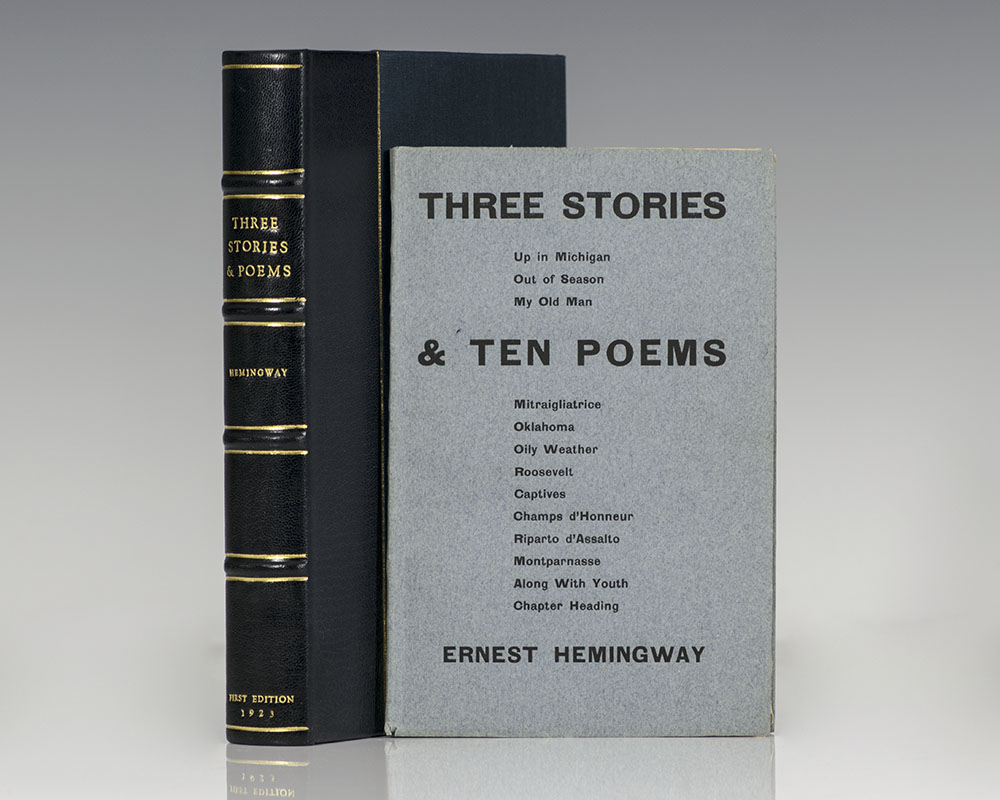
Hemingway’s first book was printed in Paris in an edition of just 300 copies. Its three stories, among them “Up in Michigan” and “My Old Man,” turn on desire, disillusion, and the loss of innocence, written in the spare, understated style that would soon transform American prose. It is the earliest and rarest of all Hemingway first editions and the true cornerstone of any collection.
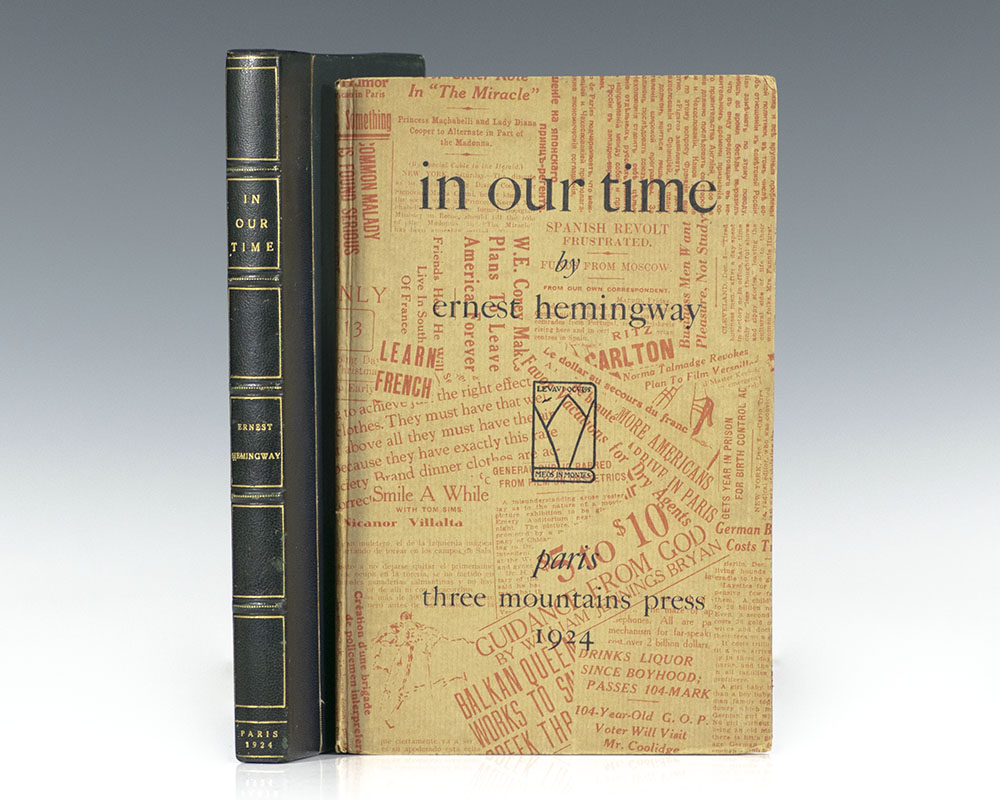
In Our Time was the collection that established Hemingway’s reputation, interleaving spare short stories with terse vignettes of war, bullfighting, and violence. Several of its stories follow his alter ego Nick Adams, carrying him from a boyhood shock in “Indian Camp” to a wounded soldier’s uneasy homecoming in “Big Two-Hearted River.” The book ranks among the very rarest of his works, second only to Three Stories and Ten Poems.
The Torrents of Spring is a short comic novella that Hemingway wrote in little more than a week as a parody of Sherwood Anderson’s Dark Laughter. Set in a Michigan pump factory, its cast of dazed war veterans and diner waitresses gently mocks the earnest primitivism of Anderson’s fiction. As his first book for Scribner’s, the first printing is uncommon, especially in the original dust jacket.
The Sun Also Rises was Hemingway’s first novel and remains the defining portrait of the Lost Generation, following a circle of disillusioned expatriates from the cafes of Paris to the bullfights of Pamplona. Narrated by the war-wounded journalist Jake Barnes, it turns on his hopeless love for the free-spirited Lady Brett Ashley, and its clean, declarative prose changed the course of the modern novel. True first-issue copies, identified by the “stoppped” misprint on page 181 and the matching dust jacket, are highly prized.
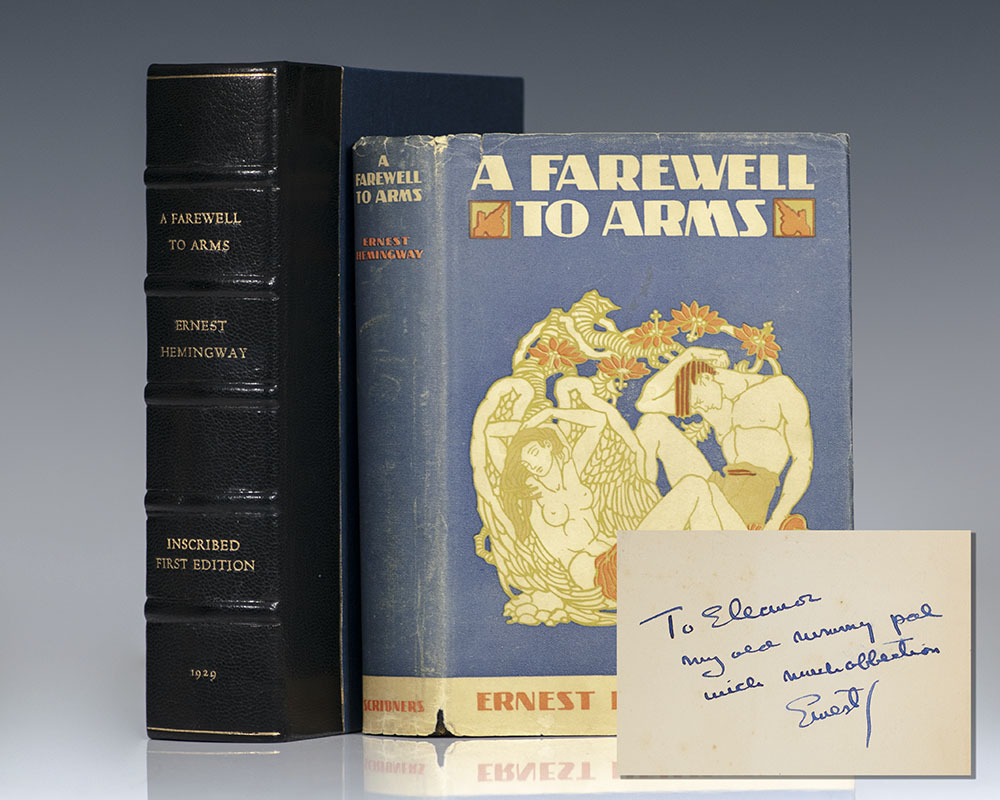
Drawn from Hemingway’s own service as an ambulance driver on the Italian front, this tragic romance between a wounded American lieutenant and an English nurse stands among the finest novels of the First World War. Lieutenant Frederic Henry deserts the chaos of the Italian retreat and escapes to Switzerland with the nurse Catherine Barkley, only for their fragile idyll to end in heartbreak. A signed limited edition of just 510 copies accompanied the first trade printing, and early copies in the fragile first-issue jacket remain scarce.
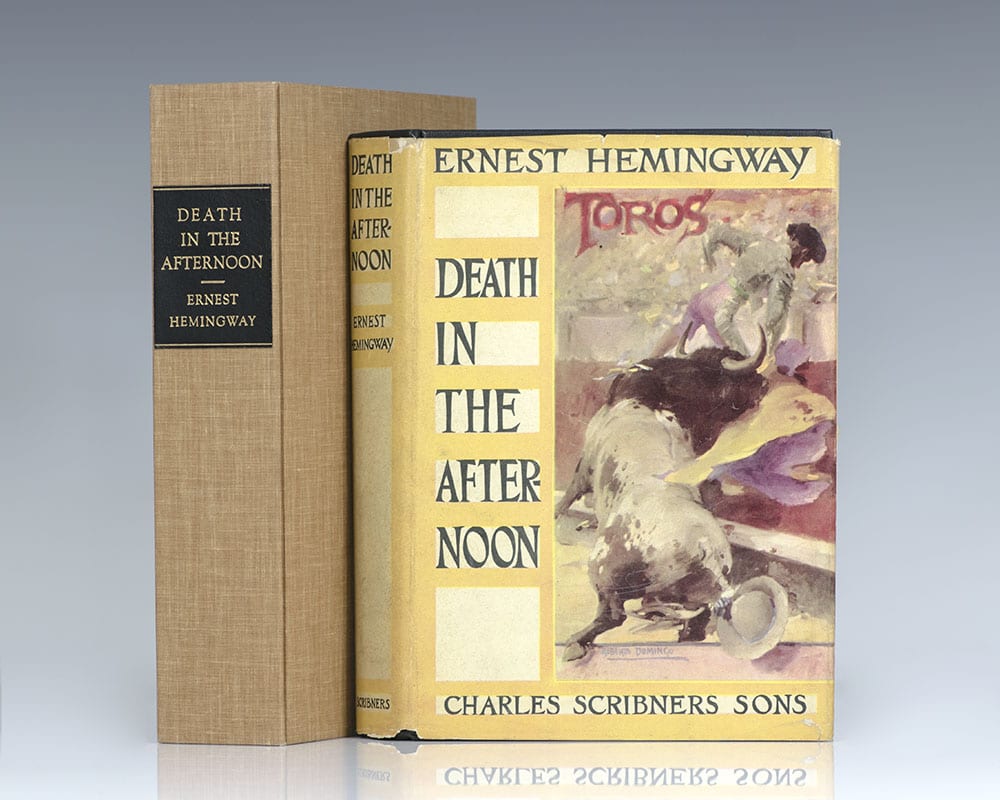
Death in the Afternoon is Hemingway’s passionate, book-length study of the Spanish bullfight, which he treats not as sport but as tragic art. Part treatise and part memoir, it ranges over death, craft, and the difference between what a writer truly feels and what he is expected to feel. First printings in the original pictorial dust jacket, drawn from a design by Juan Gris, are increasingly hard to find.
Winner Take Nothing was Hemingway’s third and final major collection of short stories, and it includes the much-anthologized “A Clean, Well-Lighted Place.” Darker and more spare than his earlier work, its stories, among them “The Gambler, the Nun, and the Radio” and “Fathers and Sons,” circle around ritual, chance, and the search for order against the surrounding dark. It is among the rarest of Hemingway’s titles to find signed or inscribed.
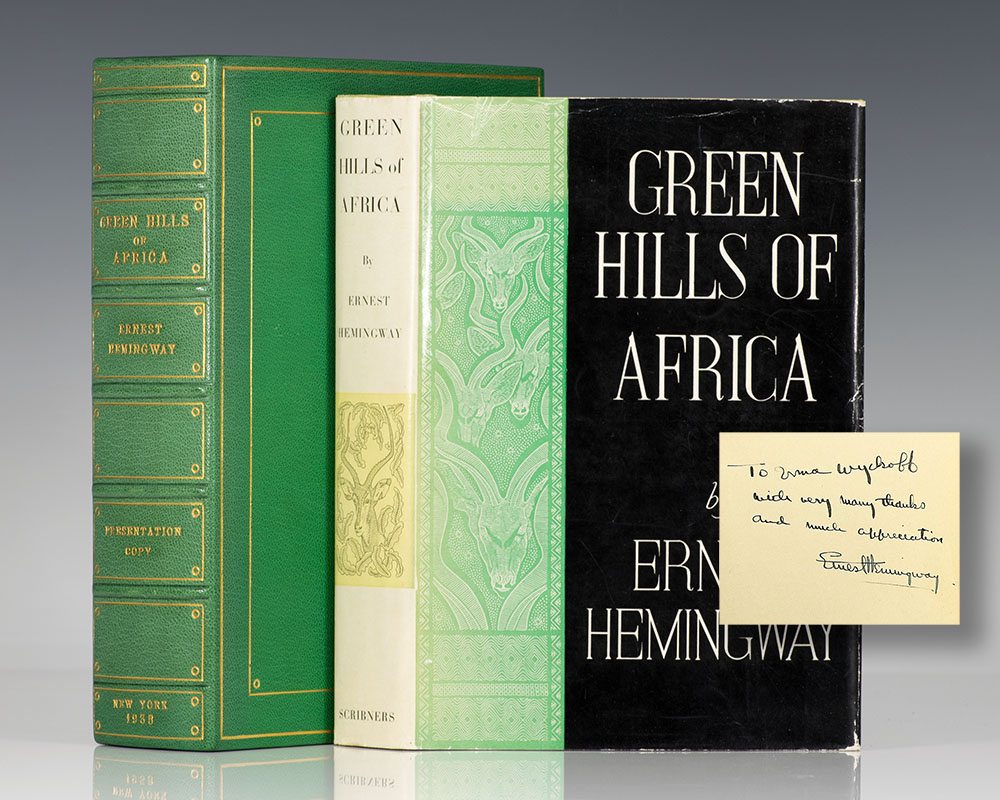
Green Hills of Africa is an experimental work of nonfiction that recounts a month Hemingway spent on safari in East Africa. As he pursues kudu and sable across the plains of Tanganyika, he weaves the hunt together with candid reflections on writing and rival authors, testing how far a factual narrative could take on the shape of a novel. The first edition in its original dust jacket is uncommon, and signed copies are scarcer still.
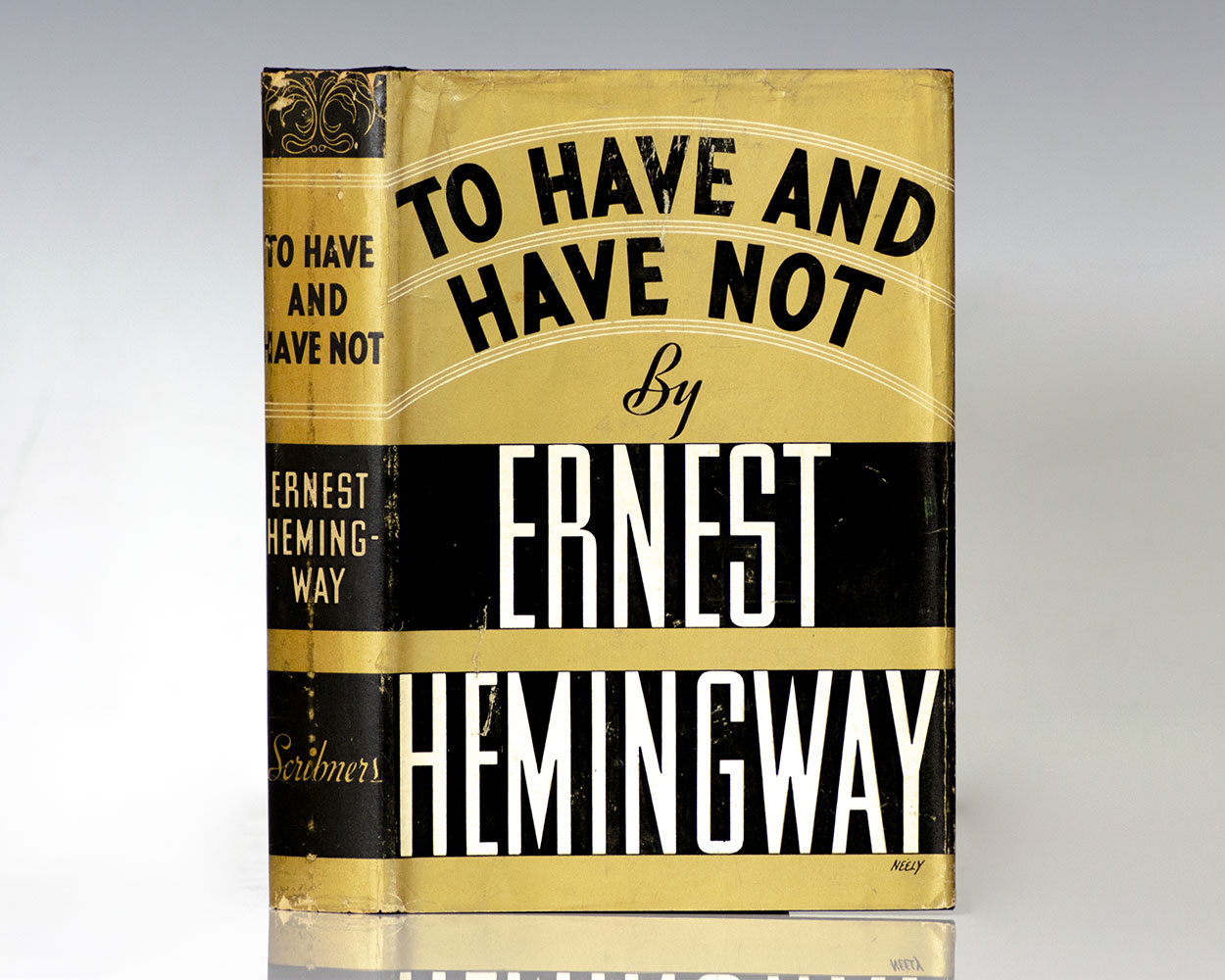
To Have and Have Not is Hemingway’s only novel set largely on American soil, following the down-on-his-luck boat captain Harry Morgan through Depression-era Key West and Cuba. Morgan’s slide from charter fishing into running rum and human cargo plays out against a backdrop of idle yachtsmen and the desperate poor. Bright, unrestored copies in the first-issue dust jacket have become genuinely scarce.
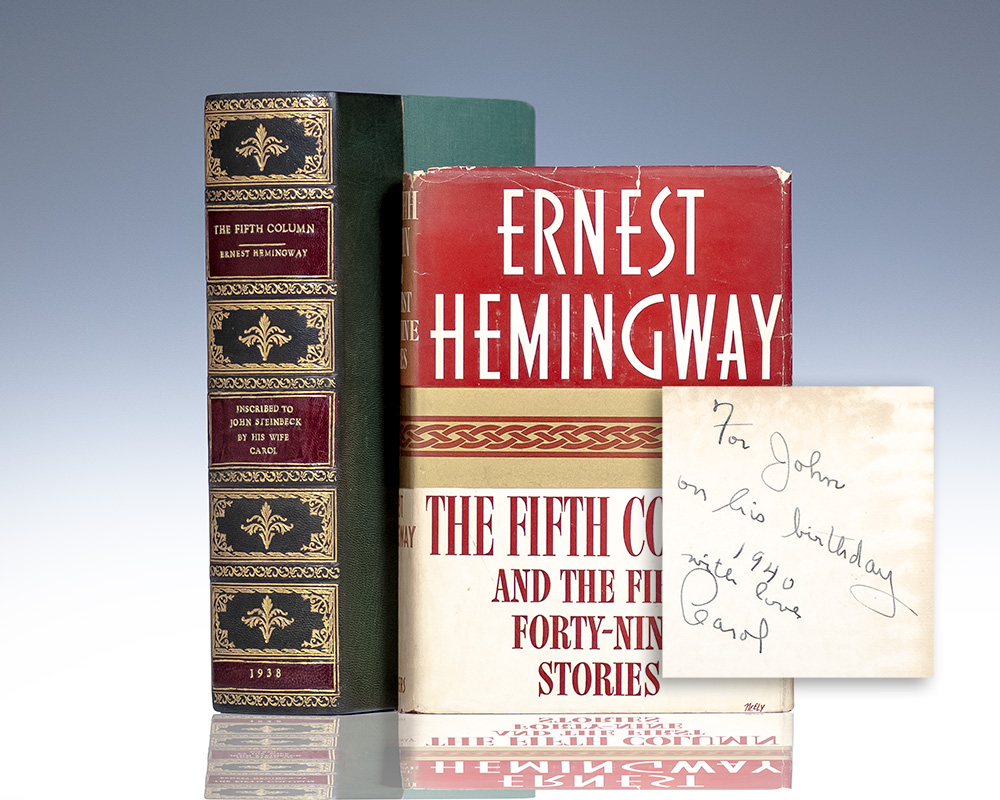
This volume pairs Hemingway’s only play, a drama of espionage set in besieged Madrid during the Spanish Civil War, with forty-nine of his short stories. The play trails a counter-espionage agent through the Hotel Florida during the siege, while the stories roam from African safaris to the Michigan woods. It marks the first book appearance of “The Snows of Kilimanjaro” and “The Short Happy Life of Francis Macomber,” long prized by collectors of his short fiction.
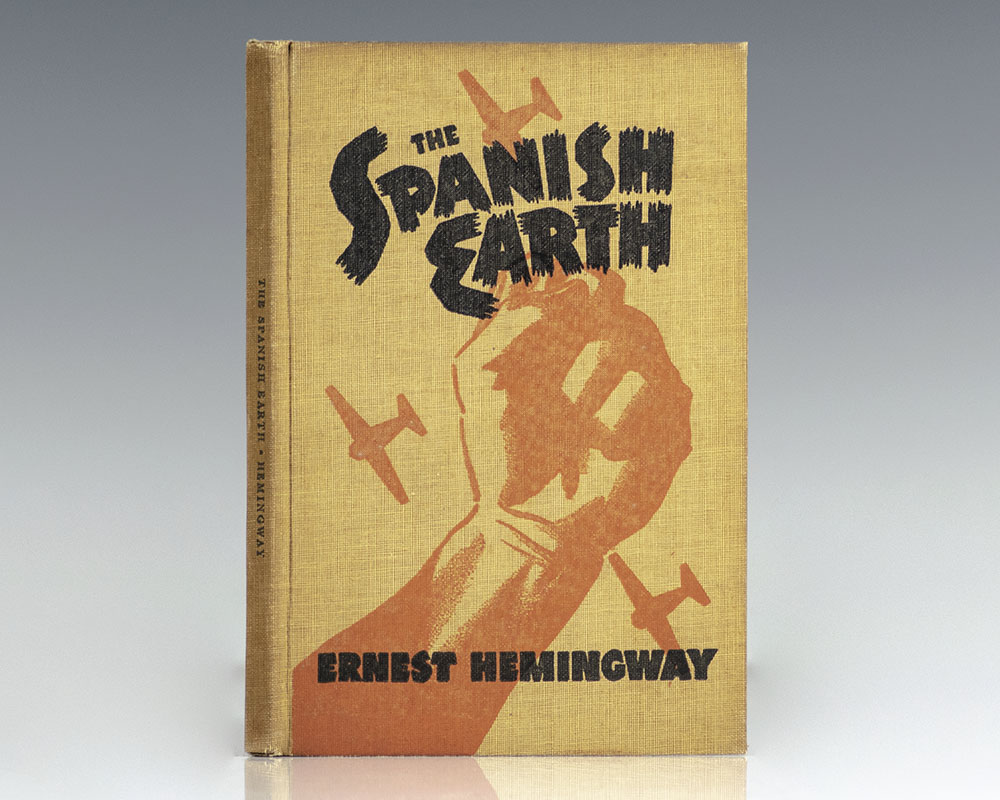
The Spanish Earth prints the narration Hemingway wrote and delivered for the documentary film of the same name, made to rally American support for the Spanish Republic against Franco. Its text follows the villagers of Fuentiduena as they defend their land and dig an irrigation ditch under fire, turning one village into an emblem of the Republic’s struggle. Issued in only 1,000 numbered copies, with the earliest state limited to perhaps fifty to a hundred, it is among his scarcest publications.
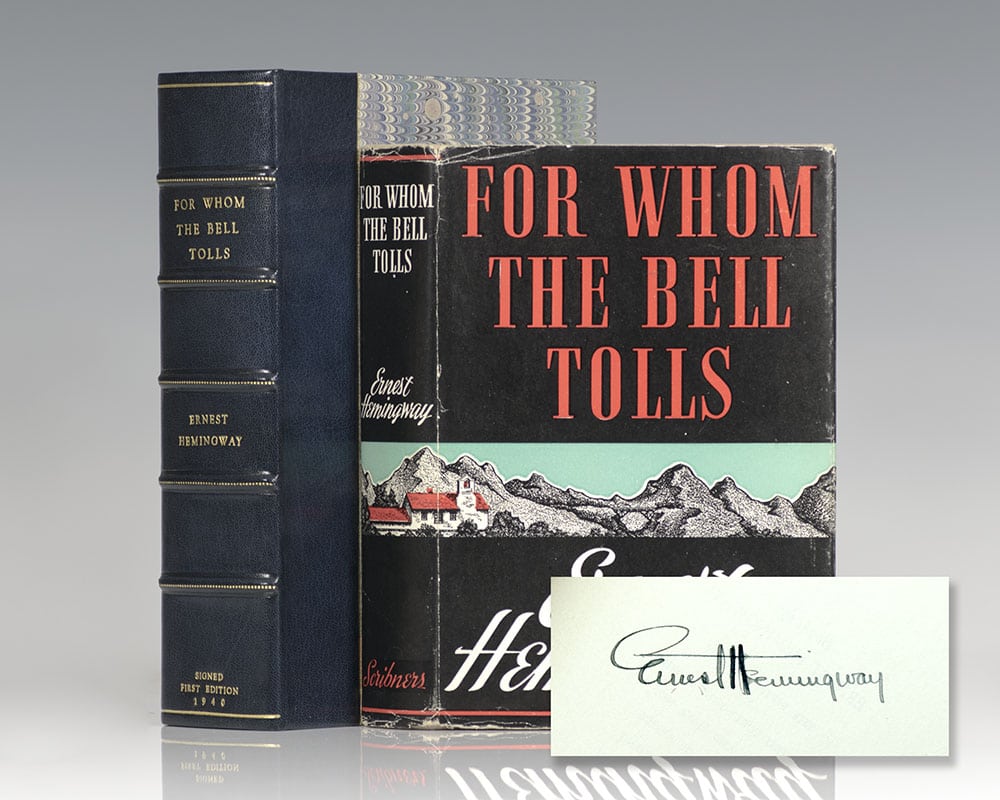
For Whom the Bell Tolls is Hemingway’s sweeping novel of the Spanish Civil War, following the young American Robert Jordan on a mission to destroy a bridge behind fascist lines over three fateful days. Fighting beside a band of guerrillas in the pine forests of the Sierra, Jordan falls in love with the young Maria as the doomed operation counts down to its climax. An immediate bestseller printed in large numbers, it is nonetheless sought after in fine, unrestored first-issue jackets and in signed copies.
Across the River and Into the Trees was Hemingway’s first novel in a decade, set in postwar Venice and centered on an aging American colonel confronting love, memory, and mortality. Colonel Richard Cantwell, ailing and near the end, spends his last days duck-hunting and dining with the young Venetian countess Renata, revisiting the wars that shaped him. First printings in the original dust jacket have become uncommon.
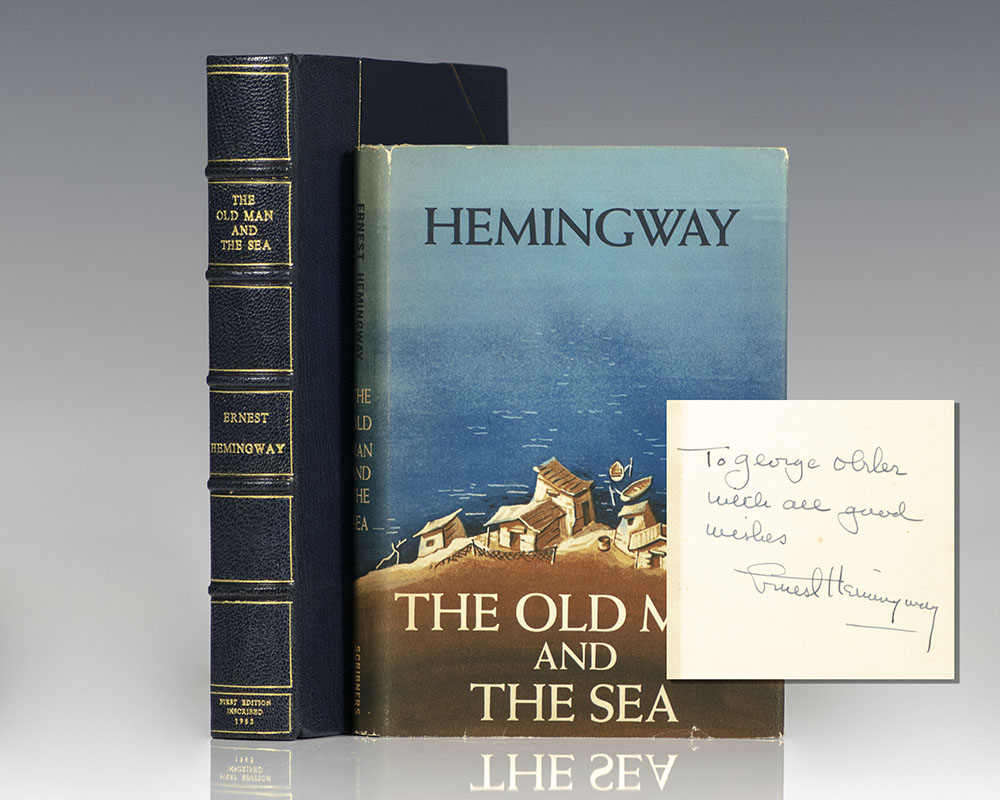
The Old Man and the Sea is the spare, luminous novella of Santiago, an aging Cuban fisherman locked in an epic struggle with a giant marlin far out in the Gulf Stream. Towed for days across the open sea, Santiago at last kills the marlin, only to fight off the sharks that strip it to bone before he can bring it home. The book won the Pulitzer Prize and was singled out when Hemingway received the Nobel Prize in 1954, and true first editions bearing the Scribner’s “A” and seal are decidedly scarce when signed.
(WEST PALM BEACH, FL) – The West Palm Beach Library Foundation’s Cruise for a Cause set new records in number of guests aboard the yacht and in achieving…
Arthur Koestler was born in Budapest on the fifth of September, 1905, and by the time he died in London seventy-seven years later he had produced one of…
Arthur C. Clarke’s 2001: A Space Odyssey was written in an unusual way—hand in hand with the film it accompanies. Beginning in 1964 from Clarke’s 1948 short story…
Join our growing list of satisfied clients who have leveraged
our multi-cloud and hybrid cloud strategies to achieve greater
agility and efficiency in their operations.