What’s Wrong with the World.
CHESTERTON, G. K. [Henry James; William James].
What’s Wrong with the World.
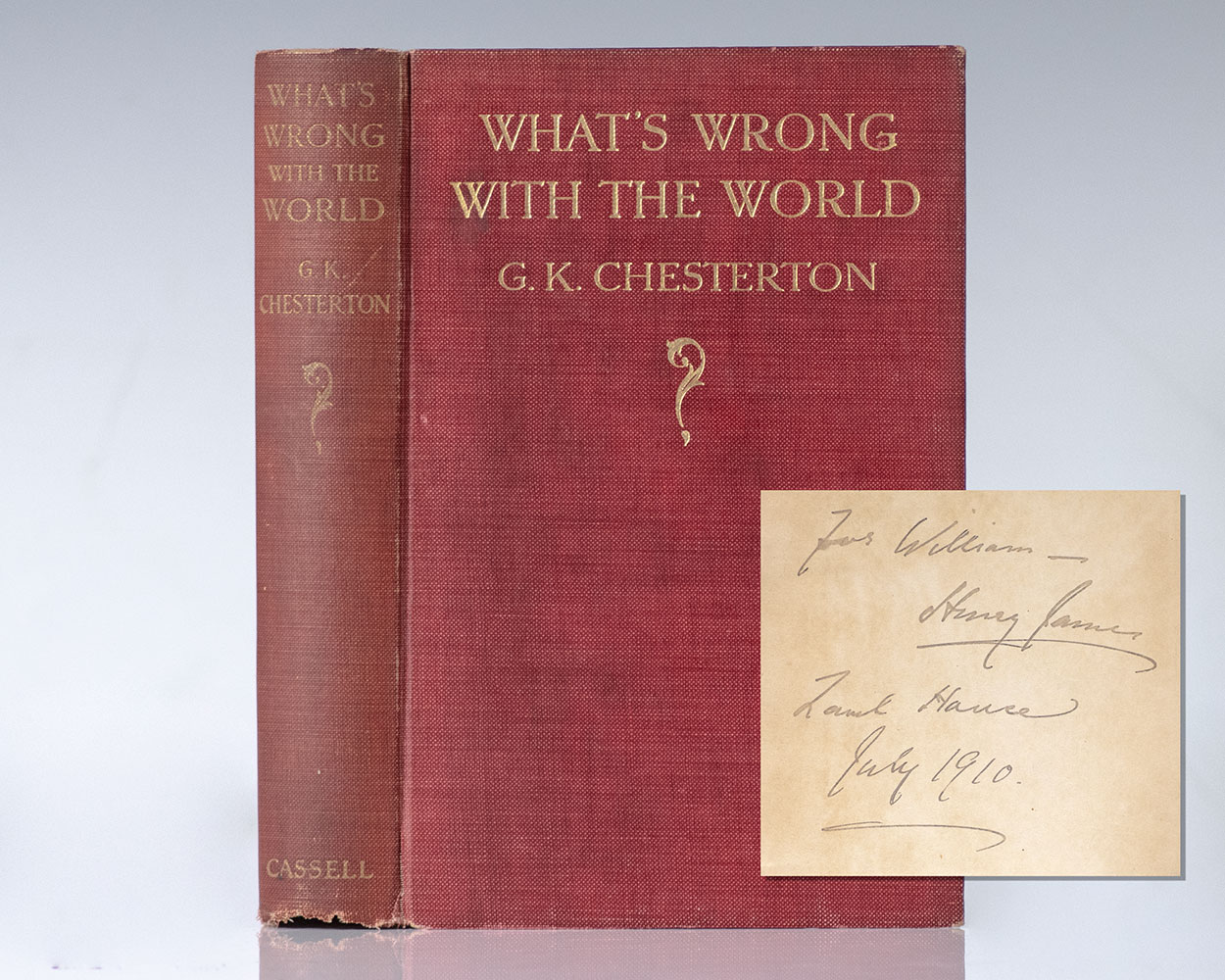
“Men invent new ideals because they dare not attempt old ideals. They look forward with enthusiasm, because they are afraid to look back": First edition of G.K. Chesterton's What's Wrong With The World; inscribed by fellow author Henry James to his brother, the "father of American psychology" William James
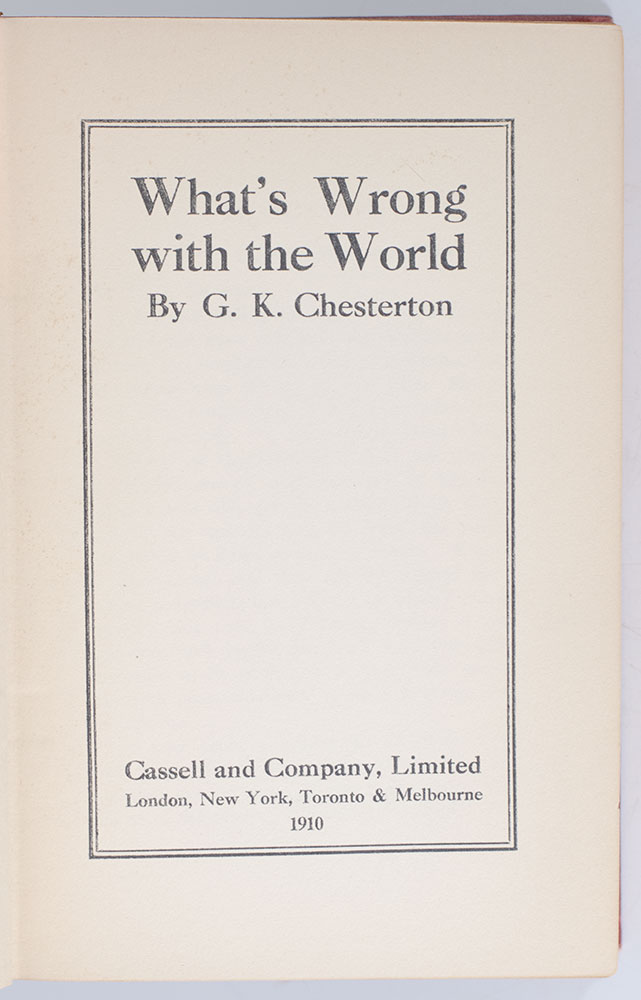
London: Cassell and Company, Limted, 1910.
We're sorry, this item has sold.
Out of Stock
Item Number: 139425
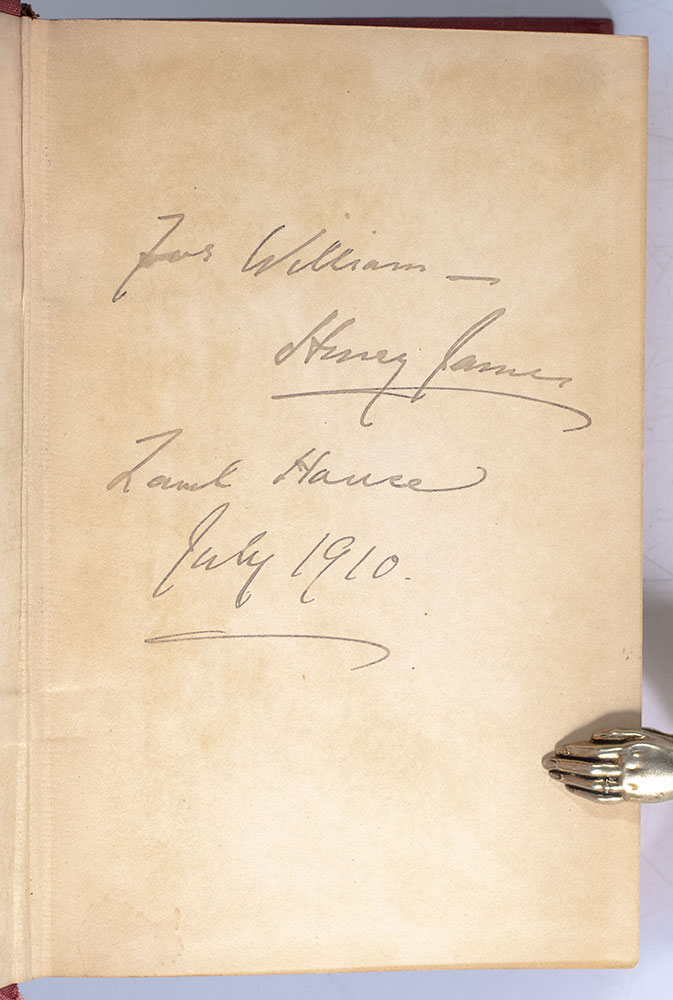
First edition of Chesterton’s incisive analysis of modern society. Octavo, original cloth with gilt titles to the spine and front panel. Association copy, inscribed by Henry James on the front free endpaper in the year of publication, “For William – Henry James Lamb House July 1910.” The recipient, Henry James’s older brother William James, is widely considered one of the most influential philosophers of the United States and the “Father of American psychology.” James trained as a physician and taught anatomy at Harvard, but never practiced medicine. Instead he pursued his interests in psychology and then philosophy. He wrote widely on many topics, including epistemology, education, metaphysics, psychology, religion, and mysticism. Among his most influential books are The Principles of Psychology, a groundbreaking text in the field of psychology; Essays in Radical Empiricism, an important text in philosophy; and The Varieties of Religious Experience, an investigation of different forms of religious experience, including theories on mind-cure. In very good condition. An exceptional association.
In What's Wrong With the World, Chesterton provides a remarkably perceptive analysis of a variety of pertinent social and moral issues perhaps more relevant today than even in his own time. In his light and humorous, yet deadly serious and philosophical, style he comments on feminism and true womanhood, errors in education, the importance of the child and other issues, using incisive arguments against the trendsetters' assaults against the family. Chesterton possessed the genius to foresee the dangers if modernist proposals were implemented and advised that lax moral standards would lead to the dehumanization of man. Throughout the work he staunchly defends against the ideas and institutions that could potentially subvert the traditional family model and thereby deliver man into the hands of the servile state.