The Old Man and the Sea.

HEMINGWAY, Ernest.
The Old Man and the Sea.
First Edition of Ernest Hemingway's The Old Man and the Sea; Inscribed by Him to His Close Friend George Brown
New York: Charles Scribner's & Sons, 1952.
We're sorry, this item has sold.
Out of Stock
Item Number: 150850
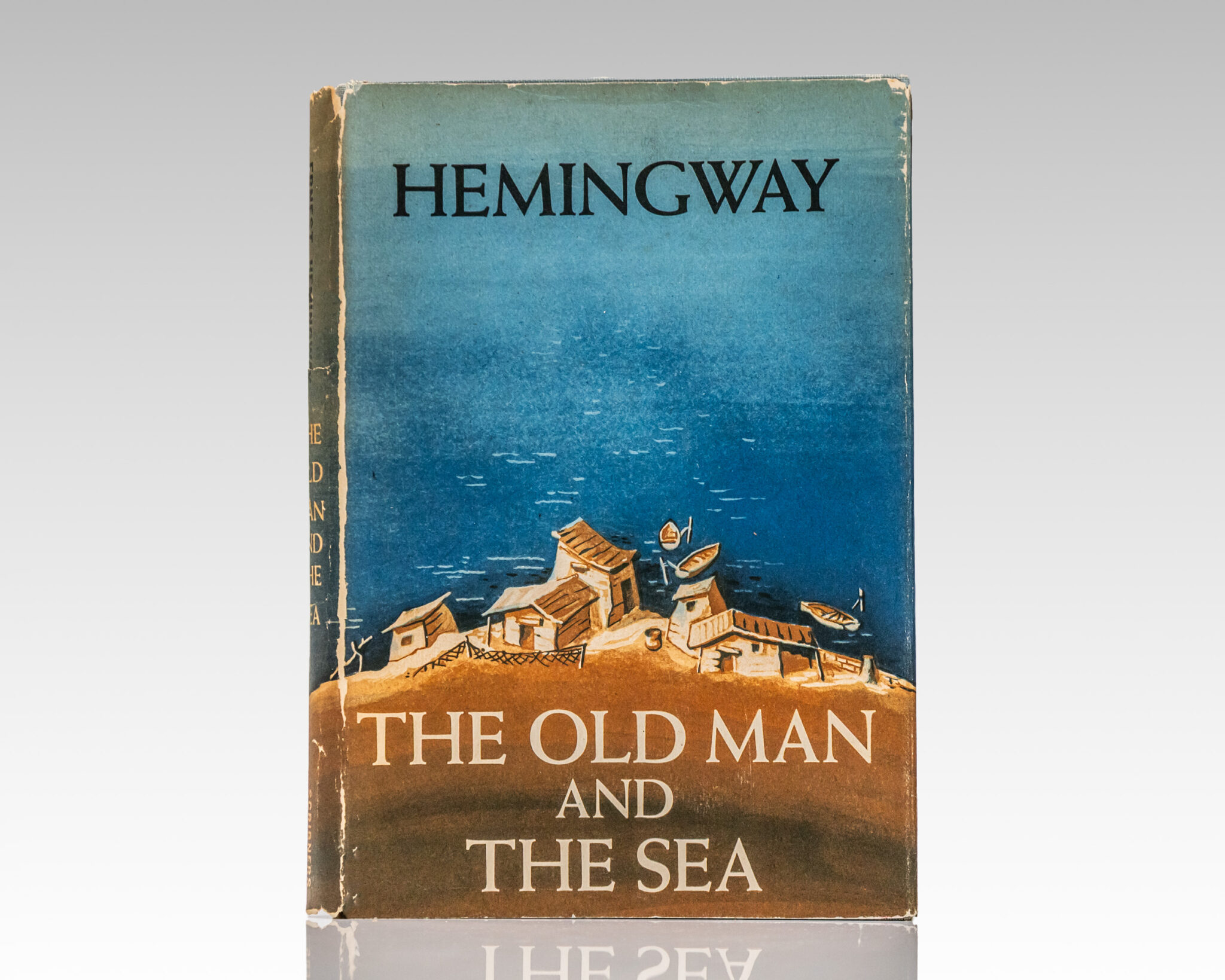
First edition of Hemingway’s Pulitzer Prize-winning novel and one of his most famous works. Octavo, original blue cloth. Association copy, inscribed by the author on the front free endpaper to Hemingway’s friend and boxing trainer George Brown, “To George from his old pal Ernie, The 1st-15th September Campaign, La Vigia, Sept 17 1955″ with a sketch of an army insignia. The recipient, George Brown is one of a handful of people outside of Hemingway’s family for whom the author signed books and letters as Ernie. Hemingway first met Brown, the owner of a gym in midtown New York, in the 1930s. The author often visited Brown when he was in the city and hosted him at his homes in Cuba and Idaho. In 1955, Hemingway invited Brown to La Vigia to be his physical trainer for the strenuous fishing sequences in the film adaptation of The Old Man and the Sea. Brown gave him postoperative rubdowns and delighted him with his unfailing solicitude. ‘Did they hurt you, Ernie?’ George would say. ‘How’s the back? Lie down like you were going to sleep. Make him a drink, René. What kind of liquor going to hurt you, boy? Hold it up to his mouth, René. Drink it slow, Ernie. Just relax good, and let me get the legs loosened up.’ Ernest reveled in such treatment (Baker, p. 531). The experience of filming took a physical toll on Hemingway and forced him to confront his own mortality: he wrote out his will on 17 September, with George as one of his witnesses. “George Brown, the erstwhile trainer of Harry Greb and the proprietor for many years of a gymnasium in New York, knew Hemingway very well for a quarter of a century. While he considered him ‘one of the finest men I’ve ever known,’ Brown’s opinion both of his ability and his ethics as a boxer was low… the gym manager had a completely straightforward view of the novelist’s psychology in these set-to’s—he was out to win, any way he could” (Lynn, Hemingway, 422-23). During the filming of The Old Man and the Sea, Hemingway brought Brown to Cuba to be his trainer: “As his trainer for this strenuous venture, he imported his old friend and boxing coach, George W. Brown. Brown gave him postoperative rubdowns and delighted him with his unfailing solicitude… Ernest reveled in such treatment, and called on George to be one of the witnesses to his will” (Baker, Ernest Hemingway, 531). Brown drove Mary and Ernest home to Idaho from Rochester when he was discharged from the Mayo Clinic and was still present as a guest in Idaho when Hemingway killed himself not long after. He was also one of the pallbearers at Hemingway’s funeral. Very good in a very good dust jacket. Photograph of Hemingway by Lee Samuels. An exceptional association.
Upon its publication in 1952 by Charles Scribner's Sons, The Old Man and the Sea was awarded the Pulitzer Prize for Fiction the following year and was cited by the Nobel Committee as contributing to the awarding of the Nobel Prize in Literature to Hemingway in 1954. The novel reinvigorated Hemingway's literary reputation. It initiated a reexamination of his entire body of work. The novel was received with such alacrity, that it restored many readers' confidence in Hemingway's capability as an author. Indeed, the publisher even wrote on an early dust jacket, calling the novel a "new classic," and it was compared by many critics to such revered works as William Faulkner's "The Bear" and Herman Melville's Moby-Dick.
Other Books by this Author