


PALLADIO, Andrea. Translated out of Italian by Pierre Le Muet. Translated into English by Godfrey Richards.
The First Book of Architecture.
London: Printed for A. Bettesworth and C. Hitch, and J. Osborn in Pater-noster-Row , 1733.
$7,500.00
In Stock
Item Number: RRB-151582
Finely Bound Eighteenth Century Example of Godfrey Richards' English Translation of Palladio‘s First Book of Architecture; Beautifully Illustrated with 71 Engraved Plates
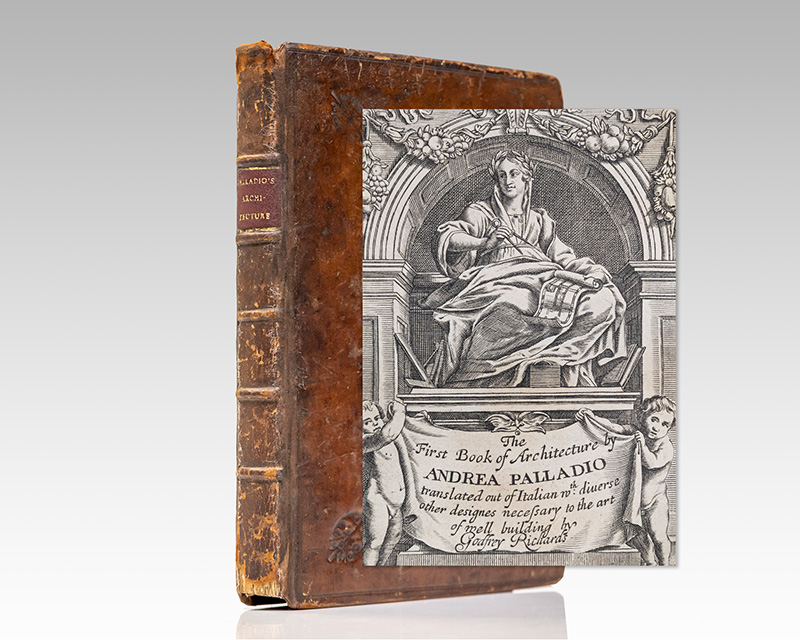
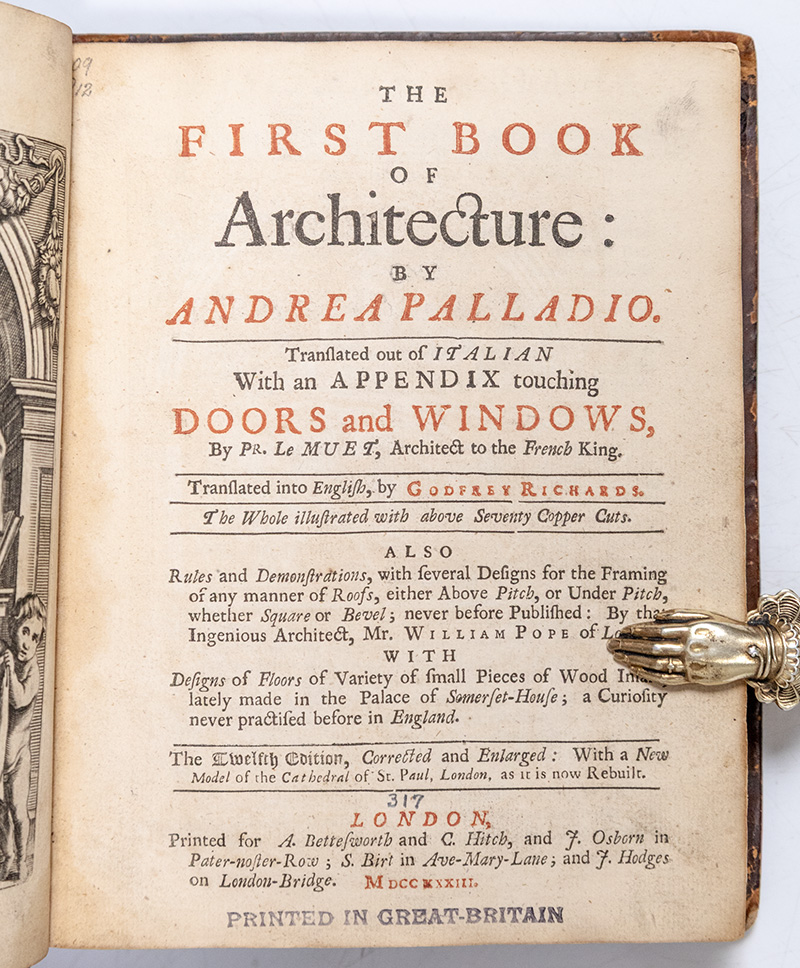
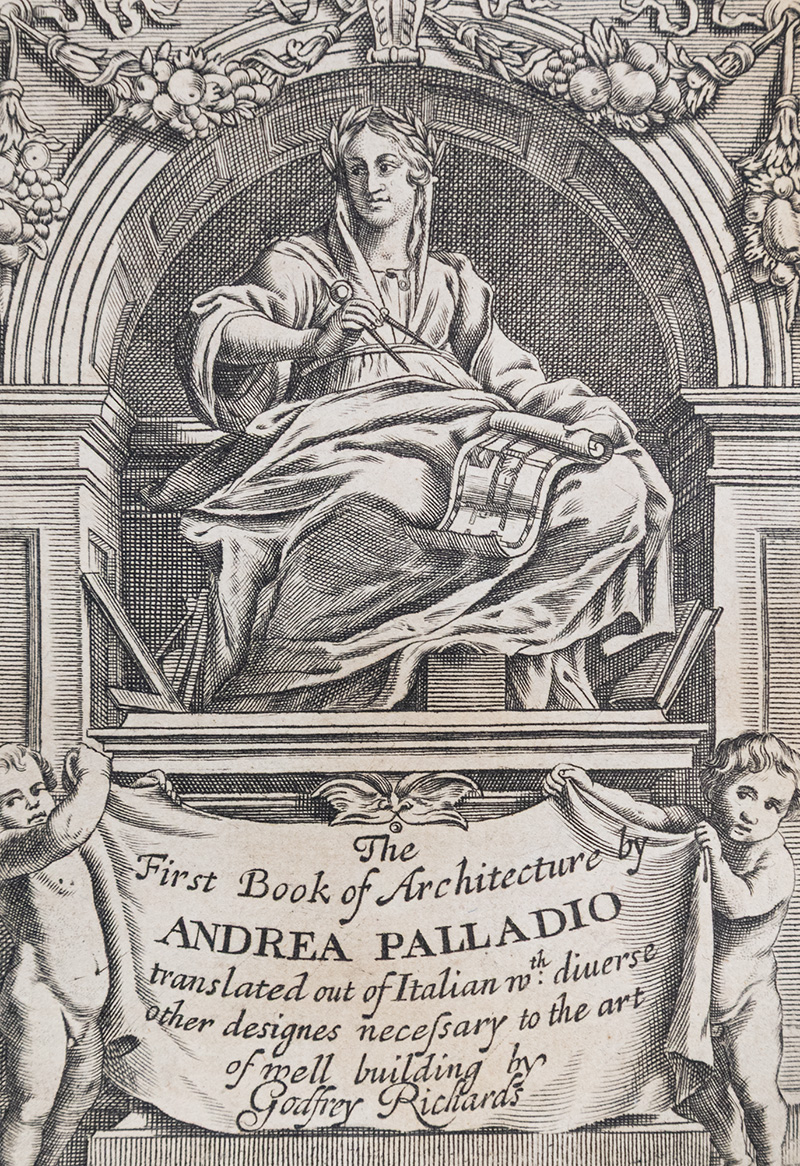
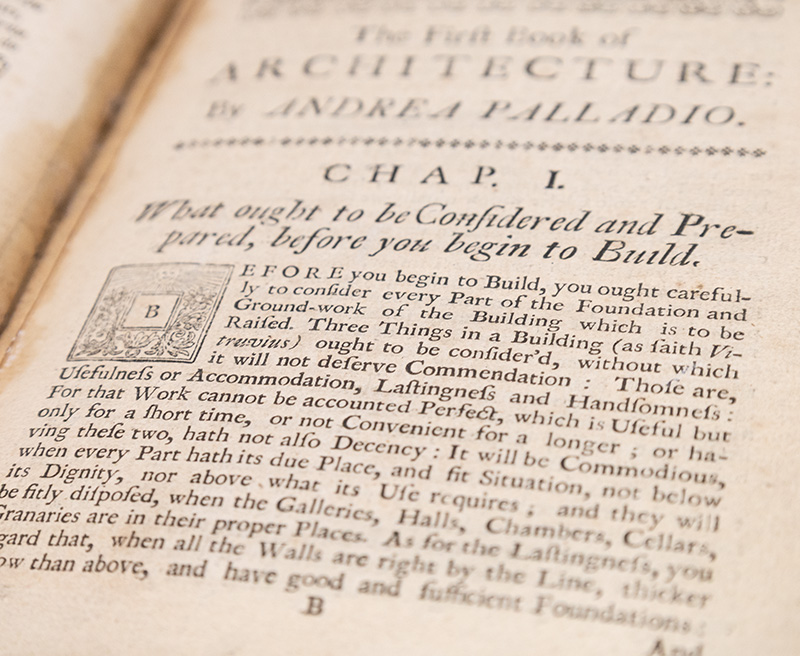
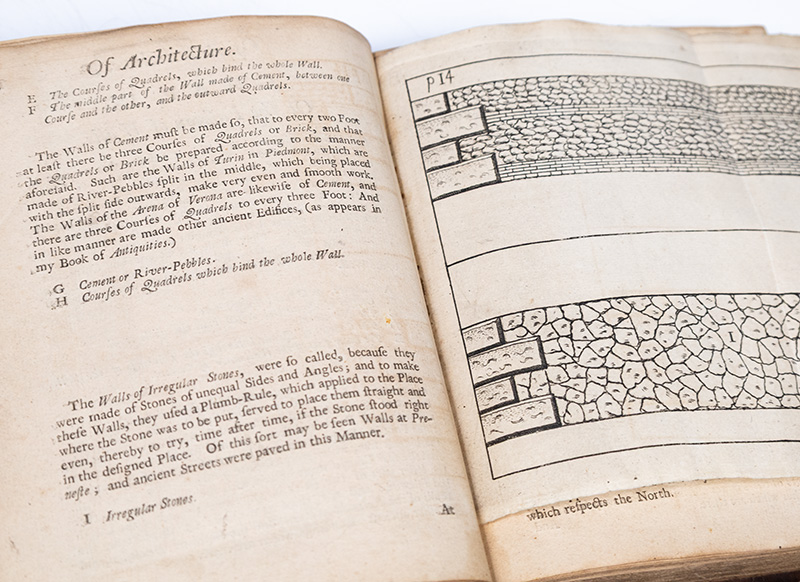
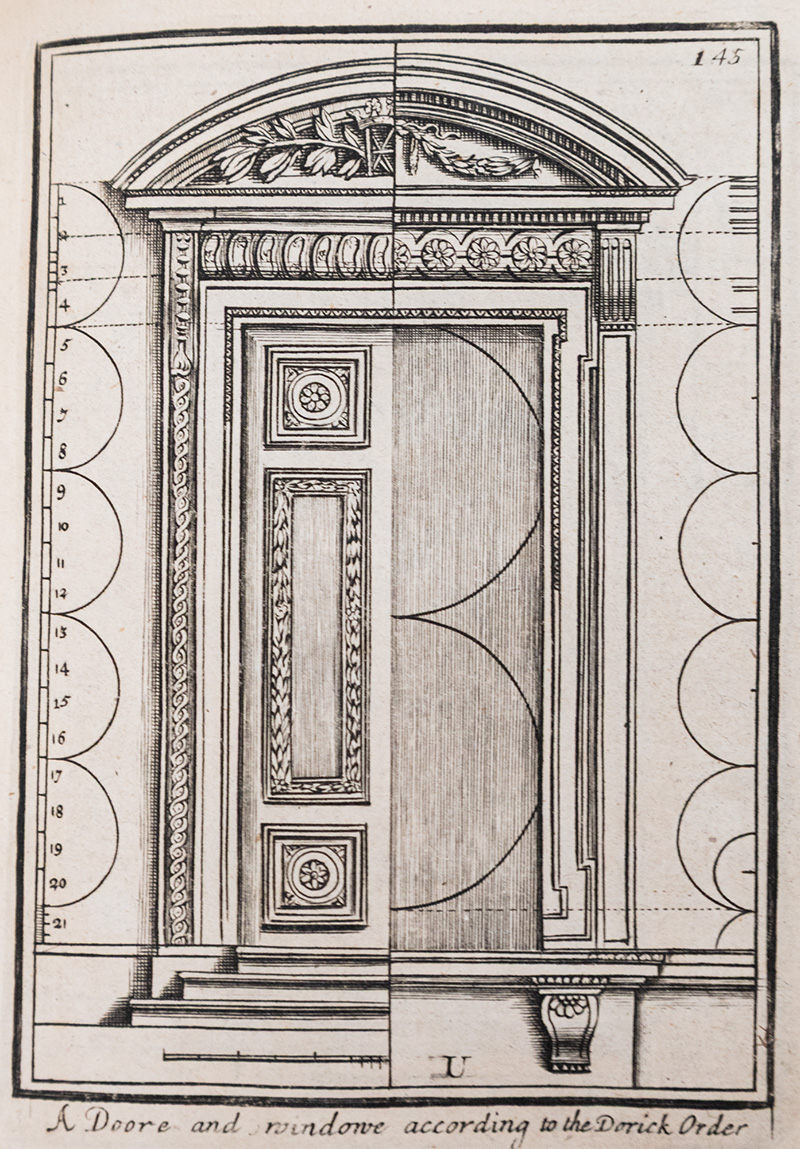
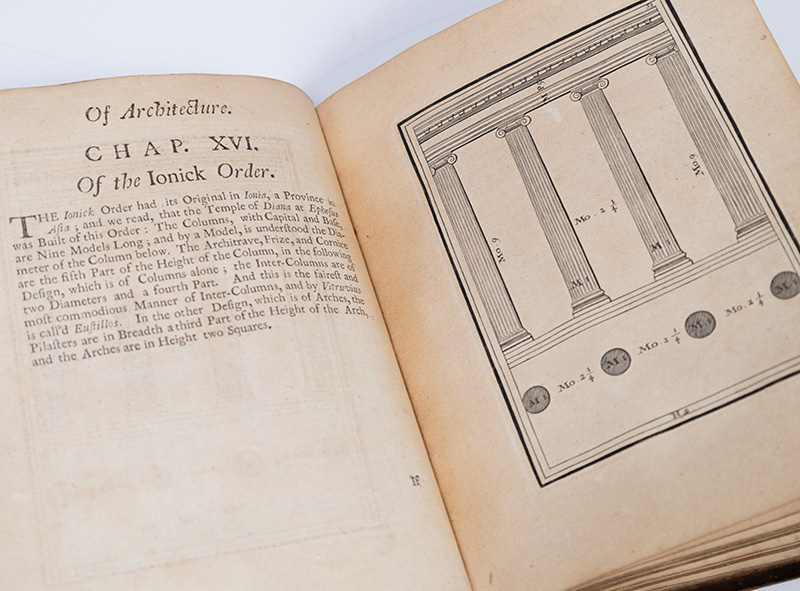
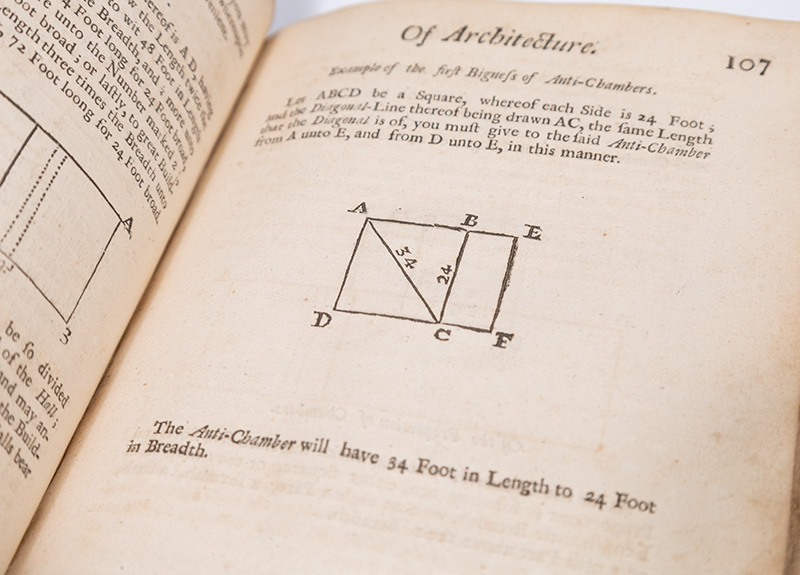
Finely bound eighteenth century example of Godfrey Richards' English translation of the first book in Palladio's monumental work. Octavo, bound in full contemporary polished calf with a morocco spine label lettered in gilt, front and rear panels decoratively stamped in blind, title page printed in red and black, additional engraved pictorial title page, illustrated with 71 engraved plates and full-page illustrations, 4 folding including a view of St. Paul's Cathedral, woodcut illustrations, advertisement leaf at end. Twelfth edition. Neat ownership inscriptions and small bookplate to the front free endpaper. Bookseller's ticket to the pastedown. In very good condition, with the engravings very crisp and bright.
One of the foremost architects of the Venetian Renaissance, Andrea Palladio (1508–1580) based his designs on the principles of classical Greek architecture and the traditions of Roman building as described by Vitruvius. He is widely regarded as one of the most influential figures in the history of Western architecture, particularly known for his villas in the Veneto, as well as his palaces in Vicenza and churches in Venice, all within the Venetian Republic. His architectural theories were codified in his treatise I Quattro Libri dell’Architettura (The Four Books of Architecture), which exerted a lasting influence on architectural practice across Europe and the United States. Palladio’s style, later termed Palladianism, combined elements of Greek, Roman, and Renaissance design, emphasizing symmetry, proportion, and harmony in a manner inspired by classical temple architecture.
The First Book of Architecture.
$7,500.00
In Stock
Other Books by this Author