

CRICK, Francis.
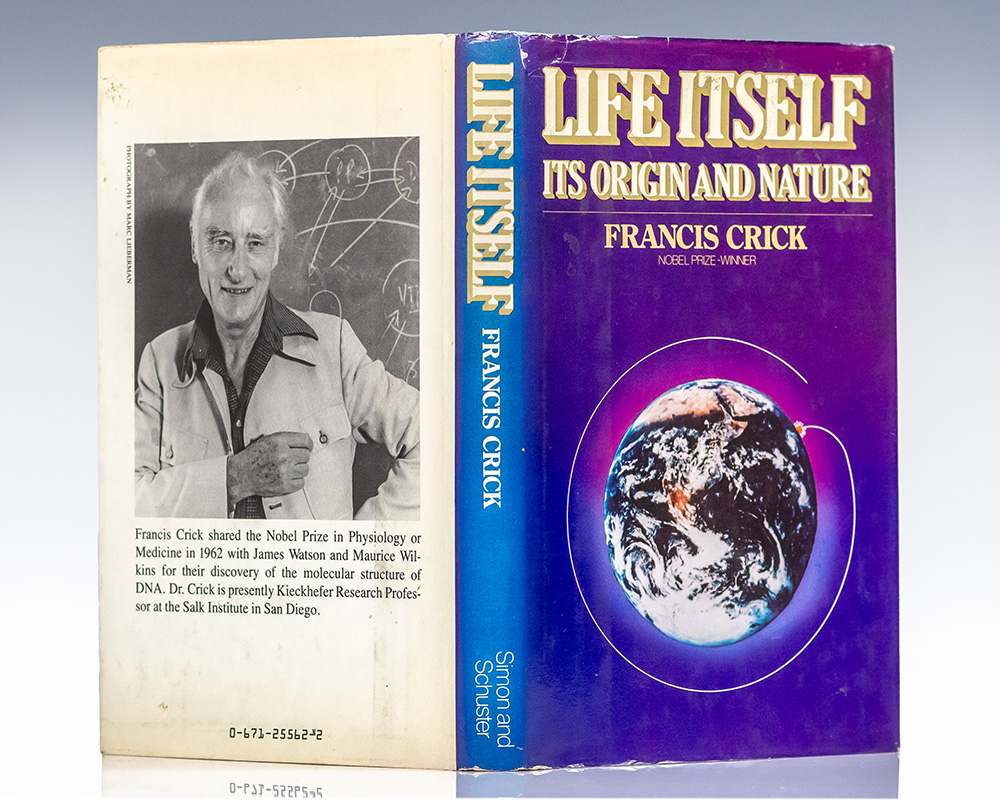
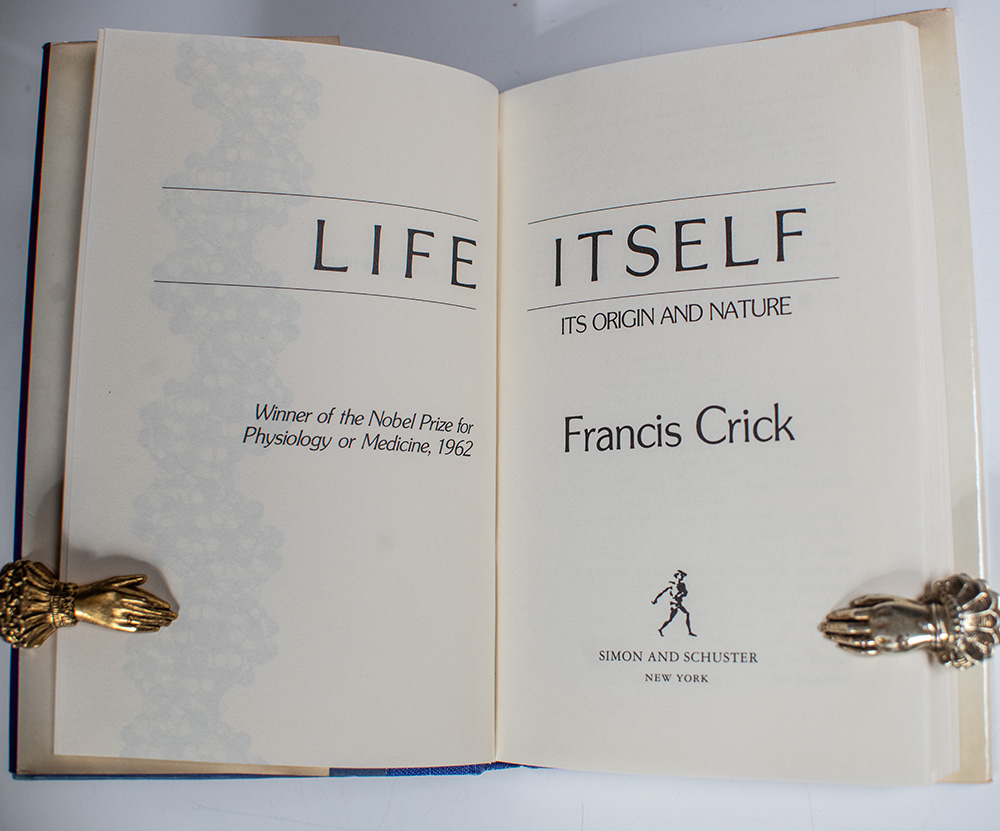
Life Itself: Its Origin and Nature.
New York: Simon and Schuster , 1981.
$1,250.00
In Stock
Item Number: RRB-148917
+$500
First Edition of Life Itself: Its Origin and Nature; inscribed by Francis Crick to his lover
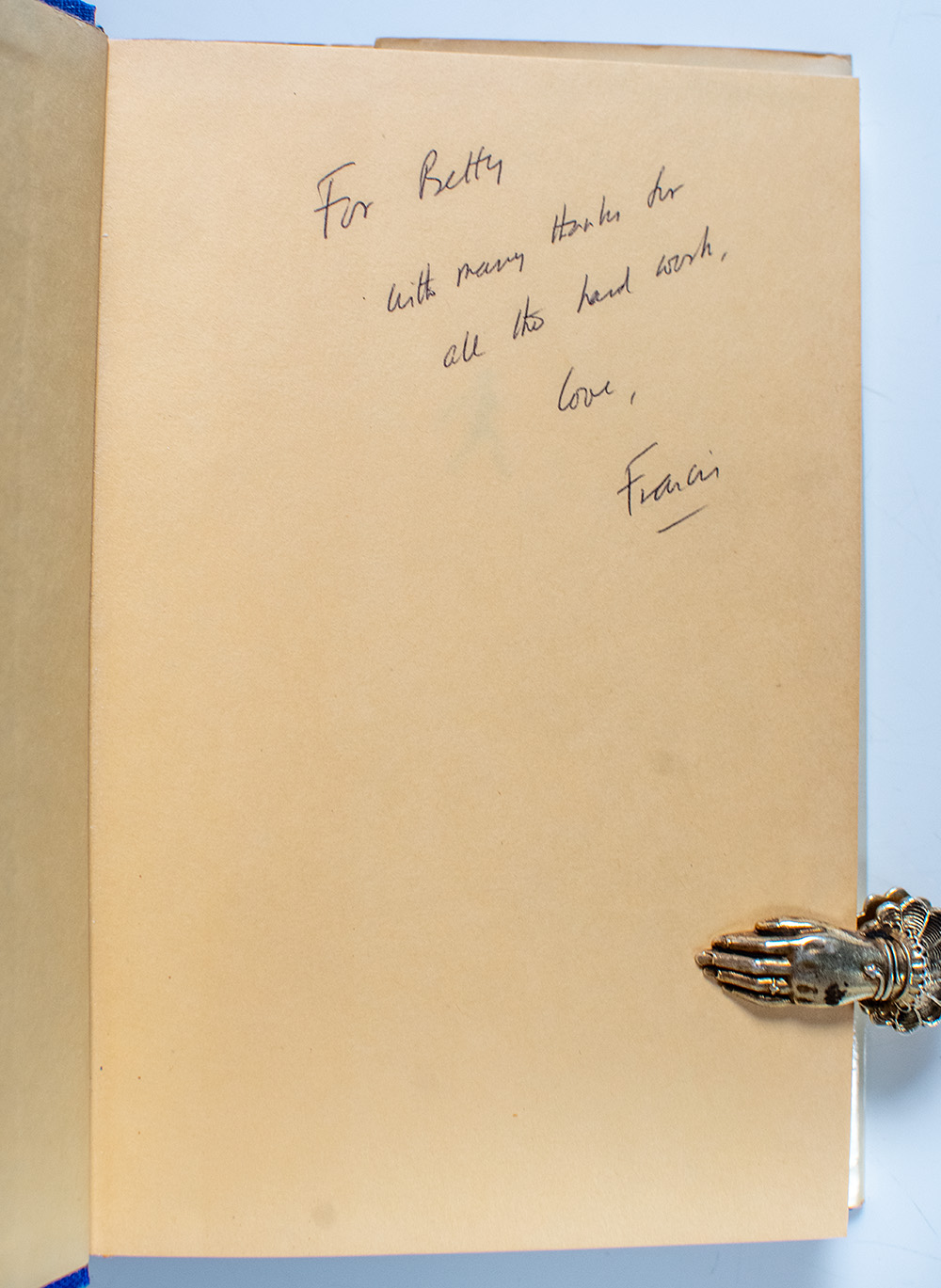
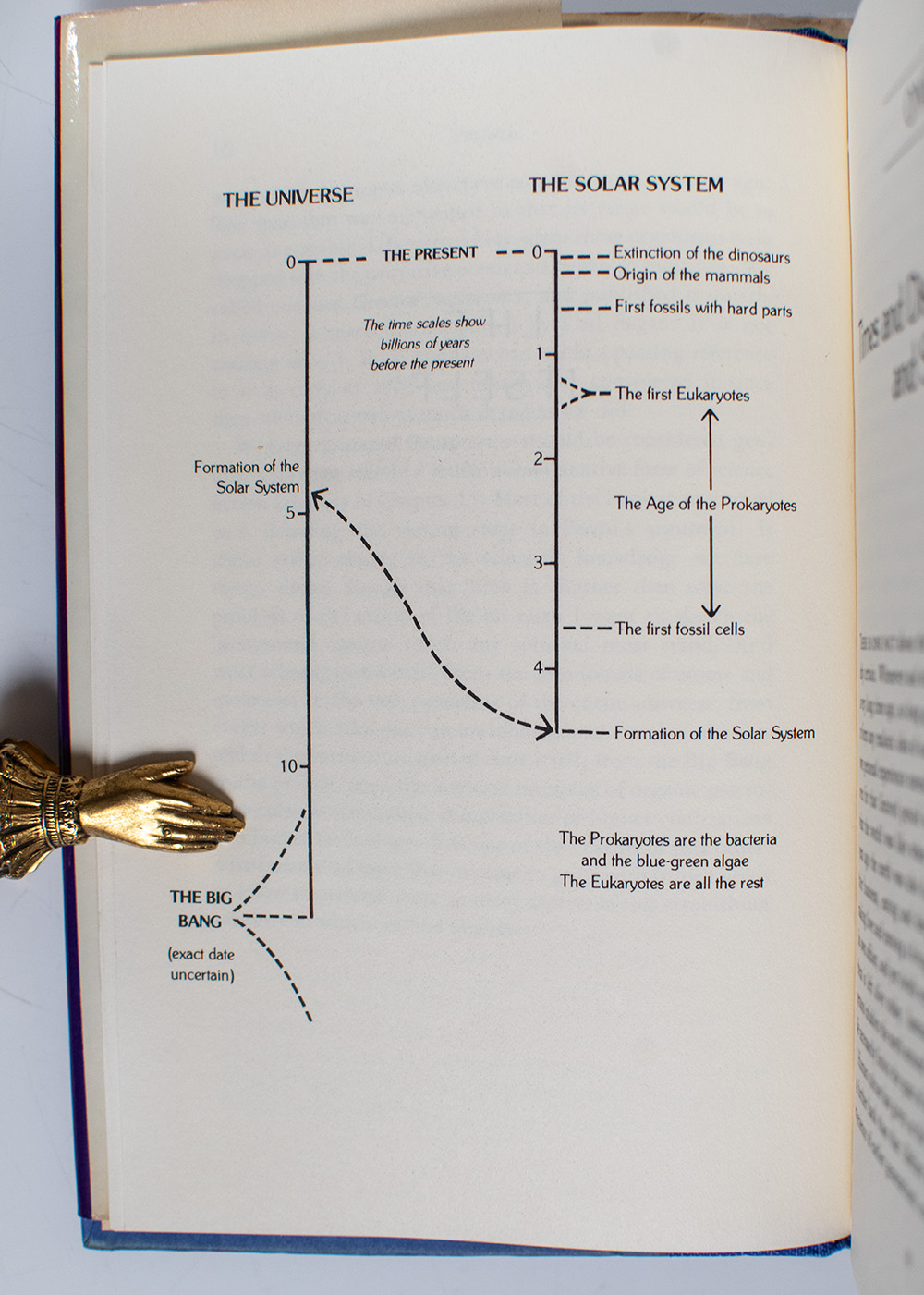
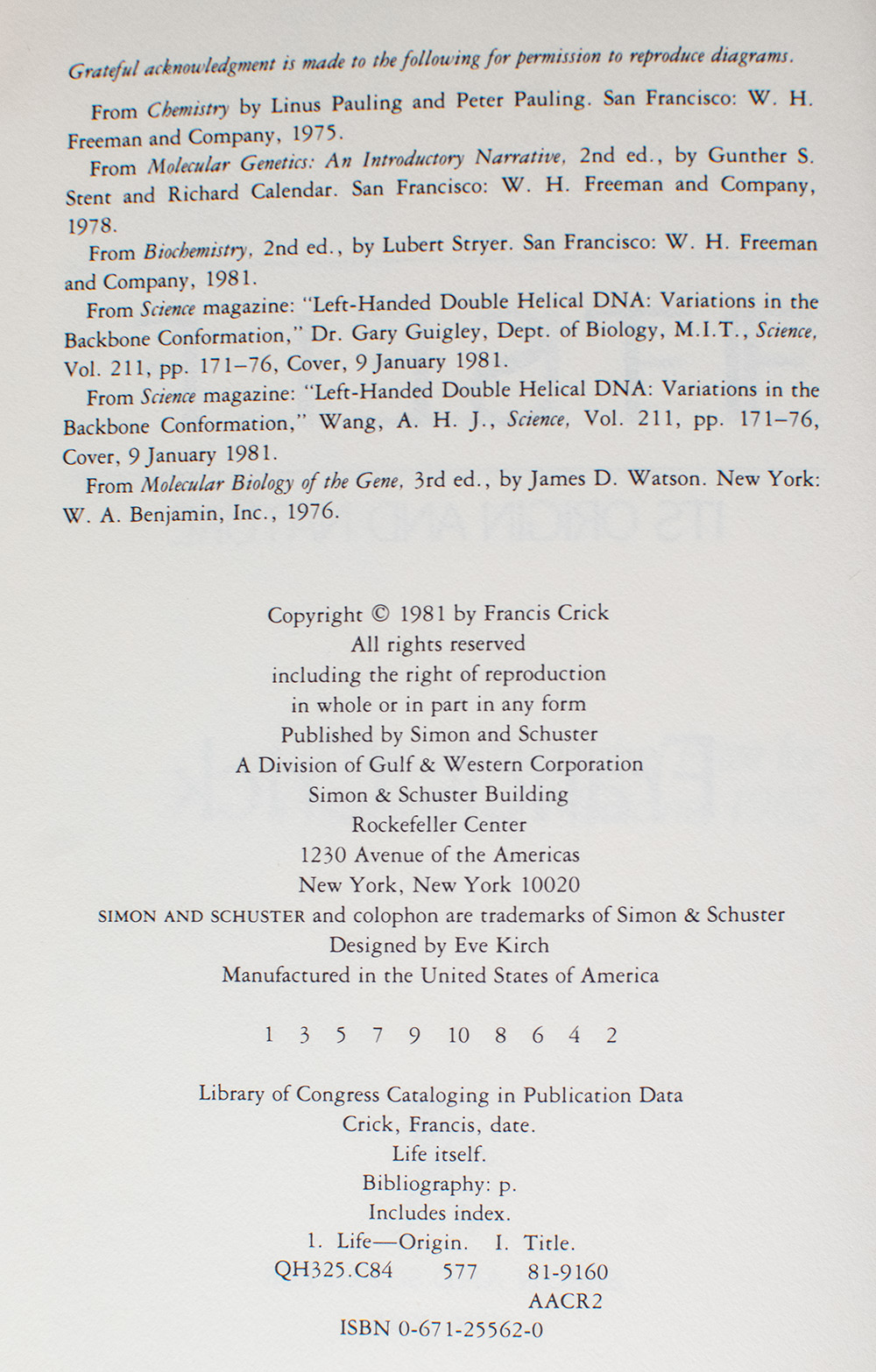
First edition of this work on biology and the origin of life and man by the Nobel Prize-winning physicist. Octavo, original half-cloth, illustrated with diagrams. Association copy, inscribed by the author in the year of publication to his personal assistant on the front free endpaper, "For Betty with many thanks for all the hard work, love, Francis." The recipient Betty "Maria" Lang was employed at the Salk Institute from 1977 to her retirement in 1994, where her organizational skills and dedication facilitated Crick’s research activities. Crick, an advocate of open marriage, enjoyed with Lang a sexual relationship between 1981 and 1992. Fine in a very good dust jacket. Jacket design by Robert Aulicino.
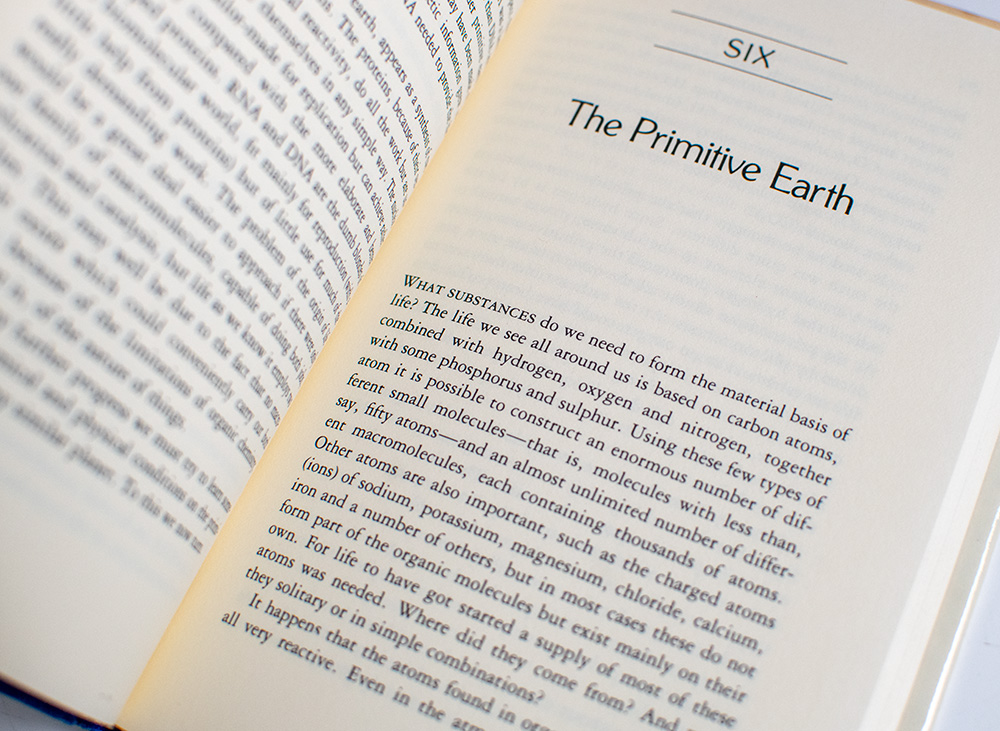
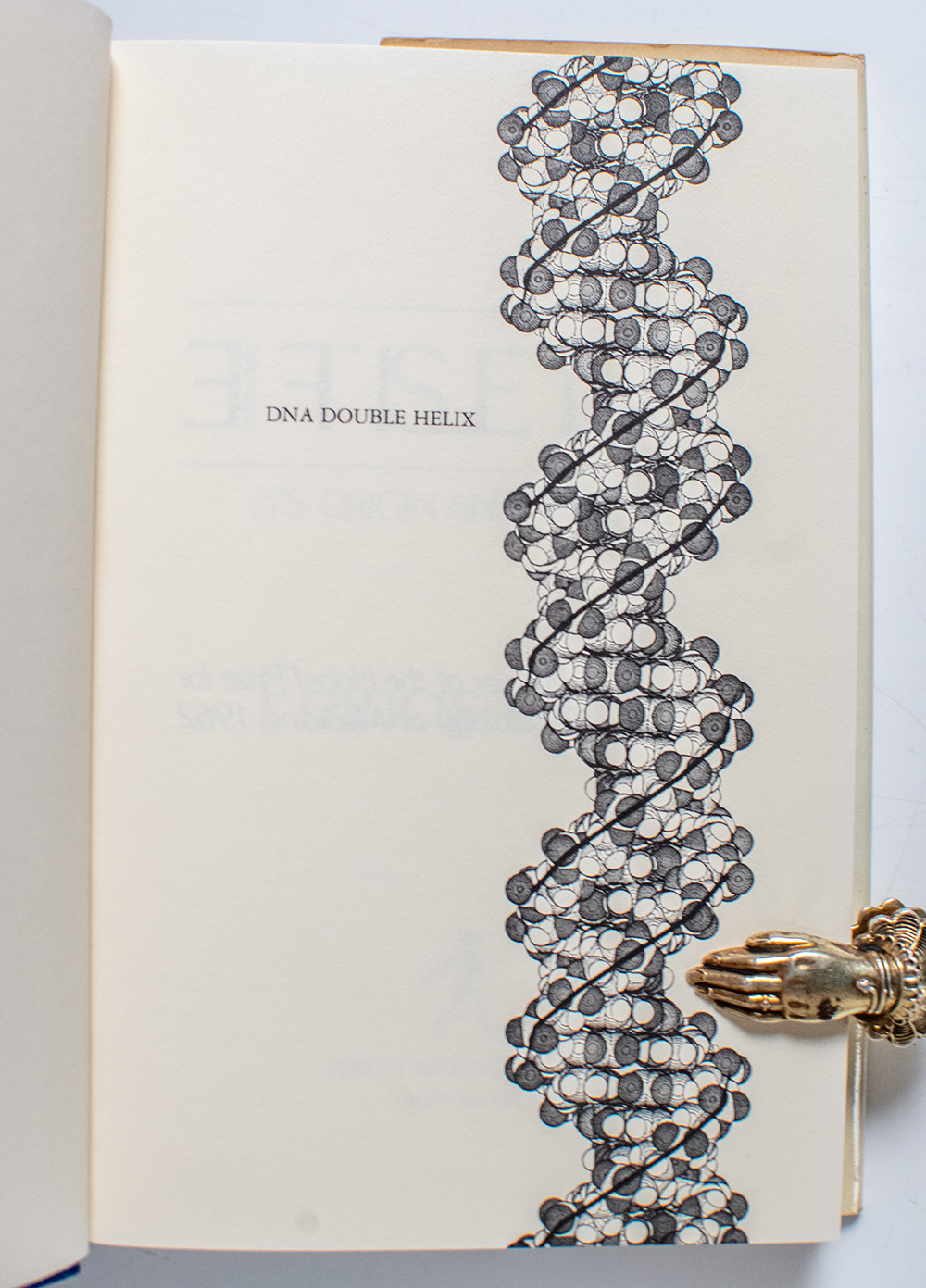
There is probably no one who has a deeper understanding of life’s biochemical basis than Sir Francis Crick. In 1962, he won the Nobel Prize in Medicine, along with J. D. Watson and M. H. F. Wilkins, for breakthrough studies on the molecular structure of DNA. Known primarily for his co-discovery of the DNA double helix, Crick here shifts focus to the question of how life could have arisen on Earth. Rejecting the adequacy of purely terrestrial explanations, he famously advanced the hypothesis of “directed panspermia,” suggesting that life may have been intentionally seeded on Earth by an advanced extraterrestrial civilization. While speculative, Crick’s argument underscores his broader concern with the improbability of complex molecular structures emerging spontaneously under primitive Earth conditions.
Life Itself: Its Origin and Nature.
$1,250.00
In Stock
Other Books by this Author


![1962 Nobel Prize-Winning Scientists Signed Photograph. [James D. Watson, Francis Crick and Maurice Wilkins Signed Photograph].](https://raptisrarebooks2.bvbeta.com/wp-content/uploads/2022/11/RRB-138937-1024x726.jpg)