
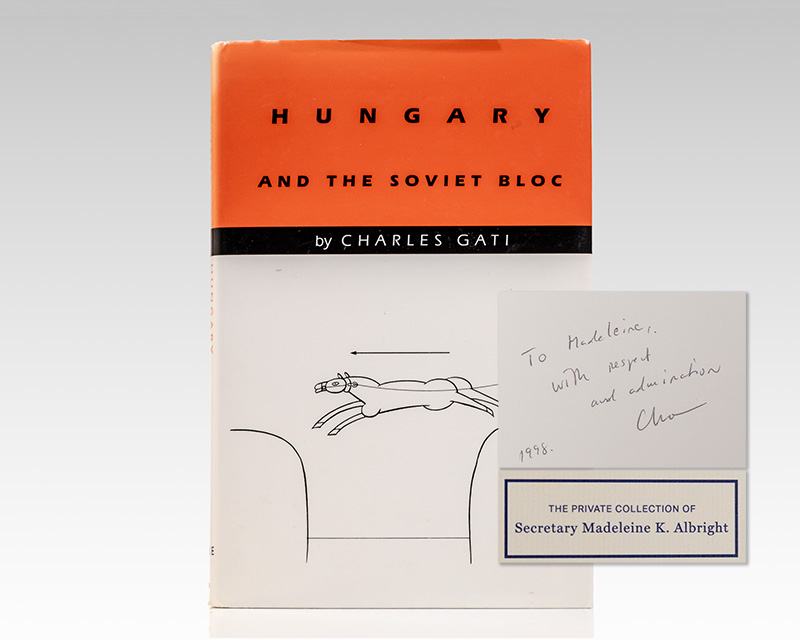
GATI, Charles [Madeleine K. Albright].
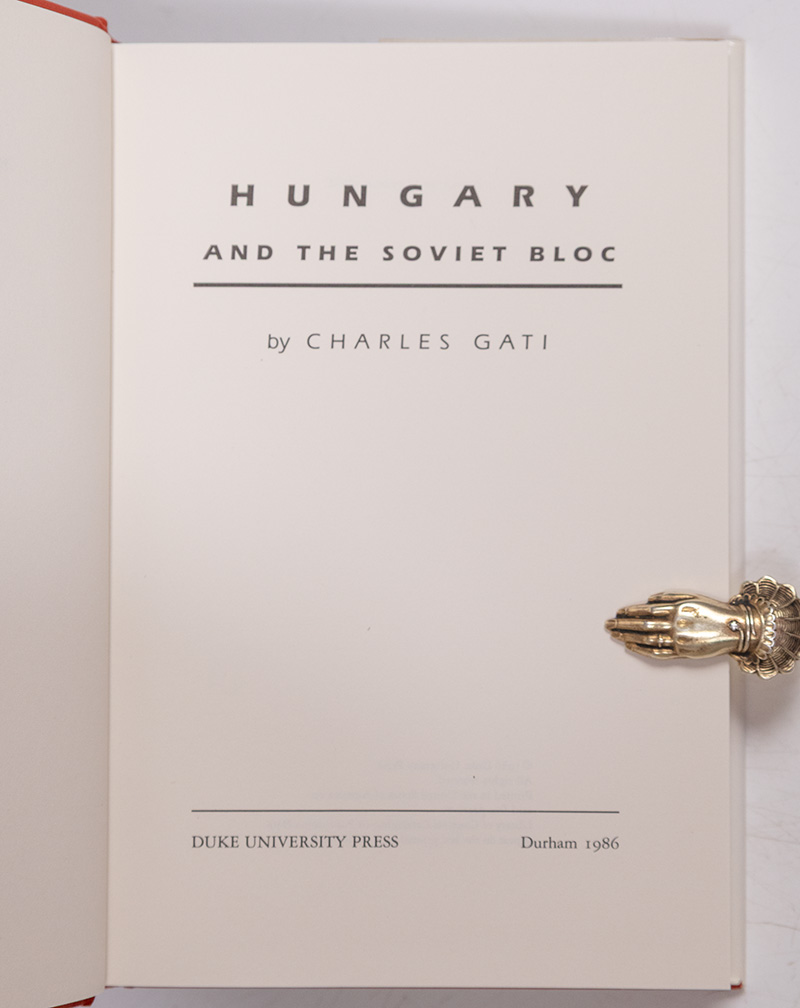
Hungary And The Soviet Bloc.
Durham: Duke University Press , 1986.
$400.00
In Stock
Item Number: RRB-149053
+$500
First edition of Gati's Hungary and the Soviet Bloc
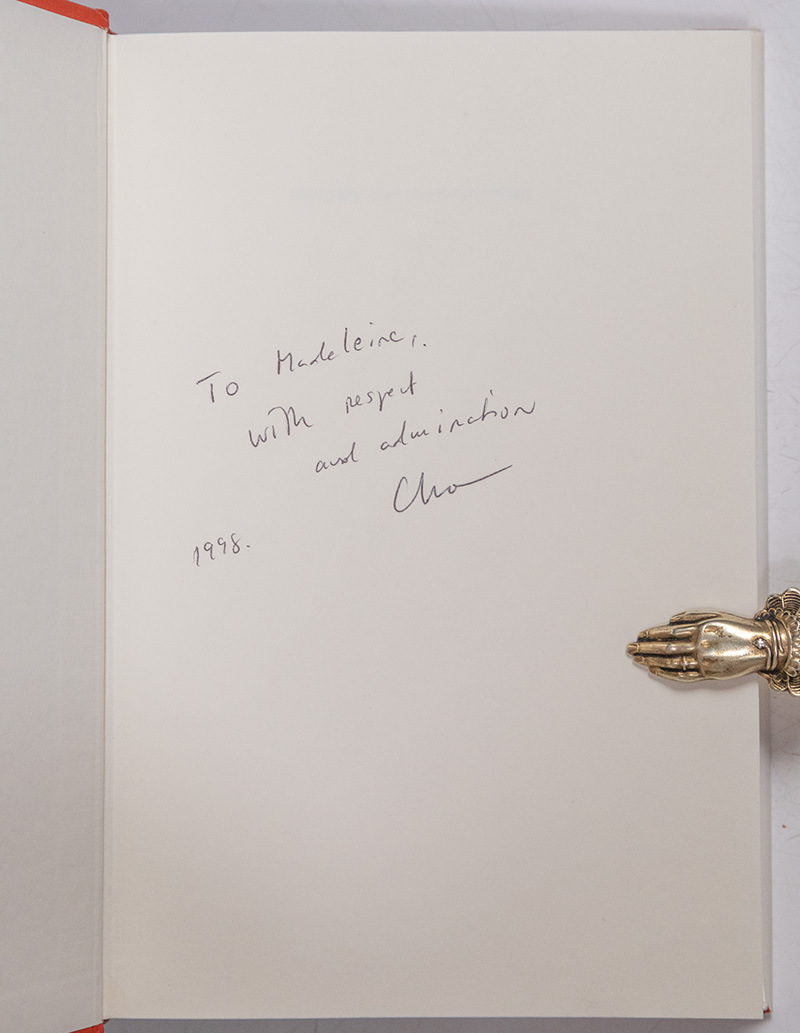
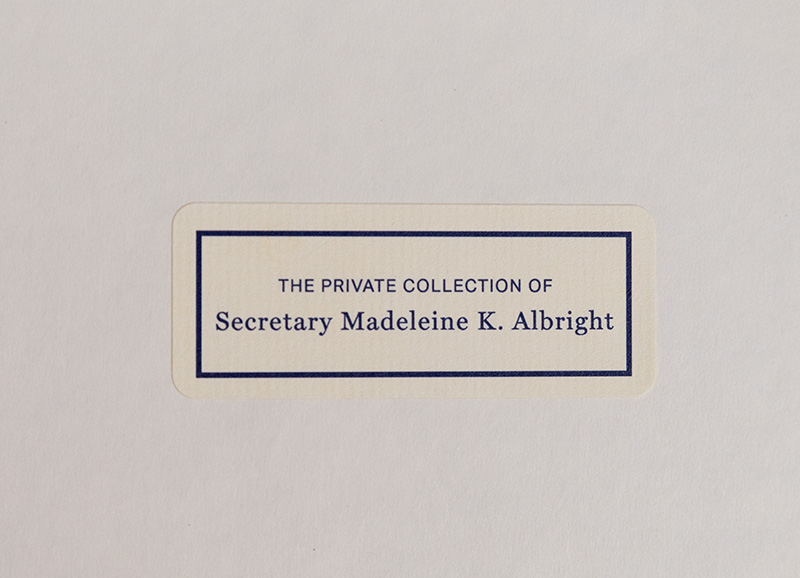
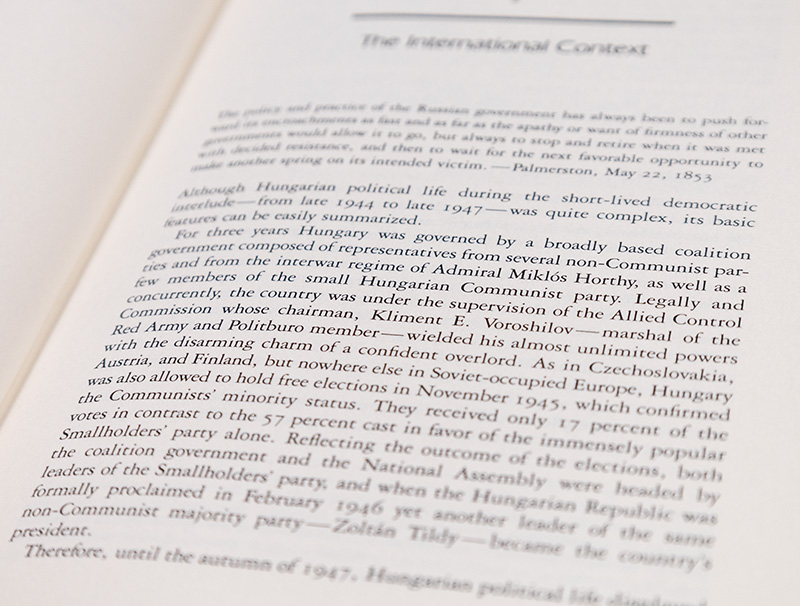
First edition of Gati's examination on Hungary's relationship with the Soviet Union. Octavo, original publisher’s cloth. Presentation copy, inscribed by author on the front free endpaper, "To Madeleine, with respect and admiration Charles 1998." The recipient, Madeleine K. Albright was the first woman to serve as the U.S. Secretary of State. She acted under President Bill Clinton from 1997 to 2001, leading the United States through foreign policy in the Middle East with the endorsement of military action in Iraq. At the 1998 NATO summit, Albright coined the “3 Ds” of NATO, “which is no diminution of NATO, no discrimination and no duplication – because I think that we don’t need any of those three “Ds” to happen.” After her tenure as Secretary of State, she served as chair of the consulting Albright Stonebridge Group and was the Michael and Virginia Mortara Endowed Distinguished Professor in the Practice of Diplomacy at Georgetown University’s School of Foreign Service. For Albright’s contributions to foreign policy and relations that defined a century, President Barack Obama awarded her the Presidential Medal of Freedom in 2012. Fine in a near fine dust jacket. Bookplate to the front pastedown from, “The Private Collection of Secretary Madeleine K. Albright.”
Hungary and the Soviet Bloc is a scholarly work that explores Hungary's political, social, and economic dynamics within the context of the Soviet-dominated Eastern Bloc during the 20th century. The book examines Hungary's relationship with the Soviet Union, particularly during the Cold War, and its experiences under Soviet influence, including the 1956 Hungarian Revolution. It discusses the complexities of Hungary's position as a satellite state within the larger framework of Soviet policies, addressing both internal resistance movements and the efforts of the Hungarian government to navigate the pressures of communist rule. The text provides a comprehensive analysis of Hungary's political landscape, the impact of Soviet policies on Hungarian society, and the country's role in the broader geopolitical struggles of the Cold War era. Through historical analysis, Hungary and the Soviet Bloc offers valuable insights into the mechanisms of Soviet control and the responses of Eastern European nations to Soviet domination.
Hungary And The Soviet Bloc.
$400.00
In Stock
Other Books by this Author