From Russia, With Love.
FLEMING, Ian.
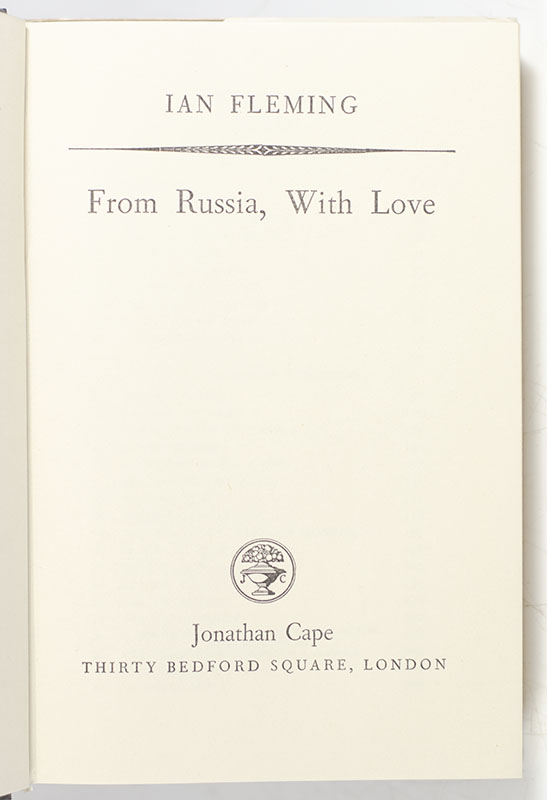
From Russia, With Love.
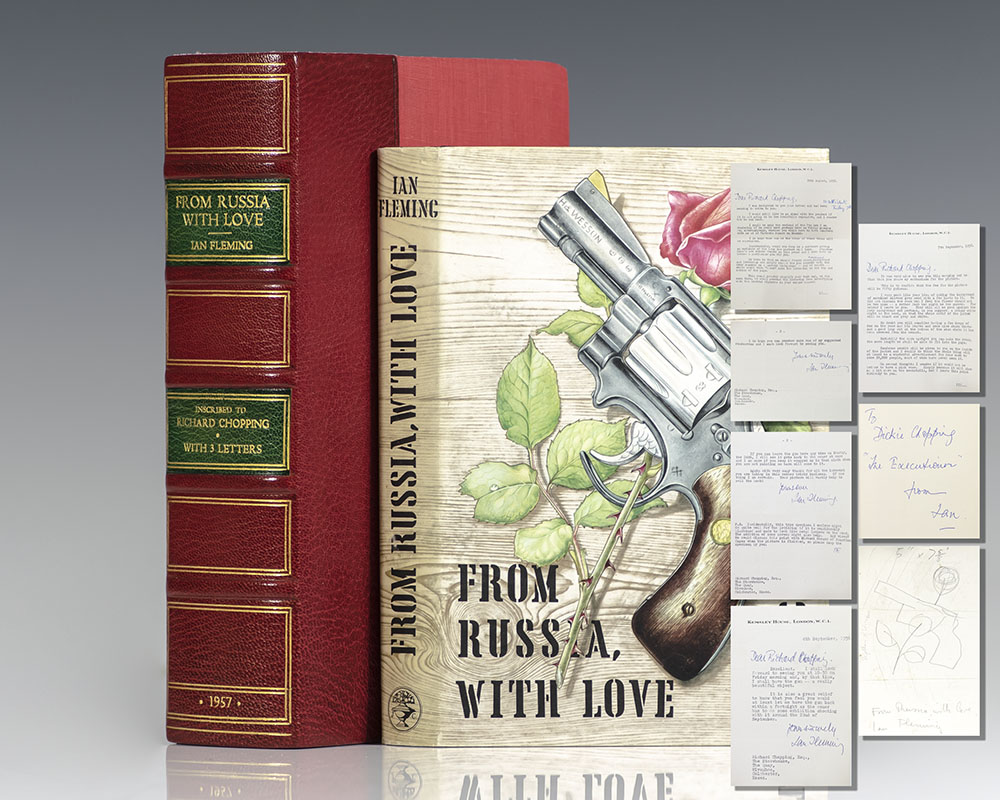
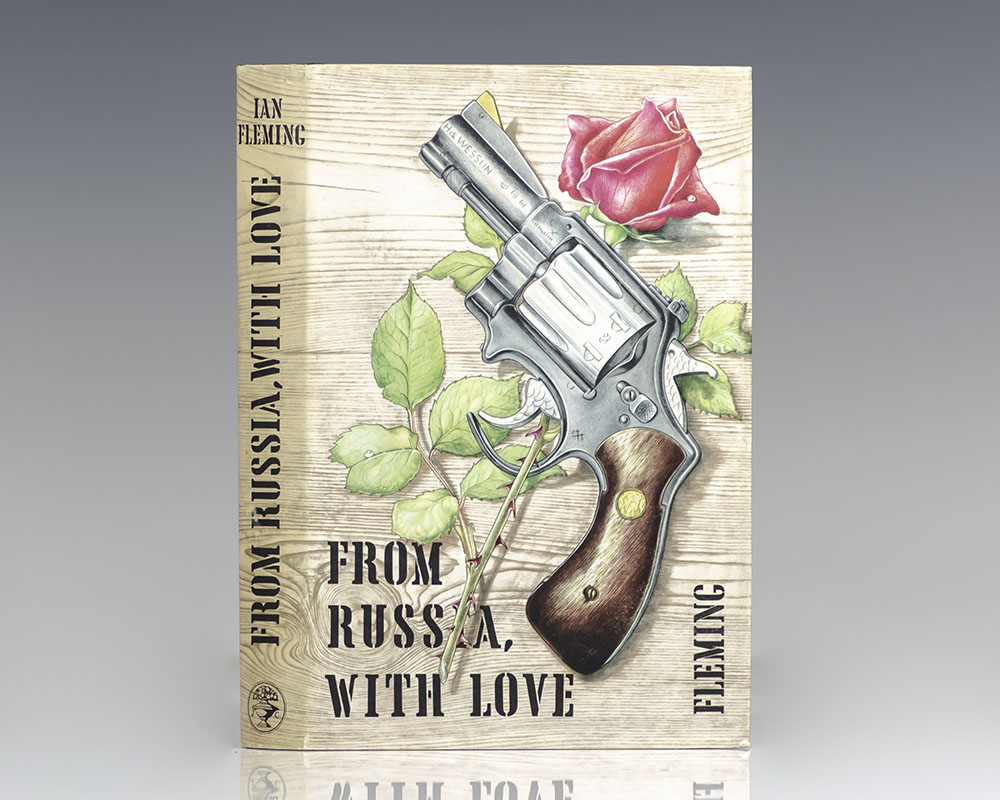
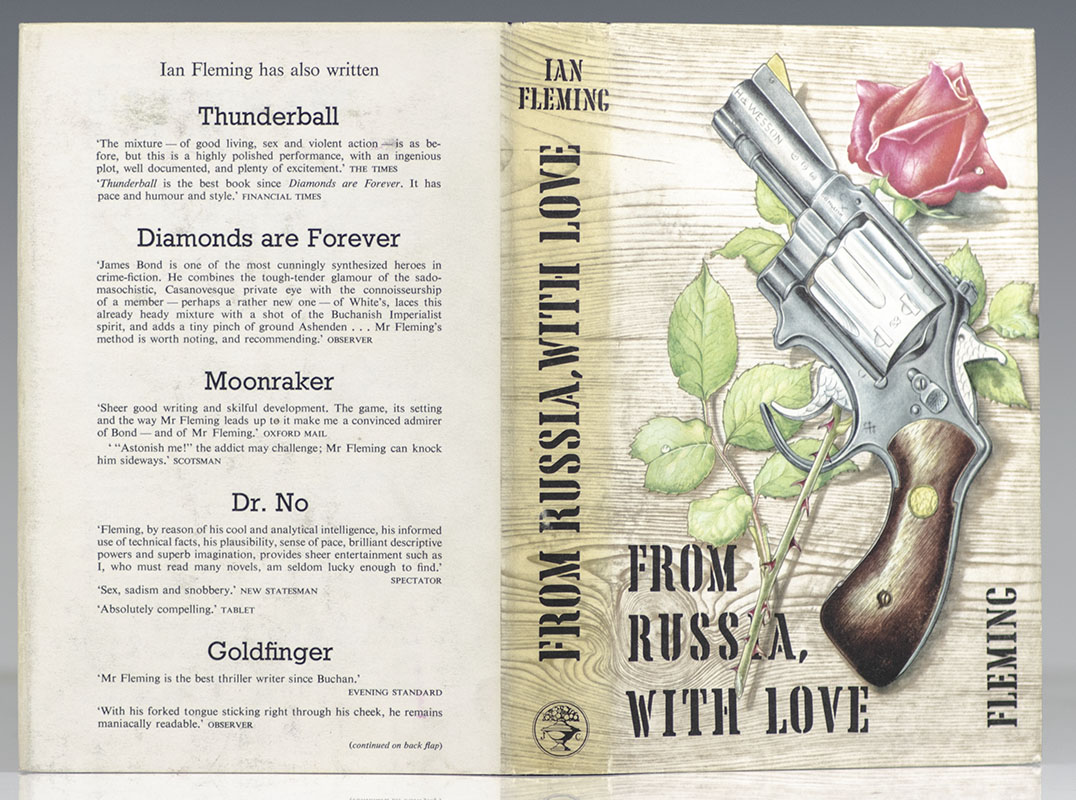
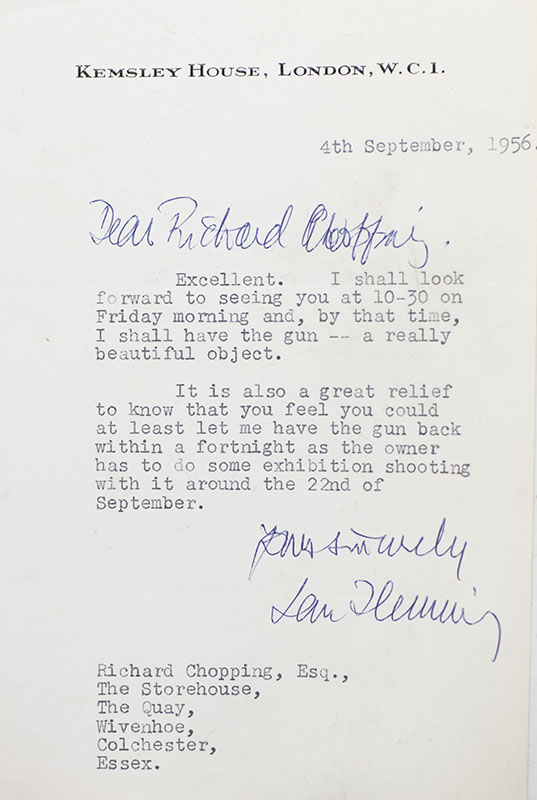
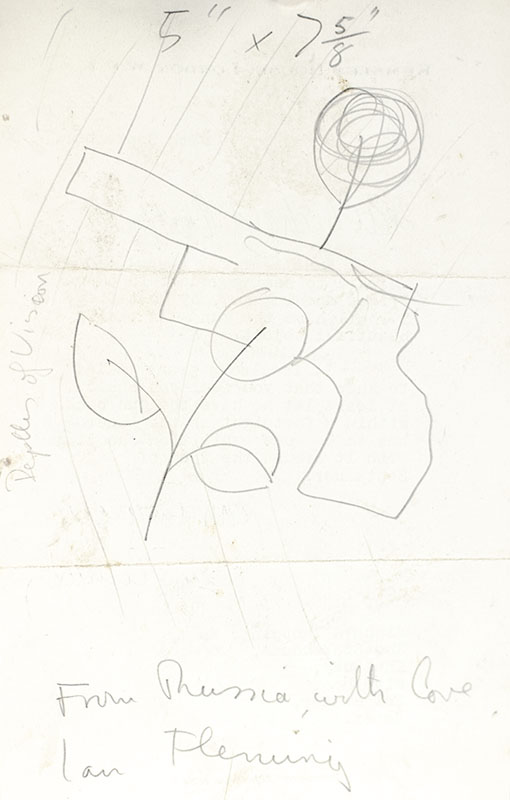
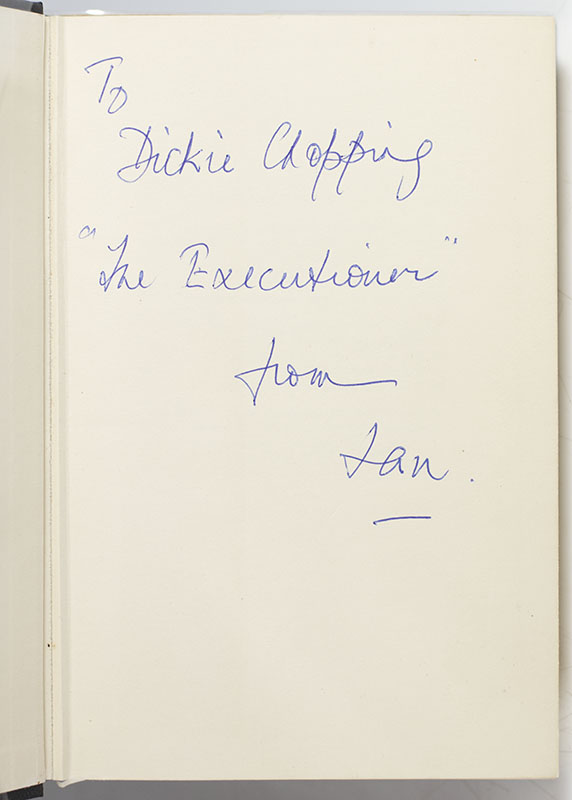
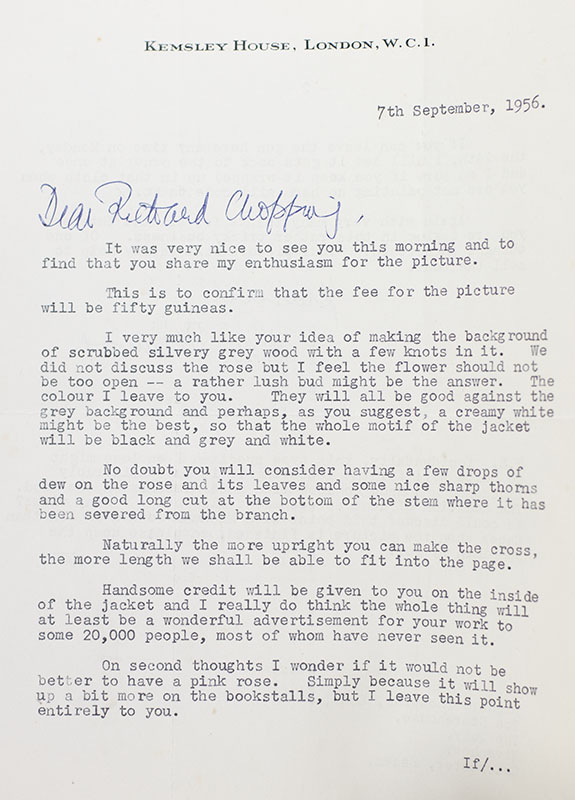
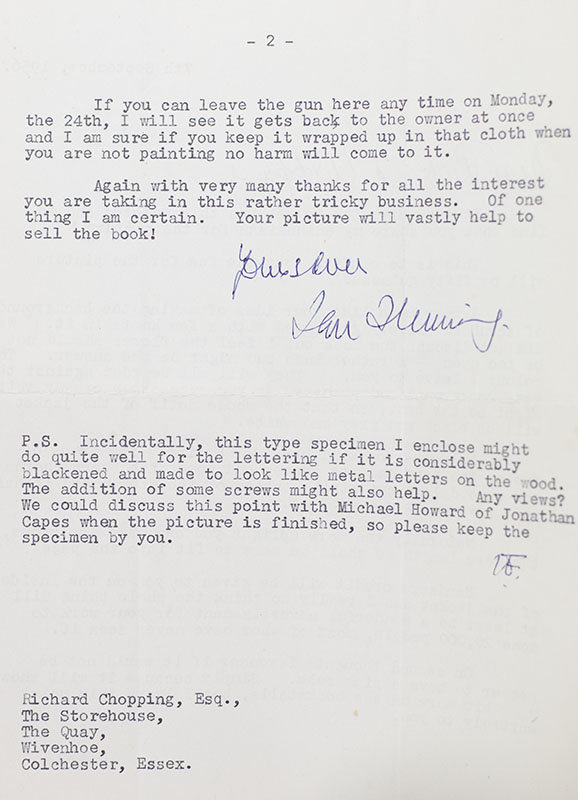
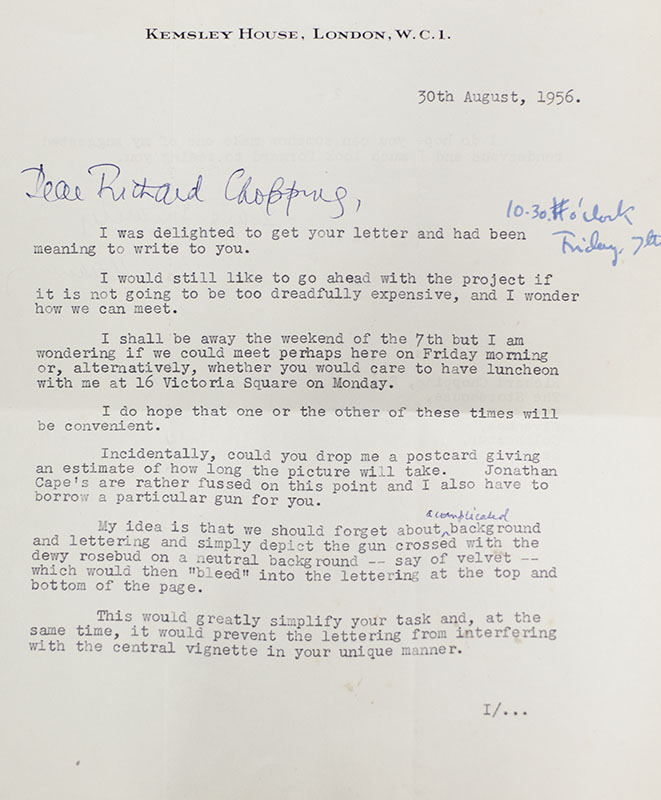
"To Dickie Chopping 'the executioner'": First edition of From Russia, With Love; inscribed by Ian Fleming to dust jacket artist Richard Chopping with three letters discussing the jacket design and Chopping's preliminary sketch of the rose and gun
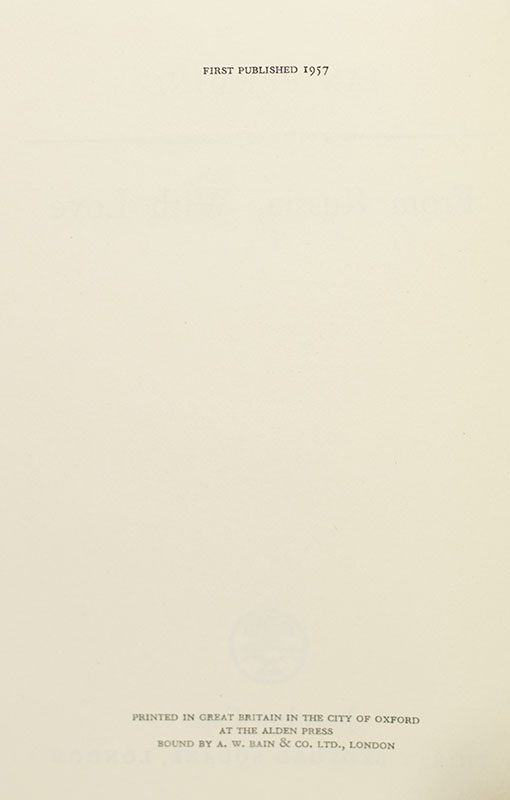
London: Jonathan Cape, 1957.
We're sorry, this item has sold.
Out of Stock
Item Number: 122007
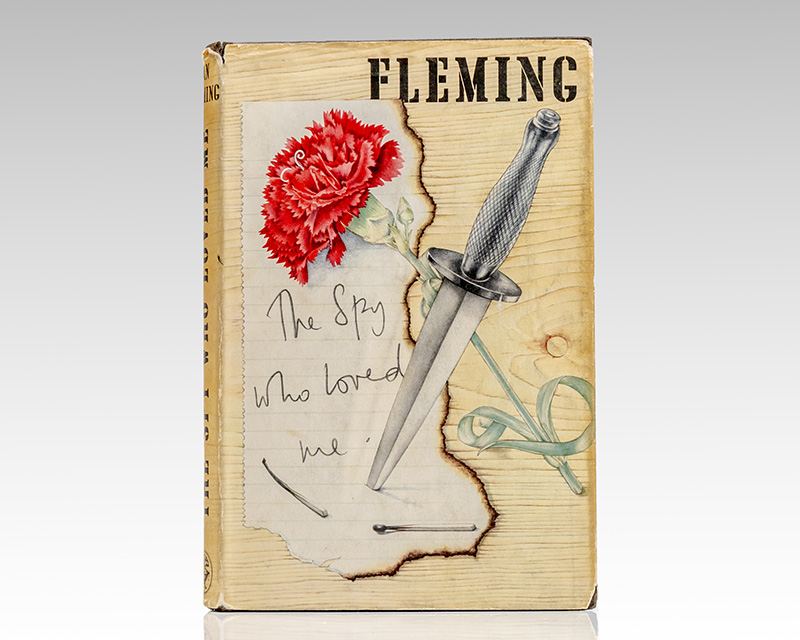
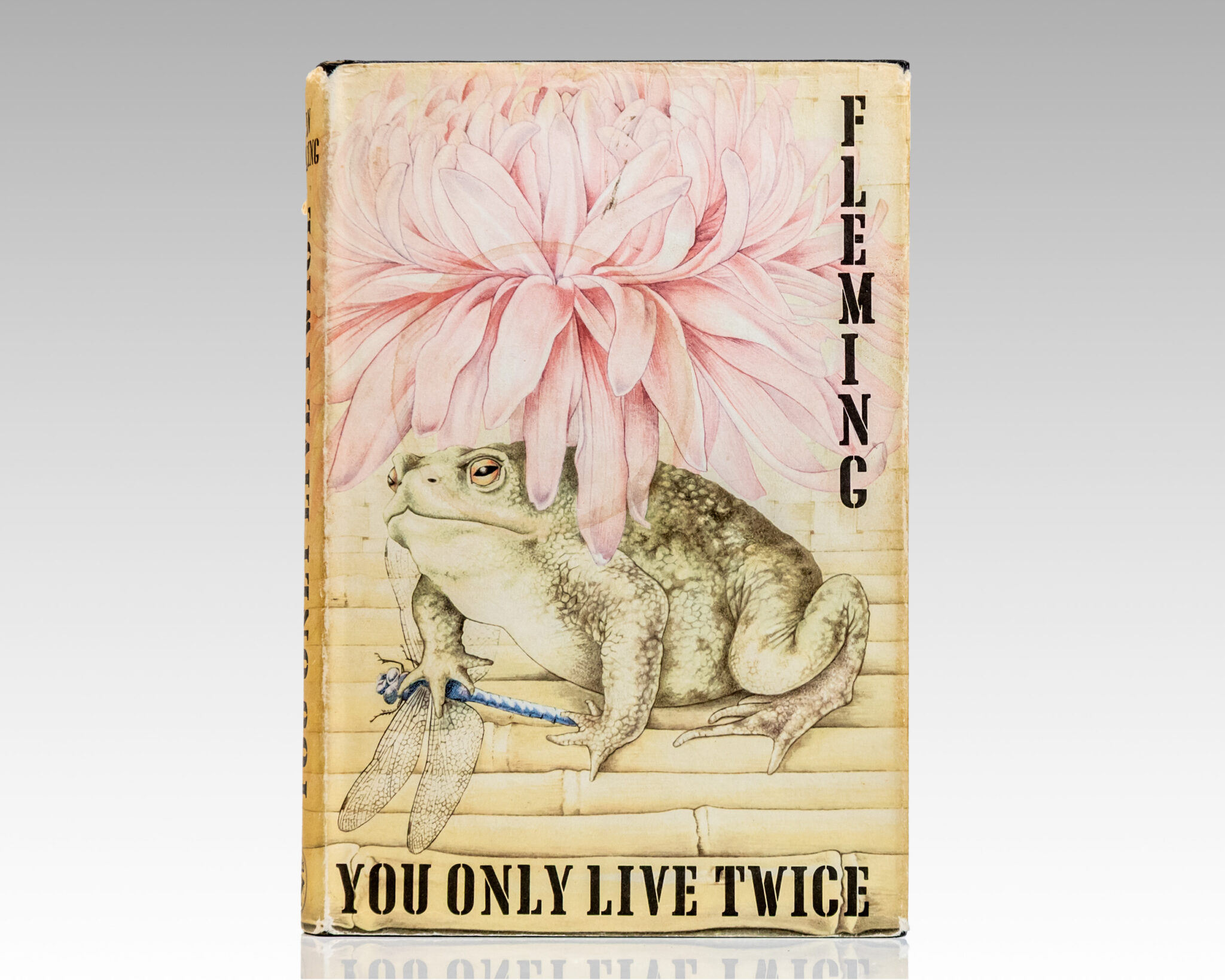
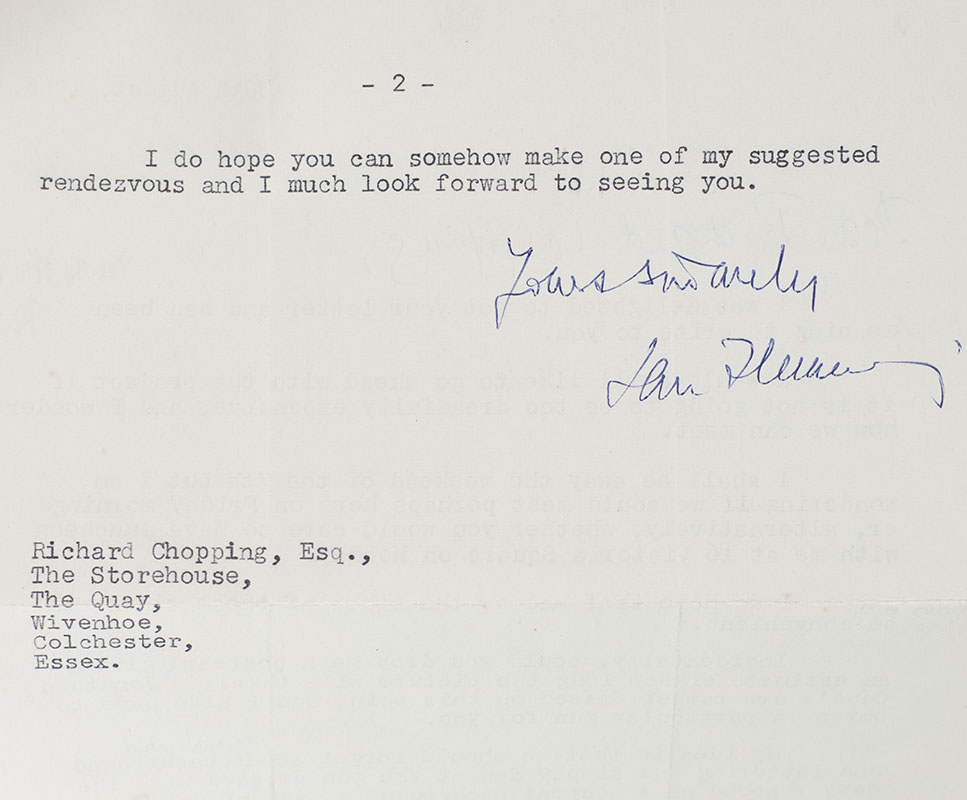
First edition of the fifth James Bond Novel and the first to feature a dust jacket design by Richard Chopping. Octavo, original cloth with gilt titles to the spine, gilt rose and gun emblem to the front panel. Association copy, inscribed by Ian Fleming to Richard Chopping, “To Dickie Chopping “The Executioner” from Ian.” The recipient, British illustrator Richard Chopping’s designs have become an iconic component of the Bond cultural phenomenon. Fleming’s wife, Ann, introduced him to Chopping in 1956, then a young painter, and after a few months of correspondence the initial design for the From Russia, With Love dust jacket was conceived. Following this initial collaboration, Chopping would design all of the subsequent James Bond dust-jackets (with the exception of Dr. No) including: Goldfinger, For Your Eyes Only, Thunderball, The Spy Who Loved Me, On Her Majesty’s Secret Service, You Only Live Twice, The Man with the Golden Gun, and Octopussy and The Living Daylights. With three typed letters signed by Fleming on his Kemsley House letterhead discussing his ideas for the design of the jacket for From Russia with Love with Chopping. Dated 30th August, 1956 the earliest letter reads in part, “Dear Richard Chopping, I was delighted to get your letter and had been meaning to write you. I would still like to go ahead with the project if it is not going to be dreadfully expensive, and I wonder how we can meet… Incidentally could you drop me a postcard giving me an estimate of how long the picture will take. Johnathan Cape’s are rather fussed on this point and I also have to borrow a particular gun for you. My idea is that we should forget about a complicated background and lettering and simply depict a gun crossed with the dewy rosebud on a neutral background — say of velvet — which would then “bleed” into the lettering at the top and bottom of the page. This would greatly simplify your task and, at the same time, it would prevent the lettering from interfering with the central vignette in your unique manner… Yours sincerely Ian Fleming.” The second letter, dated 4th September, 1956 reads in full, “Dear Richard Chopping, Excellent. I shall look forward to seeing you at 10-30 on Friday morning and, by that time, I shall have the gun — a really beautiful object. It is also a great relief to know that you feel you could at least let me have the gun back within a fortnight as the owner has to do some exhibition shooting with it around the 22nd of September. Yours Sincerely, Ian Fleming.” Chopping has responded to the letter with a pencil sketch of the rose and gun on the verso of the letter. The final letter, dated 7th September, 1956 reads in part, “Dear Richard Chopping, It was very nice to see you this morning and to find that you share my enthusiasm for the picture… I very much like your idea of making the background of scrubbed silvery grey wood with a few knots in it. We did not discuss the rose but I feel that the flower should not be too open — a rather lush bud might be the answer. The colour I leave to you. They will all be good against the grey background and perhaps, as you suggest, a creamy white might be the best, so that the whole motif of the jacket will be black and grey and white. No doubt you will consider having a few drops of dew on the rose and its leaves and some nice sharp thorns and a good long cut at the bottom of the stem where if has been severed from the branch… Handsome credit will be given to you on the inside of the jacket and I really do think the whole thing will at least be a wonderful advertisement for your work to some 20,000 people, most of whom have never seen it. On second thoughts [sic] I wonder if it would not be better to have a pink rose. Simply because it will show up a but more on the bookstalls, but leave this point entirely to you…” Chopping was, in fact, given “handsome credit” on the dust jacket flap which reads, “Jacket devised by the author and executed by Richard Chopping”, hence Fleming’s reference to him as “The Executioner” in his inscription. Fine in a fine first issue dust jacket. Chopping has signed the dust jacket flap beneath his credit. With an additional sixth impression dust jacket. An exceptional association, offering exclusive insight into the design process of one of the most iconic dust jackets in modern literature.
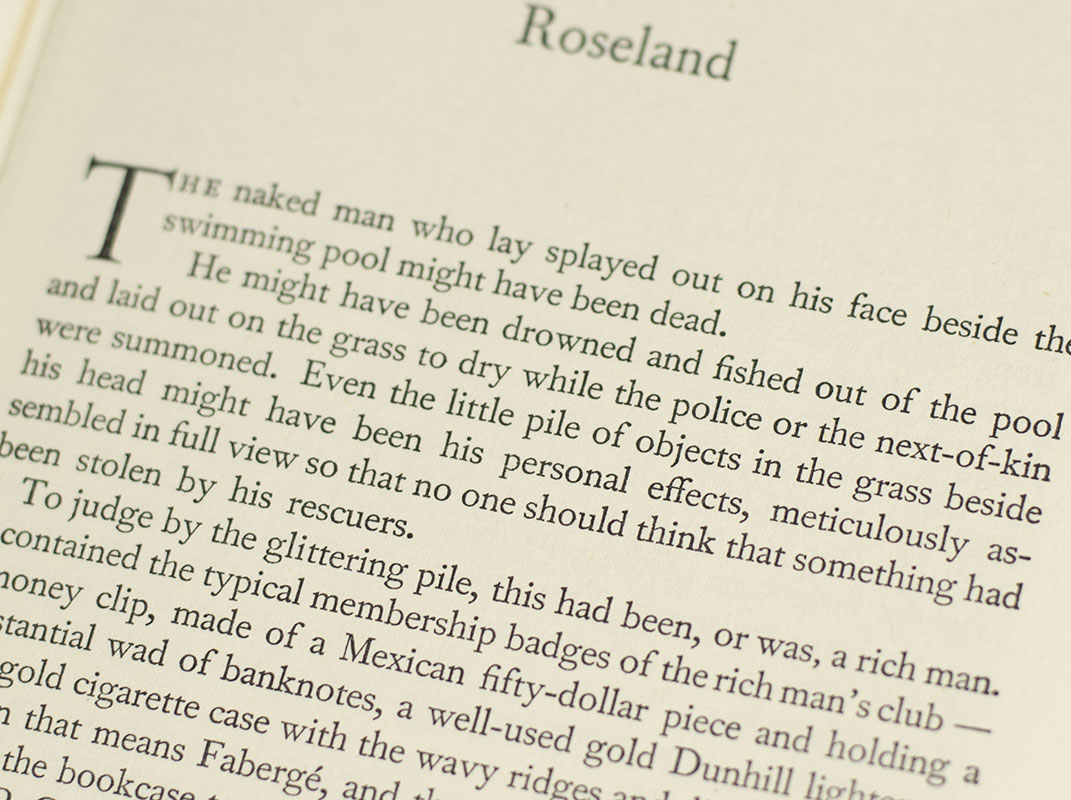
"Described in the Times Literary Supplement as ‘most brilliant,’ the book was a great commercial success and helped to launch Fleming as a best-selling novelist It ended with Bond seriously wounded and nearly killed by fugu poison from the sex organs of the Japanese globe-fish While the ending was not quite Sherlock Holmes and his apparently fatal last struggle with evil at the Reichenbach Falls, Fleming had provided himself with an opportunity to remove his hero. He was not, however, to take it. There was public agitation when 007 was reported dead. Bond was irreplaceable" (Black, 27, 30). "This is a very highly sought after title, as it is generally considered the best novel in the series and the best of the movies, as well" (Biondi & Pickard, 44). Made into the 1964 film of the same title with Sean Connery as Bond and Lotte Lenya as ex-KGB agent Rosa Klebb.
Other Books by this Author
-

Fleming, Ian [Cubby Broccoli]
Complete Set of 14 First Edition James Bond Novels: Casino Royale, Live and Let Die, Moonraker, Diamonds are Forever, From Russia with Love, Dr. No, Goldfinger, For Your Eyes Only (short stories including A View to a Kill and Quantum of Solace), Thunderball, The Spy Who loved Me, On Her Majesty’s Secret Service, You Only Live Twice, The Man with the Golden Gun, Octopussy and The Living Daylights.
$150,000.00