
GIBBON, Lewis Grassic [James Leslie Mitchell] [Ray Mitchell; Seumas Stewart; Bill Craig].
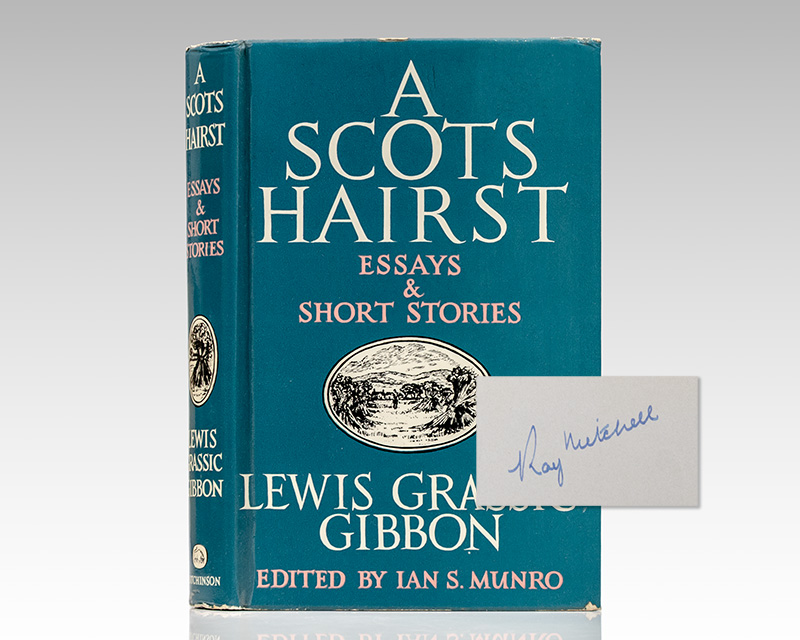
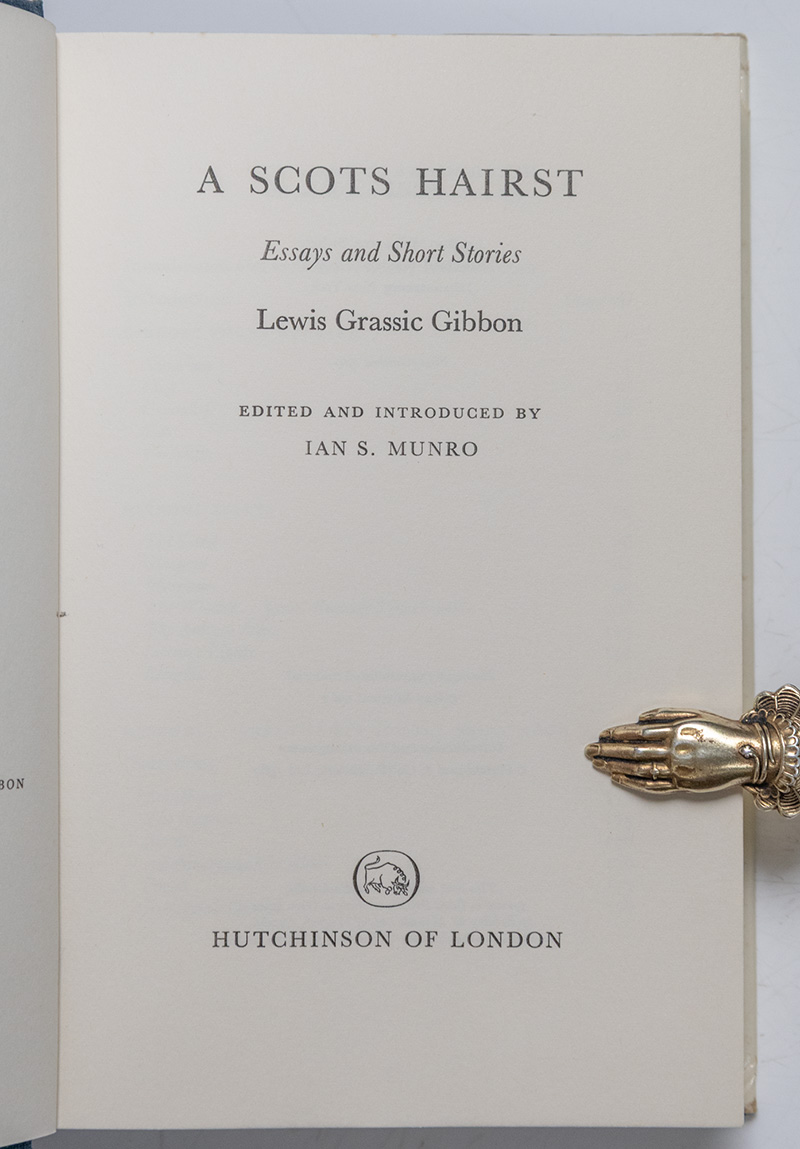
A Scots Hairst: Essays and Short Stories.
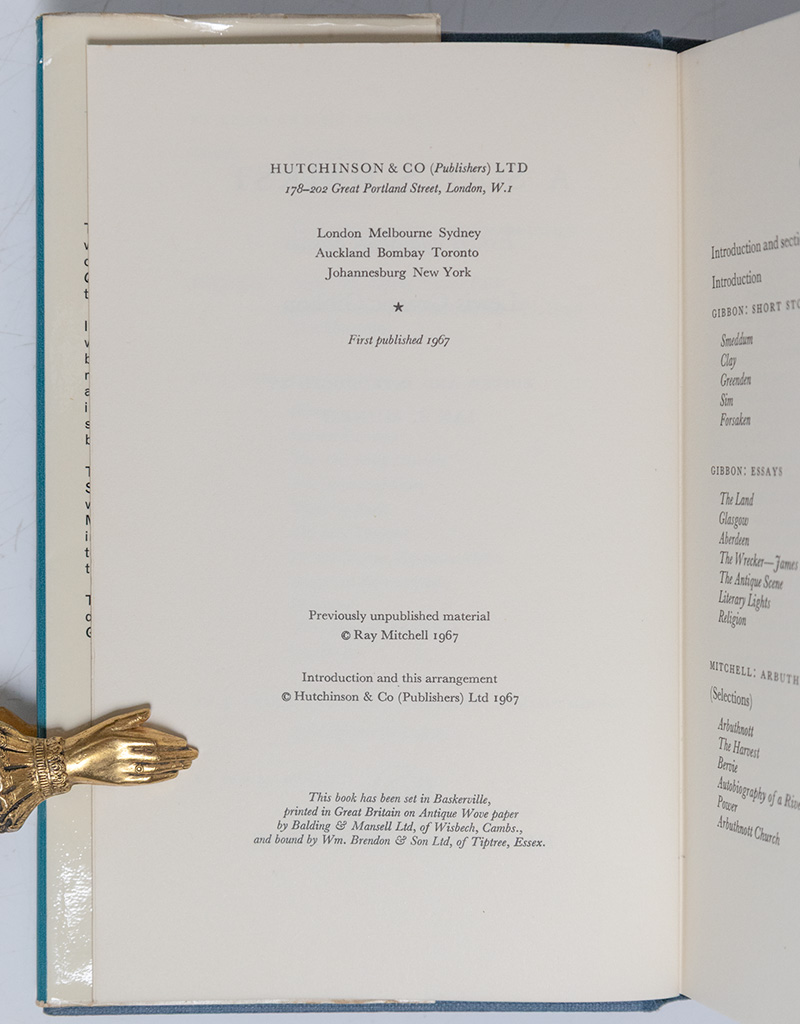
London: Hutchinson , 1967.
$1,600.00
In Stock
Item Number: RRB-151457
+$500
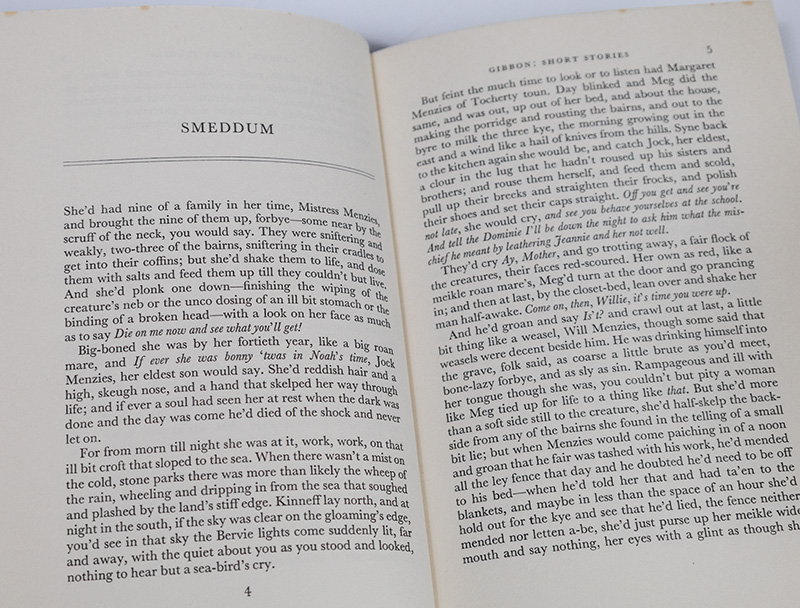
First Edition of Lewis Grassic Gibbon's A Scots Hairst; Signed by His Wife Ray Mitchell and From the Library of Bibliophile Seumas Stewart
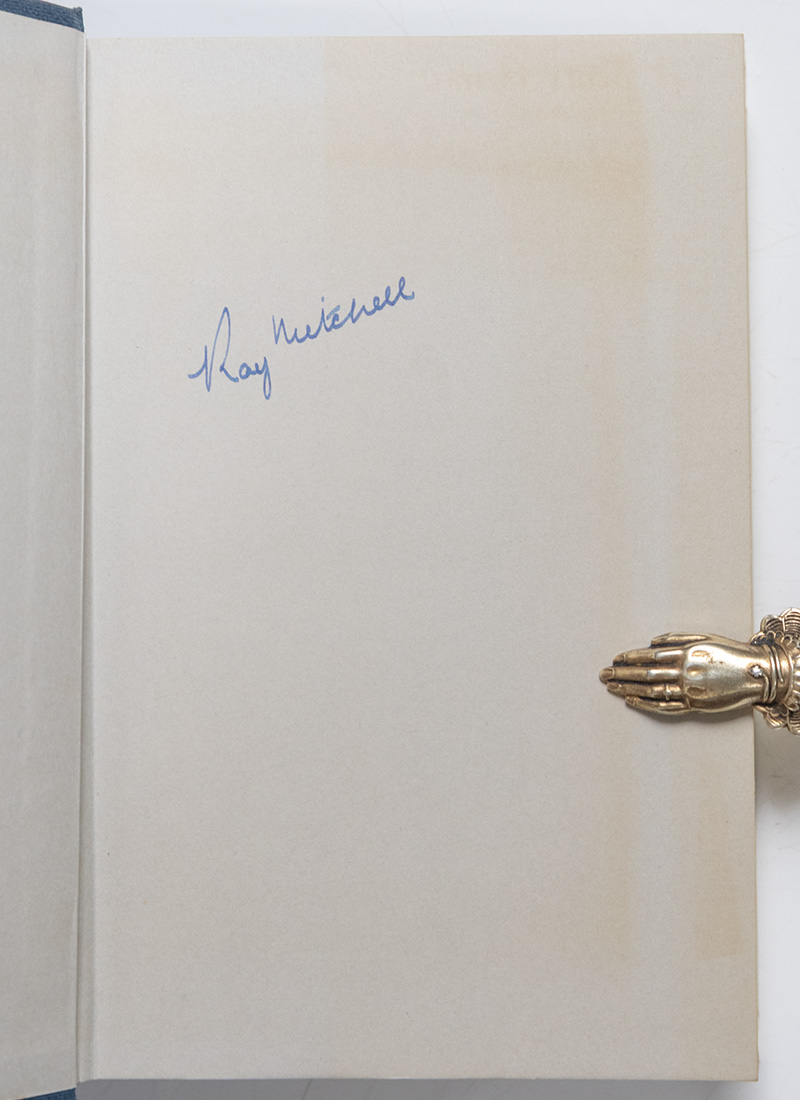
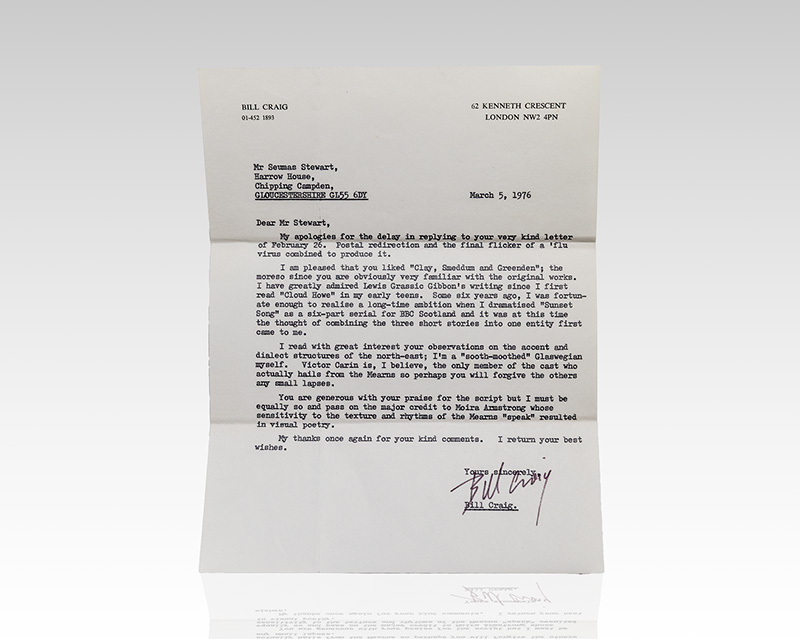
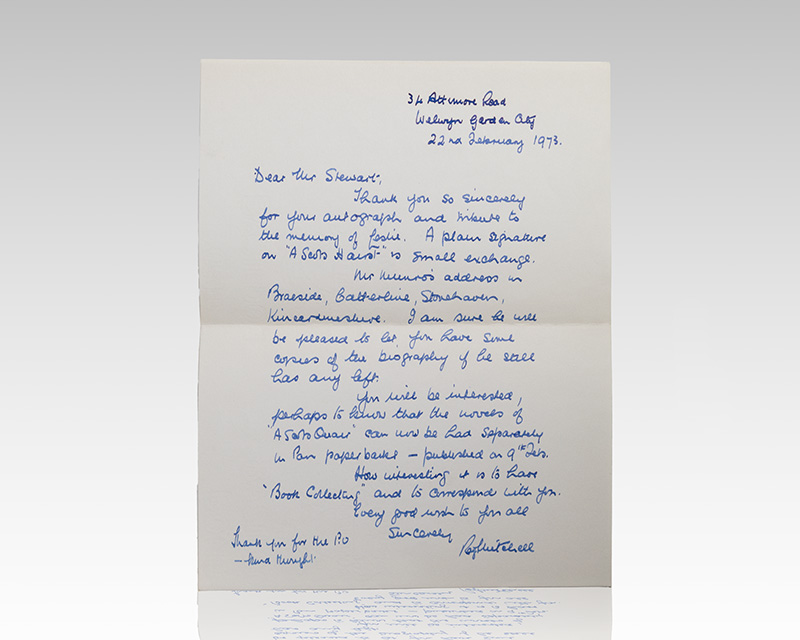
First edition of this posthumous collection of Lewis Grassic Gibbon’s shorter works. Octavo, original publisher's blue cloth with gilt titles to the spine. Boldly signed by his wife Ray Mitchell on the front free endpaper. From the library of bibliophile Seumas Stewart, a respected figure in the field of book collecting and bibliophilic writing, best known for his work Book Collecting (1947). Ray Mitchell signed A Scots Hairst for Stewart in exchange for a signed copy of his work Book Collecting, which he autographed for her with a tribute to her late husband. Together with two autograph letters signed by Ray Mitchell to Seumas Stewart regarding the exchange of books, the paperback of A Scots Hairst, and the adaptation of "Sunset Song" for BBC Scotland. Accompanied by a typed letter to Stewart signed by scriptwriter Bill Craig and dated March 5, 1976, regarding the dramatization of "Sunset Song" for BBC and Stewart's praise for the script. Near fine in a near fine dust jacket. A wonderful association.
Lewis Grassic Gibbon, the pen name of James Leslie Mitchell (1901–1935), was a Scottish novelist and essayist best known for his powerful depictions of rural life and social change in early twentieth-century Scotland. His most celebrated work, Sunset Song (1932), the first novel in the Scots Quair trilogy, portrays the tensions between tradition and modernity through the life of a young woman in a farming community. Writing under both his real name and pseudonym, Mitchell combined regional realism with broader political and historical concerns, often addressing themes of class, industrialization, and identity. Despite his relatively short life, his work has had a lasting impact on Scottish literature and is regarded as a significant contribution to modern British fiction.
A Scots Hairst: Essays and Short Stories.
$1,600.00
In Stock